Get Full Government Meeting Transcripts, Videos, & Alerts Forever!
Get email alerts on the Clean Energy Transition topic
No spam. Unsubscribe anytime.
Southface presents clean energy transition plan; recommends sustainability officer and energy manager
Summary
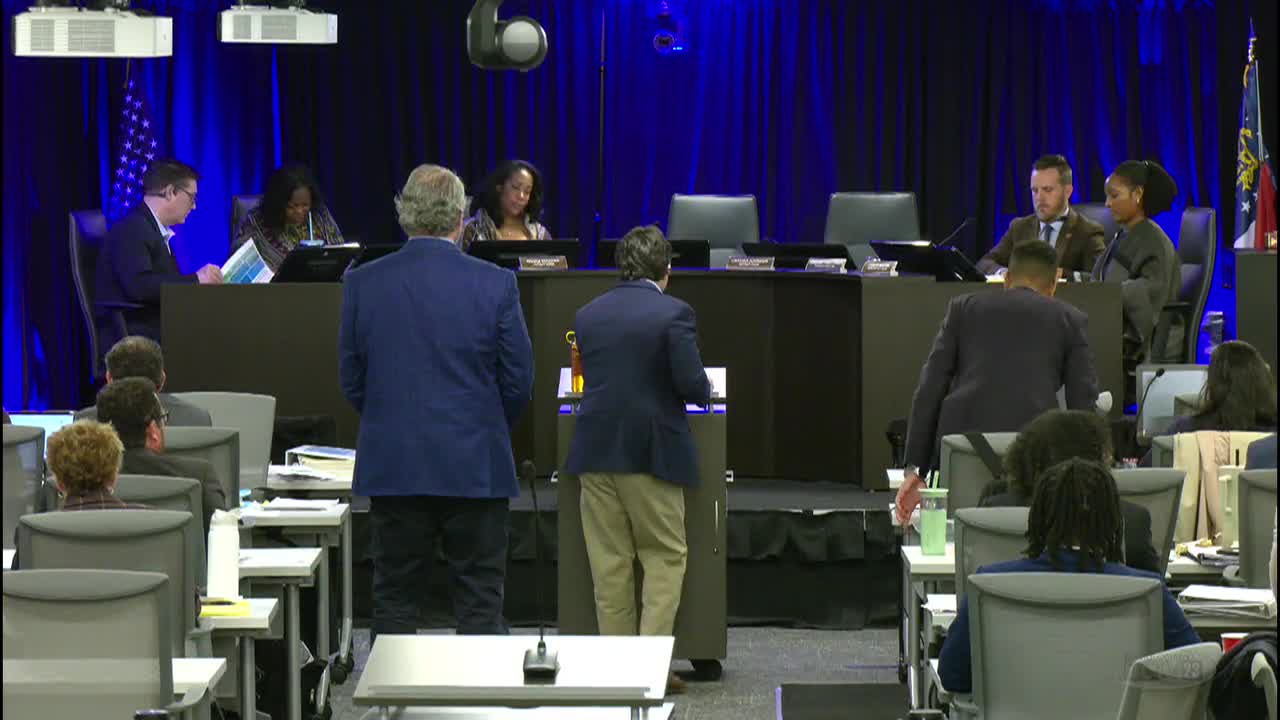
Southface, an Atlanta-based sustainability nonprofit, presented its Clean Energy Transition Plan to the DeKalb County Operations Committee, outlining recommendations for staffing, governance and investments to reduce the county’s building energy use and greenhouse gas emissions.
Southface, an Atlanta-based sustainability nonprofit, presented its Clean Energy Transition Plan to the DeKalb County Operations Committee, outlining recommendations for staffing, governance and investments to reduce the county’s building energy use and greenhouse gas emissions.
Spencer Clifford, project manager at Southface, and advisor Robert Reed told the committee the plan’s pillars include centering equity, sustaining sustainability through institutional changes, investing in community energy programs and improving data systems. Key near-term recommendations include creating a sustainability officer position at the deputy chief operating officer level and hiring an energy manager to track live energy usage across county facilities.
Southface presented a modeled pathway to achieve a 30% reduction in county building energy consumption by 2030. The firm estimated the county would need roughly $41 million in upfront investment to achieve the 30% reduction and projected annual savings of about $5.2 million thereafter—a simple payback period of about eight years under the plan’s assumptions. Southface also provided regional salary benchmarks and recommended a salary range of $140,000–$160,000 for the sustainability officer and $80,000–$100,000 for an energy manager.
Committee members asked questions about recommended financing mechanisms, including residential and commercial PACE programs and federal and state funding availability. Southface warned that PACE financing has risks when poorly structured and advised careful program design. The presenters also emphasized the need for central data management and a governance structure that includes a bicameral Environmental Justice and Sustainability Board with a sustainability subcommittee and an environmental-justice subcommittee to advise and oversee implementation.
The committee did not take a formal vote on adoption; staff said a resolution to adopt the plan would be returned in a future meeting after further discussion of transition plan details.