Get Full Government Meeting Transcripts, Videos, & Alerts Forever!
Get email alerts on the Wildfire Mitigation topic
No spam. Unsubscribe anytime.
Hawaiian Electric outlines wildfire safety strategy for Hawaii Island, emphasizes grid hardening and situational awareness
Summary
Hawaiian Electric told the county committee on March 18 that it has spent about $120 million on wildfire safety and reduced utility‑infrastructure ignition risk by roughly 60%, and described ongoing grid hardening, vegetation management and situational‑awareness work to further lower risk on Hawaii Island.
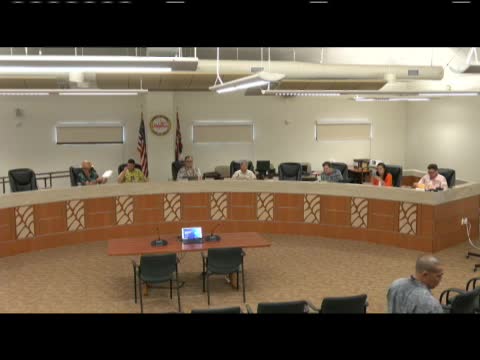
Hawaiian Electric staff presented an updated wildfire safety strategy to the Hawaii County Communications Reports and Council Oversight Committee on March 18, describing ongoing grid hardening, vegetation management, situational awareness and operational changes intended to lower wildfire risk across Hawaii Island.
The company said it has spent about $120 million on wildfire safety work and has reduced wildfire risk attributable to its infrastructure by around 60% to date, with a longer‑term target of roughly 80% reduction where feasible while balancing reliability and customer costs. The utility said it filed an enhanced wildfire safety strategy with the Hawaii Public Utilities Commission in January built around four pillars: grid hardening, situational awareness, operational practices and stakeholder/community partnerships.
Grid hardening actions described by Hawaiian Electric included pole replacements (wood and alternate materials such as steel and composite), conductor upgrades (including replacement of older copper conductor with aluminum and evaluation of covered conductor), shorter spans where needed, current‑limiting fuses and surge arrestors designed to reduce fault energy and minimize potential ignition sources, and targeted undergrounding planning in high‑risk corridors. Transmission and distribution director Kurt Tsukiyama said covered conductor and other equipment used widely by other utilities were among the tools being assessed.
Situational awareness and operations: the utility is expanding weather stations and cameras, deploying drones and helicopters for inspections in hard‑to‑reach areas, installing fault‑circuit indicators to help locate faults and increasing inspection frequency in high‑risk (tiered) areas to at least annual overhead inspections. Director of Hawaii Island operations Kevin Waldjen said vegetation management in the highest‑risk zones will include level‑1 and level‑2 inspections and hazard‑tree identification with removal when needed.
Public safety power shutoffs and criteria: the utility described the public safety power shutoff (PSPS) framework as a last line of defense and said it has not enacted a PSPS on Hawaii Island since the program’s launch on July 1, 2024. The utility summarized PSPS triggers as a combination of factors — National Weather Service fire‑weather watches/red‑flag warnings, wind gusts (examples given: gusts above ~45 mph), sustained low relative humidity (examples given: below ~45%), situational reports from cameras and weather stations — and said the plan is a “living” strategy that will be re‑analyzed annually as grid improvements and situational‑awareness tools are deployed.
Community programs and federal funds: the company said it had identified $95 million in federal funding matched by utility funds for grid‑related resilience work; a separate $5 million set aside for community benefits tied to that federal package was reported as frozen by the U.S. Department of Energy at the time of the hearing, and Hawaiian Electric said it had notified prospective community partners. The utility said work in Waikoloa — a locally identified high‑risk area — has included aerial inspections, tree trimming and deployments of weather stations and cameras.
Council discussion: Councilmember Matt Chalker (public testifier earlier) and several councilmembers pressed for specifics for Waikoloa and for clearer responsibilities for landowners and utilities in vegetation management. Councilmembers suggested coordinating conduit/sidewalk projects with strategic undergrounding to reduce costs and improve public infrastructure. Several councilmembers thanked the utility for the transparent presentation and urged continued county‑utility collaboration.
Committee action: Councilmember Eustace moved to close the file on Communication 167; Councilmember Inaba seconded. The committee recorded 7 ayes and two excused (Councilmembers Michelle Galimba and Ashley Kurkowitz) and closed the file.
Ending: Hawaiian Electric said it will continue community outreach, coordinate with county departments and first responders, and update the commission and the committee as its living wildfire strategy evolves and as additional equipment and situational‑awareness assets are deployed.