Get Full Government Meeting Transcripts, Videos, & Alerts Forever!
Get email alerts on the Transportation Connectivity topic
No spam. Unsubscribe anytime.
Residents and officials press for East–West access as GRB expansion proceeds
Summary
Residents, neighborhood groups and council members raised traffic, transit and safety concerns about plans tied to an expansion of the George R. Brown convention center that would abandon sections of Polk Street; councilmembers and staff said they will continue engagement and study alternatives including two‑way Leland and grade separations.
Supporters and opponents of the proposed Georgia R. Brown (GRB) expansion pressed City Council on March 20 over plans that would abandon portions of Polk Street in the downtown convention district and reroute traffic to nearby streets.
The dispute centers on access from Houston’s east side: residents and business owners said closing Polk and moving traffic to Leland Street would worsen already constrained east–west connections and create safety and transit problems for commuters, students and emergency response.
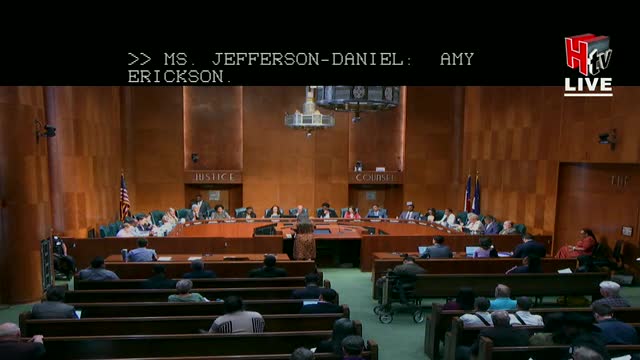
“ We support the economic opportunity of an expanded GRB and admire the renderings. We simply want access to the Convention District downtown and beyond,” said Amy Erickson, an Easton resident who represented a neighborhood group at the meeting. Erickson and others told council they fear a two‑way Leland will be inadequate because Leland crosses an at‑grade railroad and already experiences frequent blockages.
Nut graf: The city and Houston First, the nonprofit managing the convention district project, have proposed changes that would close a stretch of Polk Street over I‑59/69; city staff and council members said they are continuing to gather traffic studies and meet with stakeholders, while residents urged longer public review and mitigation measures such as grade separations and designated mitigation funding for connectivity impacts.
Councilmember Willie Martinez, who represents the affected area, said the administration has committed to continued engagement. “We don't have a timeline yet, but we want to continue to stay engaged with you all,” Martinez said. He and other councilmembers said Houston First has agreed to hold further public meetings.
Speakers documented several operational concerns: Metro officials told attendees that current bus routes (the 40/41 lines) carry about 5,500 daily riders that rely on Polk; speakers warned that moving buses onto a narrower two‑way Leland would hamper buses, bicycle lanes and general traffic flow. Community members also documented intersections that would be affected, notably the Leland–West Belt–Cullen rail crossing where daily train activations can block traffic.
Councilmembers acknowledged the constraints and said they were working with Public Works, Metro, Union Pacific, TxDOT and Houston First to identify engineering and staging solutions. Councilmember David Ramirez noted options under review, including converting nearby streets to two‑way operation or other rerouting, but emphasized the need for more analysis: "That vision raises additional questions," Ramirez said of the proposed Leland conversion.
Multiple speakers urged that any fair‑market compensation for right‑of‑way or other revenue tied to the project be directed to mitigate East‑side impacts rather than entering the general fund. One community proposal offered splitting construction into separate phases so work could begin on less contentious blocks while additional study proceeded on East–West connectivity.
City officials and councilmembers repeatedly contrasted the compressed timeline for the GRB work with TxDOT’s longer I‑45/North Houston project schedule, urging planners to account for overlapping construction. Amy Dinn, an East End resident, noted that TxDOT’s projects already plan closures and that coordinating timelines is critical to avoid compounding access losses.
Council action and next steps: councilmembers said they will compile unanswered technical questions raised at recent public meetings and press Houston First and Public Works for more detailed traffic studies, timelines and mitigation plans. Several council offices pledged to continue convenings and to require additional public meetings by Houston First.
Ending: Residents asked for a formal community‑benefits approach and more time for public review. Councilmembers said they will continue to press for engineering studies and mitigation commitments before final approvals proceed.