Get Full Government Meeting Transcripts, Videos, & Alerts Forever!
Get email alerts on the Density Bonus Reform topic
No spam. Unsubscribe anytime.
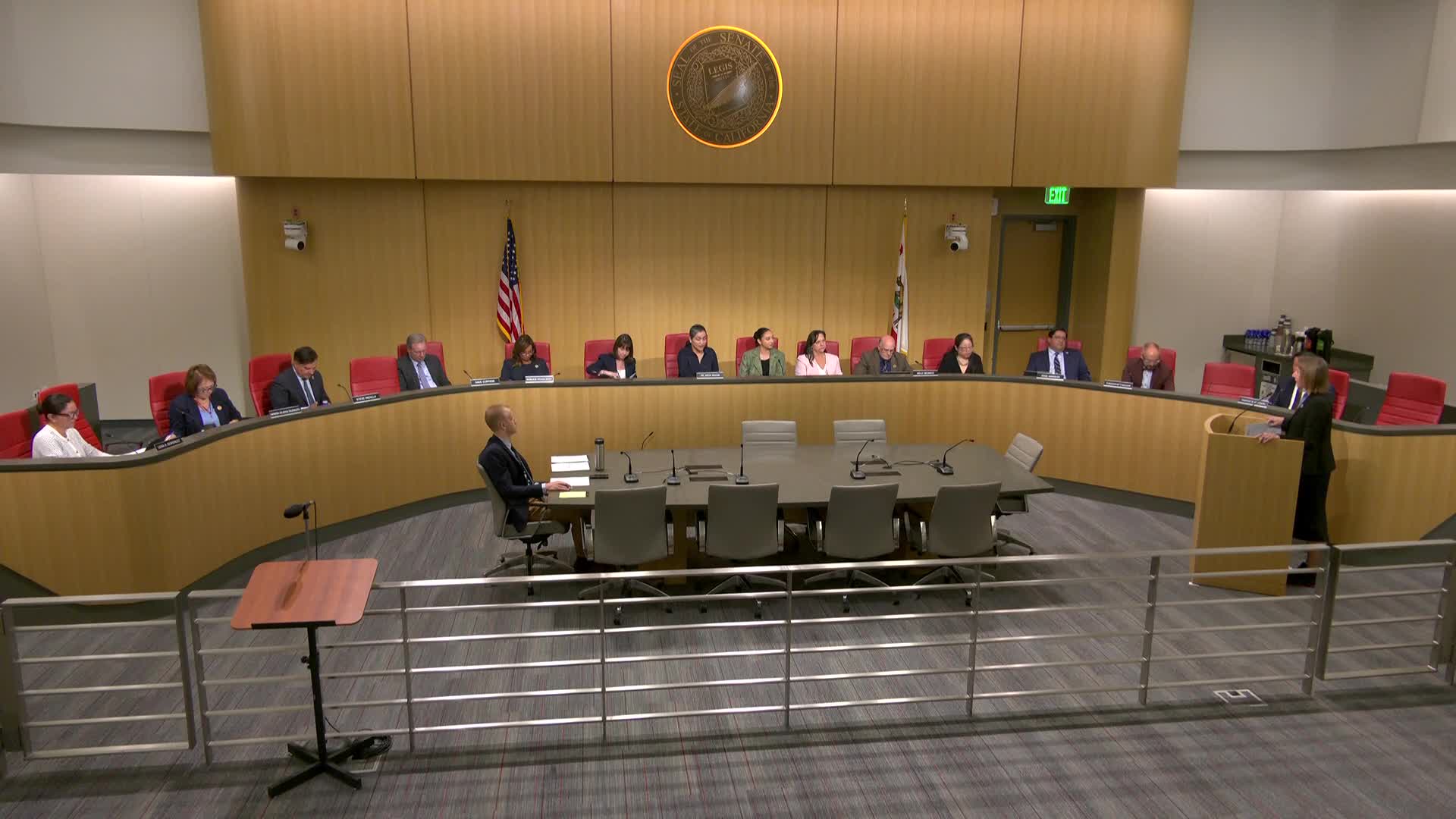
Senate committee narrows density bonus use to ensure mixed‑use projects remain primarily residential
Summary
SB 92, introduced by Sen. Blake Spear, would require density bonus projects to dedicate at least two-thirds of total floor area to residential uses, a change supporters say will prevent nonresidential projects from using housing bonuses to bypass local limits; the bill passed the committee and moves to the Senate Local Government Committee.
SACRAMENTO — The Senate Housing Committee on Tuesday advanced SB 92, a bill by Senator Blake Spear that would require projects using the state's density bonus law to devote at least two-thirds of their total floor area to residential uses in order to qualify for density bonuses and related concessions.
Spear said the amendment is intended to close what she described as an "absurd outcome" that has allowed some developers to use minimal residential units to obtain major concessions for large nonresidential developments. "For only 10 affordable housing units, the project is able to exceed the local height limit by 210 feet," the author said, describing a proposed project in Pacific Beach that she argued exploited the statute. "This is an abuse of the law and is not consistent with the law's intent."
Maura Topp, speaking for the city of San Diego, said the bill has a narrow purpose: to ensure density bonuses further the production of housing rather than enable large commercial or hotel projects to receive housing-related concessions. "We support mixed-use housing in the city. But this type of aberration of the density bonus law does need some correction here," she said.
Witnesses in the hearing included housing advocates and industry groups. The Housing Action Coalition and several housing advocates said they were engaged in ongoing discussions with the author and offered amendments; Unite Here offered a proposed clarifying amendment to exclude hotels from streamlining eligibility, an idea the author said she would consider. Some opponents expressed concern that a strict numerical threshold could disadvantage nonurban jurisdictions where financing and project mixes differ from dense coastal cities.
Committee members generally praised the bill's intent while urging the author to continue working with stakeholders to calibrate thresholds for different community contexts. "Density bonus law was clearly about housing and not about anything else," Senator Grayson said. Senator Cabaldon suggested considering proportional approaches or calibrations for smaller jurisdictions that may not have a large pipeline of mixed-use projects.
A motion to pass SB 92 to the Senate Local Government Committee carried on a recorded vote: 10 yes, 1 no. The author and opponents said they will continue negotiations on amendments, including clarifications on whether hotels should be excluded from the housing-oriented streamlining benefits.
Votes at a glance: SB 92 —Motion: Do pass to Local Government (mover: Senator Gonzales). Outcome: Approved. Tally: 10 yes, 1 no.
If enacted as discussed in committee, SB 92 would align density bonus eligibility with the housing-focused purpose recognized in the Housing Accountability Act and require that density bonuses and related concessions meaningfully increase the residential component of projects claiming those benefits.