Get Full Government Meeting Transcripts, Videos, & Alerts Forever!
Get email alerts on the Judiciary topic
No spam. Unsubscribe anytime.
Chief Justice Guerrero urges stable funding as California courts face vacancies, heavier caseloads and program expansions
Summary
Chief Justice Patricia Guerrero told a joint session of the California Legislature that courts need stable funding as they manage staffing vacancies, rising case complexity and ongoing programs including the CARE Act, a court-interpreter pilot and AI-use safeguards.
Chief Justice Patricia Guerrero told a joint session of the California Legislature that the state judiciary needs stable funding to maintain access to justice as courts confront staffing shortages, rising caseload complexity and budget uncertainty.
Guerrero said courts faced proposed reductions last year, including $97,000,000 in trial-court cuts and the prospect of additional percentage reductions, and credited recent partial restorations in the governor's proposed budget with reducing service impacts. “We need funding to properly fulfill this solemn responsibility as a coequal branch of government to safeguard the constitutional rights and liberties of all Californians,” Guerrero said.
The nut graf: Guerrero framed the request as necessary to preserve courtroom access and core services across California’s 58 counties. She told lawmakers that remote proceedings, workforce programs and targeted reforms are mitigating access problems but that sustained funding and oversight will determine whether those gains hold.
Guerrero highlighted several immediate pressures on the courts. She said there were about 67 judicial vacancies and noted Governor Gavin Newsom has appointed 586 judges during his term, including 131 in 2024. The chief justice described the workload increase using a case-weight methodology: preliminary data shows case weights rose 54% for felonies, 95% for juvenile cases and 26% for conservatorship and guardianship proceedings between 2017 and 2025.
Guerrero said remote hearings remain an important access tool. She told lawmakers that more than 6,500 remote hearings take place each business day in civil and criminal matters, saving an estimated 1,500,000 courthouse trips annually, and that statutory authorization for criminal and civil remote proceedings has been extended through Jan. 1, 2027.
On programmatic initiatives, Guerrero reported implementation details and participation numbers: the Community Assistance, Recovery, and Empowerment (CARE) Act has produced 1,258 petitions and 2,092 hearings as of Feb. 21, and courts continue to coordinate with the California Health and Human Services Agency on mental health treatment and housing supports for people with psychotic disorders. She also described a five-year California Court Interpreter Workforce Pilot Program that currently includes 19 participating courts, has received more than 1,000 applications, and has 126 candidates enrolled; participants commit to work for courts for at least three years after certification.
The chief justice announced the Judicial Council has appointed a task force to address the use of generative artificial intelligence in courts and circulated a draft rule of court and a model-use policy for public comment. Administrative presiding justices and other judges lead the task force, which has issued guidance for judges using AI in adjudicative roles; the Judicial Council is scheduled to vote on a recommended rule later this year.
Guerrero also addressed recent problems with administration of the California bar exam. She said the court will exercise its plenary authority to implement remedies and plans to enhance oversight of admissions, including increasing the role of the committee of bar examiners in budget and administration decisions for the exam and vendor oversight.
Other programs the chief justice described include court-appointed special advocate (CASA) programs — 45 programs serving 10,600 children with 7,400 trained volunteers across 52 counties — and facilities work that completed two new public buildings and is continuing construction of several others. Guerrero said the Judicial Council is assessing physical security improvements in light of recent threats to courthouses.
Guerrero closed by urging continued three-branch collaboration, reiterating the judiciary’s role as an independent coequal branch charged with impartial administration of justice. “The judicial branch remains steadfast in its commitment to provide fair and impartial justice in accordance with our constitutional obligations,” she said.
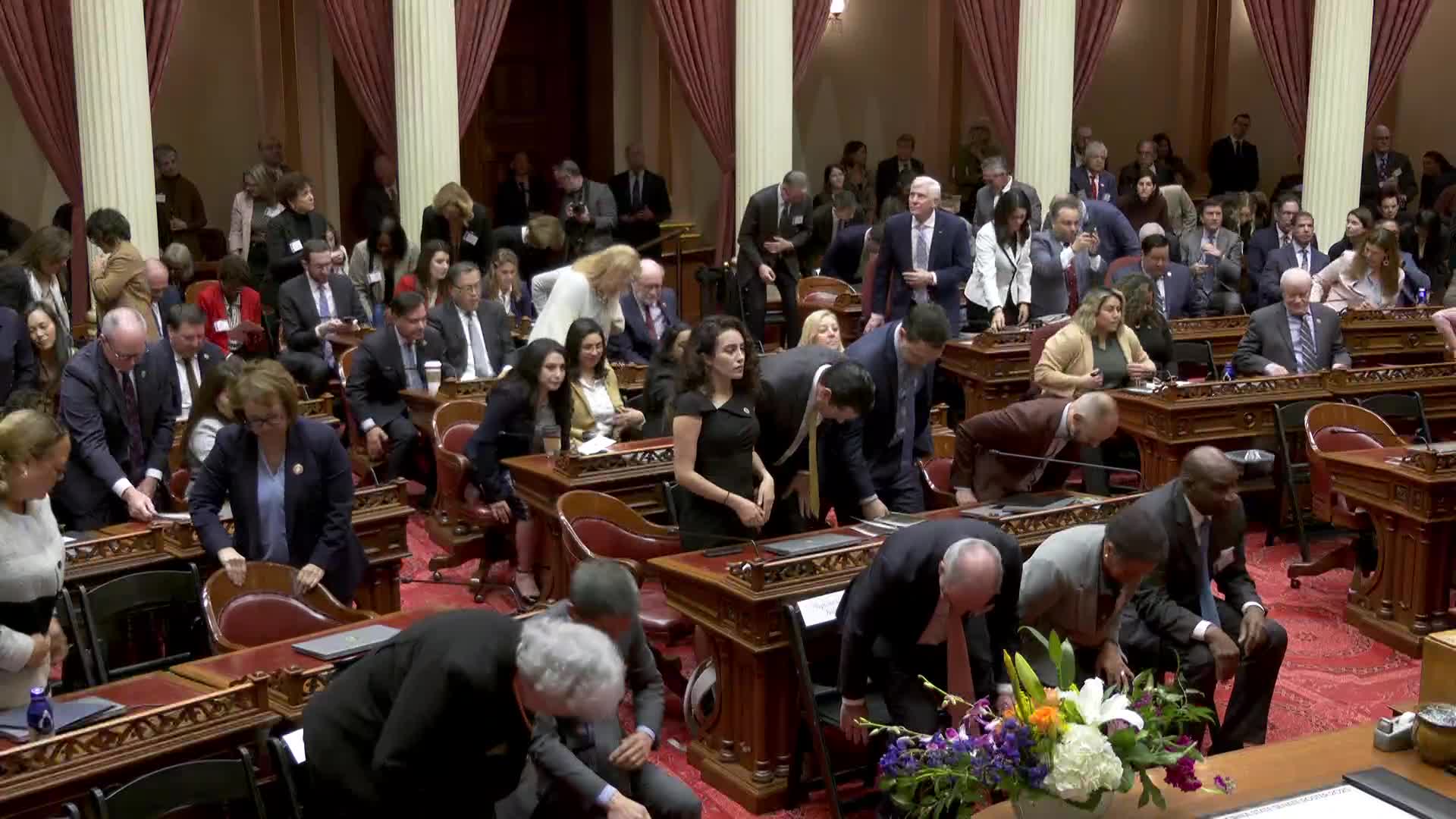
The address occurred during a joint convention of the California State Senate and Assembly attended by statewide elected officials and members of the judiciary. The joint convention adjourned after the chief justice’s remarks.