Get Full Government Meeting Transcripts, Videos, & Alerts Forever!
Get email alerts on the Personnel And Policies topic
No spam. Unsubscribe anytime.
Commissioners table county vehicle policy after lengthy discussion about tax reporting and emergency‑response exemptions
Summary
After extended debate about take‑home vehicle taxation, emergency‑response exemptions and policy scope, Ellis County commissioners asked staff to pare and clarify a draft vehicle policy and return with legal and tax guidance rather than approve it at the meeting.
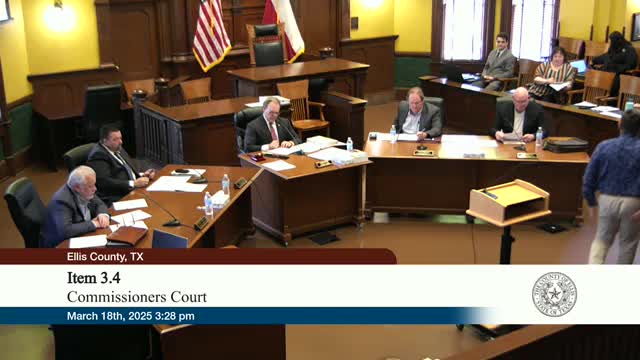
Ellis County Commissioners on Tuesday chose not to adopt a proposed county vehicle policy and instead directed staff to revise the draft and return with clearer language and tax‑reporting guidance.
County staff presented a draft vehicle policy intended to set minimum standards for operation, maintenance and assignment of county vehicles, and to address how take‑home vehicles might be treated for Internal Revenue Service (IRS) reporting purposes. The draft cited federal guidance that take‑home vehicles used for commuting can create a taxable fringe benefit.
During a lengthy discussion commissioners and the sheriff asked staff to clarify several items: which job categories (for example, public safety officers and on‑call road workers) should be exempt from fringe‑benefit reporting; whether the policy should be pared back to only items that IRS and state law require; and how the county will identify and report taxable benefits so employees are not surprised by tax consequences. Several commissioners and the sheriff emphasized they did not intend to impose new out‑of‑pocket costs on employees who take vehicles home to respond to emergencies.
The sheriff urged caution about drafting language that inadvertently required replacement or budgeting procedures that would be administratively burdensome. Several commissioners said they preferred a shorter policy focused on minimum safety and vehicle‑use standards rather than a long prescriptive document.
Action: The court did not adopt the policy. Staff was directed to revise and return with simplified language and to consult tax and legal experts to nail down reporting requirements, exemptions for bona fide emergency responders, and any payroll reporting procedures before the court takes final action.
Why it matters: The policy affects how the county assigns and accounts for vehicles and could have payroll and tax reporting consequences if take‑home vehicle use is treated as a taxable fringe benefit. Commissioners emphasized protecting employees who provide emergency response and clarifying the county’s obligations for tax reporting and insurance risk mitigation.
Speakers included county staff presenter Ryan (role not specified in the agenda packet), Sheriff Norman, County Judge Little and multiple commissioners. No final action was taken; staff will return with revisions and technical guidance.