Get Full Government Meeting Transcripts, Videos, & Alerts Forever!
Get email alerts on the Higher Education topic
No spam. Unsubscribe anytime.
Assembly hears push to expand College Corps; LAO flags high administrative share and budget tradeoffs
Summary
The Governor proposed continued and expanded funding for the California College Corps to provide paid service opportunities for undergraduates; administration and student speakers emphasized benefits while the LAO raised concerns about administrative costs and recommended rejecting the proposal given projected budget deficits.
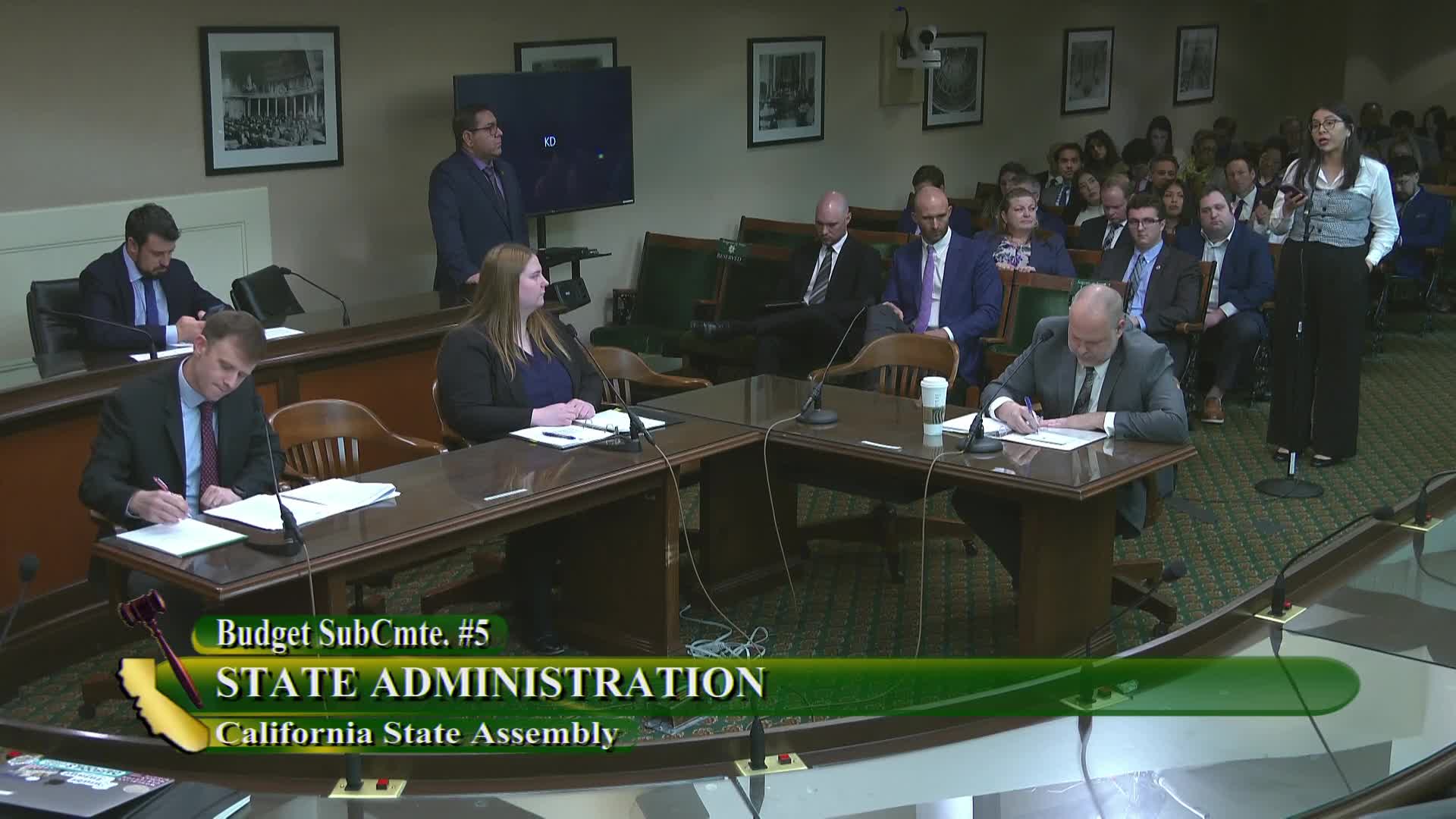
The subcommittee reviewed two College Corps budget proposals that would extend and expand California Volunteers' College Corps program, a state service initiative that places undergraduates in community service positions while providing up to $10,000 per fellow.
GoServe Director Josh Friday described the program as a pathway that combines paid service and workforce development. He said the administration proposes $83,600,000 ongoing general fund beginning in 2026‑27 to expand the program to more than 4,000 students annually and partnerships with over 50 universities, and noted a separate one‑time $5,000,000 augmentation proposed for 2025‑26 to add campuses. Friday said more than 10,000 students have participated to date and that College Corps fellows have contributed more than 2.5 million service hours in classrooms, food banks and disaster response.
The Legislative Analyst's Office urged caution. Natalie Gonzales of the LAO summarized the governor's two requests: a $5,000,000 one‑time augmentation for 2025‑26 intended to expand campuses from roughly 45 to 55, and an ongoing $84,000,000 request with 48 positions for 2026‑27 to increase slots from about 3,000 to 4,000. The LAO acknowledged the program's benefits but raised two concerns: campuses already offer service and career development opportunities, and College Corps carries high administrative costs. The LAO said about $45,000,000 of the $84,000,000 proposed ongoing funding would support administrative or program delivery costs, leaving less than half for direct student financial aid, and recommended rejecting the governor's proposals given projected budget deficits and competing higher‑education reductions.
Administration representatives and program staff replied that College Corps is not merely a financial‑aid program but a service and workforce development program that requires program delivery supports, training, evaluation and campus grants. Chief Deputy Anthony Chavez said many items LAO called "administrative" are program delivery costs, including training, evaluation and outreach.
Students and alumni described personal impacts: multiple fellows testified that College Corps reduced their debt burden, provided paid service experience (450 hours during an academic year), connected them to internships and credentials, and helped them obtain jobs in public service, health and local government. One alumnus said the program enabled her to graduate with far less debt; another said 11,000 students applied for 3,500 positions last year.
Clarifying details recorded in the hearing: College Corps participants commit to 450 hours during the academic year and can receive up to $10,000 total (paid across the year with a small scholarship upon completion). The administration framed the $10,000 amount as chosen in consultation with higher‑education leaders to match the additional out‑of‑pocket cost some Pell students face at a UC campus.
The subcommittee acknowledged the program's benefits but noted budget constraints and competing cuts to higher education and student aid. No formal vote was taken during the informational hearing.