Get Full Government Meeting Transcripts, Videos, & Alerts Forever!
Get email alerts on the Education Policy topic
No spam. Unsubscribe anytime.
Administration proposes new California Education Interagency Council; LAO urges limited‑term funding to test effectiveness
Summary
GovOps requested $5 million ongoing and 16 phased positions to establish a California Education Interagency Council to coordinate career education across state agencies; the LAO recommended limited‑term funding and expressed uncertainty the council would solve structural coordination problems.
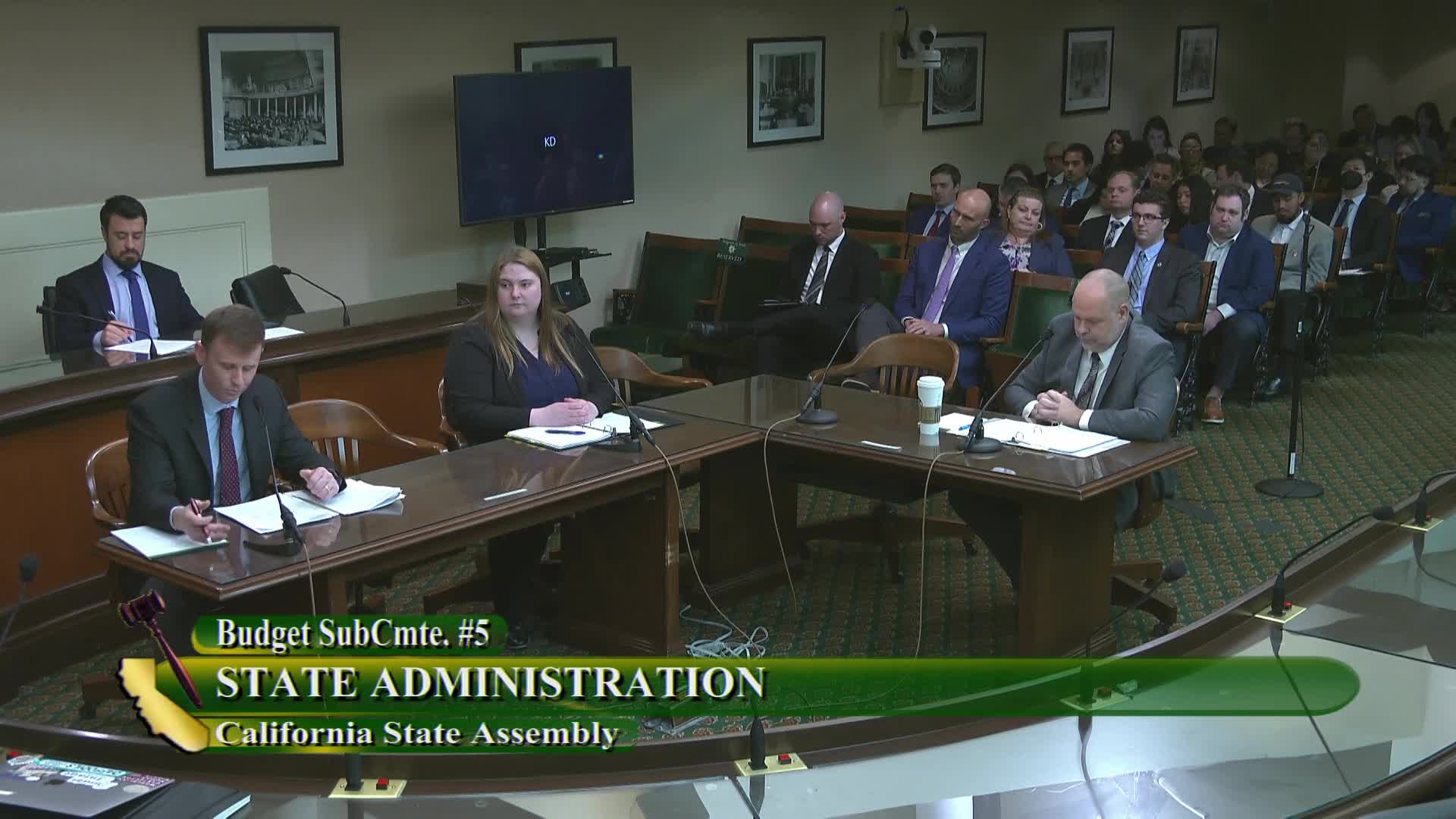
The California State Assembly Budget Subcommittee No. 5 considered a proposal from the administration to establish a California Education Interagency Council and requested $5,000,000 in general fund in 2025‑26 and ongoing to staff and support the new council.
GovOps staff explained the request arises from the Governor’s Master Plan for Career Education launched in August 2023 and aims to improve coordination among education systems, workforce providers, employers and community organizations. The administration said the council would be hosted by GovOps as a neutral convening entity and proposed 16 positions to be phased in over multiple years, with meetings “to be held at least once every six months” per trailer‑bill language. The proposal identifies eight members including the secretaries or heads of major education and workforce entities: the secretary for the Labor & Workforce Development Agency; the head of the University of California system; the California State University chancellor; the California Community Colleges chancellor; the Bureau for Private Postsecondary Education director; the president of the State Board of Education; and the State Superintendent of Public Instruction (or their designees).
Why it matters: proponents say a single convening body would help translate the master plan into action and reduce siloed programs that impede student pathways to high‑paying jobs. Critics—including the Legislative Analyst’s Office—question whether creating another statewide body will address core barriers and urged the Legislature to limit the proposal to a three‑year pilot so the council can demonstrate improved outcomes before receiving permanent funding.
LAO recommendation and questions: Alexander Bence and other LAO analysts agreed the state’s workforce and education activities are spread across agencies, but noted existing statewide entities such as the Workforce Development Board and the Intersegmental Coordinating Committee already provide venues for coordination. The LAO said “it’s difficult to know whether a new statewide venue … will lead to better outcomes” and recommended three years of limited‑term funding so the council can prove effectiveness.
Administration response: GovOps said the office is experienced in standing up cross‑agency entities and would serve as neutral staff. Department of Finance staff said the request is ongoing because the education landscape permanently evolves and requires continuous coordination.
Public comment: Several education‑focused organizations urged support. AJ Johnson of California Competes endorsed the council, calling it “crucial for coordinating specific efforts” and said community partners lack capacity and need state staffing support. The Campaign for College Opportunity also urged creation of the coordinating body to protect higher education outcomes amid budget uncertainty and federal changes.
Outstanding questions: members pressed whether the council would duplicate existing entities, how membership would be appointed and how success would be measured. The administration said membership and meeting cadence are specified in accompanying trailer‑bill language and that meetings may include designees who report directly to the named officials to ensure regular participation.
Provenance: this article draws on the GovOps presentation, LAO analysis and subsequent public comment recorded in the hearing transcript; the item began when the chair introduced issue number 2 and concluded when the subcommittee moved to the next agenda item.