Get Full Government Meeting Transcripts, Videos, & Alerts Forever!
Get email alerts on the Rural Medical Residency Funding topic
No spam. Unsubscribe anytime.
Committee hears testimony supporting $1.5 million startup funds for rural residency expansion; bill laid over
Summary
Senate file 2516 would provide startup funding to expand rural residency training tied to the new CentraCare–University of Minnesota medical school; committee heard system and hospital testimony and laid the bill over.
Senate file 2516, a bill to provide funding for residency programs linked to the new CentraCare–University of Minnesota medical school, received testimony from the sponsor, university officials and CentraCare executives; the committee laid the bill over after testimony.
The bill requests a $1.5 million appropriation intended to help establish and expand residency slots focused on specialties identified as rural shortage areas: family medicine, pediatrics, psychiatry, internal medicine and general surgery. Supporters said creating residency training in or near rural communities increases the likelihood that physicians remain to practice in those areas.
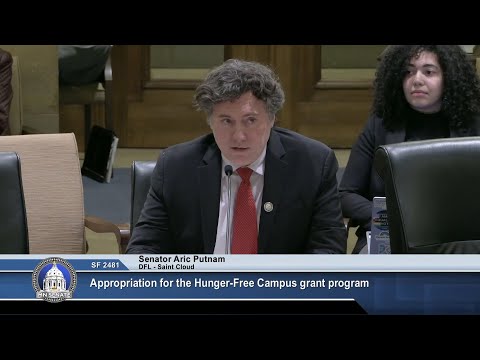
Senator Richard Putnam (sponsor) said the program will help address a physician shortage in Greater Minnesota and described the appropriation as “a 1 and a half million dollar appropriation to support this medical education,” aimed at making the new medical school’s graduates more likely to remain in rural Minnesota.
Shelly Prasad, associate vice president for rural health and professor of family medicine and community health at the University of Minnesota, described the recruitment and training strategy: recruit students from rural areas and train them in rural-focused residency sites, both of which are predictors of physicians later practicing in rural communities. “The second biggest predictor for doctors going to rural areas is training closer to home,” Prasad said.
Mike Blair, CentraCare chief financial officer, said the new medical school opened with seed funding from prior appropriations and philanthropy and that residency expansion will require sustained resources. Blair said CentraCare estimates a structural deficit as the program scales to its long-term target and described additional institutional investments and searches for federal or philanthropic support. He reported the system currently has 18 residency slots but projects a need to expand toward 72 slots over time to match anticipated graduating cohorts.
Committee members asked about scale and funding; advocates noted the committee previously provided $10 million to start the medical school and that additional targeted investments would support rural retention of physicians. After testimony the committee laid the bill over; no final passage vote was recorded in the transcript.