Get Full Government Meeting Transcripts, Videos, & Alerts Forever!
Get email alerts on the Taxpayer Assistance Vita topic
No spam. Unsubscribe anytime.
Committee lays over bill to fund VITA taxpayer‑assistance and tax‑credit outreach
Summary
House File 19‑32, which would fund taxpayer assistance (VITA) sites and tax‑credit outreach grants, was laid over after testimony from VITA providers about program impact and programmatic safeguards.
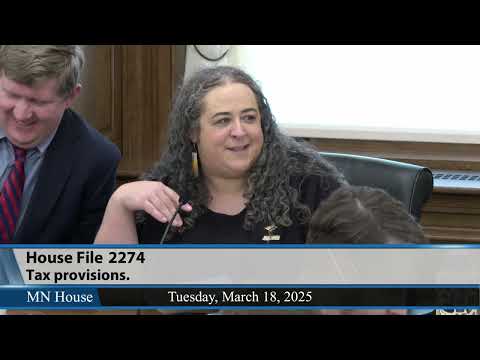
The Minnesota House Taxes Committee on March 18 laid over House File 19‑32, a bill that would fund taxpayer assistance grants for Volunteer Income Tax Assistance (VITA) sites and tax‑credit outreach grants administered by the Department of Revenue.
Nonpartisan staff described the measure as providing $1,000,000 a year for taxpayer assistance (VITA) grants and $1,000,000 a year for tax‑credit outreach. Supporters told the committee the funds stabilize local free‑tax preparation capacity and expand services to seniors, people with disabilities, limited‑English speakers and rural residents.
Dr. Alvin Akabar of Prepare and Prosper said, “Prepare and Prosper is the largest VITA provider in the state of Minnesota,” and described returning roughly $22 million to low‑income Minnesotans through tax filings; Willie Gregg, also of Prepare and Prosper, and Michelle Jensen of United Community Action Partnership described new sites, volunteer recruitment and the importance of outreach to ensure eligible households claim credits such as the working family credit and the K‑12 education credit.
Committee members raised concerns about past abuses tied to assignment features of the K‑12 education credit, where third parties that provided after‑school services received assignments and in some cases taxpayers reported problems. Joanna Barris, legislative director for the Department of Revenue, told the committee the Governor is proposing to repeal the assignment portion of the K‑12 credit: “The K‑12 credit will be the same, but we're just not allowing the assignment piece.”
Members and witnesses described the grants as competitively awarded. Department staff explained the grants are distributed through a request‑for‑proposal process, and committee members asked that statutory language be clarified to explicitly reflect competitive awards and to prevent a single direct appropriation to one provider. Representative Robbins urged adding statutory language to require a competitive process when appropriate.
The committee laid House File 19‑32 over for possible inclusion in the tax omnibus. Witnesses and members emphasized that the grants are intended to sustain and expand free tax‑preparation services that return critical refunds to low‑income households and help them claim state credits.
Ending: Funding decisions and any statutory language changes will be resolved in future committee and omnibus negotiations; staff said they will clarify grant language and continue to consult with the Department of Revenue on program administration.