Get Full Government Meeting Transcripts, Videos, & Alerts Forever!
Get email alerts on the Restorative Justice topic
No spam. Unsubscribe anytime.
Committee places bill on general register to protect statements made in restorative practice settings
Summary
House File 104, which would make statements in restorative-practice settings (such as circles) inadmissible in court—similar to alternative dispute-resolution privileges—was placed on the general register after testimony from prosecutors, restorative-practice practitioners and survivors.
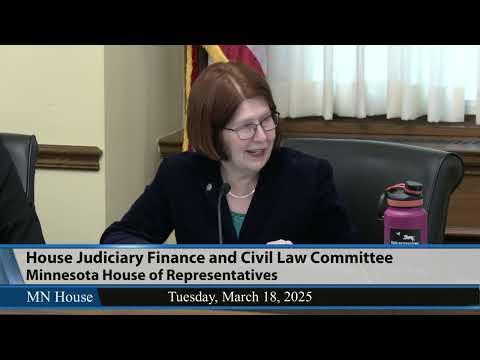
The Judiciary Finance and Civil Law Committee voted to place House File 104 on the general register after adopting DE3 and A1 amendments that refine mandated-reporter language and technical points. The bill would create a privilege making statements made in restorative-practice settings inadmissible in court, with exceptions to preserve public safety and allow sharing when necessary.
Sponsor Representative Feist told the committee the proposal is modeled on existing alternative-dispute-resolution confidentiality and is intended to give victims a legally safe space to participate in restorative practices without statements made there later being used against participants in unrelated proceedings. Feist and supporters emphasized the bill does not block prosecutors from using other evidence or holding offenders accountable through the criminal process; it only protects statements made within the restorative setting.
Amanda Seeling, a longtime restorative-practices practitioner and former prosecutor from Yellow Medicine County, described Circle and other restorative processes used in juvenile and other case types for decades in Minnesota. She and other witnesses said confidentiality is essential to restorative work because it allows storytelling, apology, and accountability in a forum victims often prefer and that can reduce recidivism. Sandra Weiss, a survivor, testified in favor, saying restorative options can be meaningful for some victims who do not pursue traditional reporting.
Representative Scott asked whether statements made in a restorative process could insulate an offender who had admitted criminal conduct; witnesses said the privilege would not prevent prosecutors from using evidence gathered outside the restorative process and that restorative agreements would not supersede criminal accountability.
After debate, proponents asked the committee to advance the bill; the committee placed House File 104 on the general register.