Get Full Government Meeting Transcripts, Videos, & Alerts Forever!
Get email alerts on the Public Records Requests topic
No spam. Unsubscribe anytime.
Hearing on school data requests bill laid over after lengthy testimony from districts and advocates
Summary
House File 1999, a proposal to allow school districts to recover costs when anonymous data requests are prepared but not inspected, was laid over after testimony from several superintendents, county recorders and transparency advocates who described trade-offs between transparency and resource burdens.
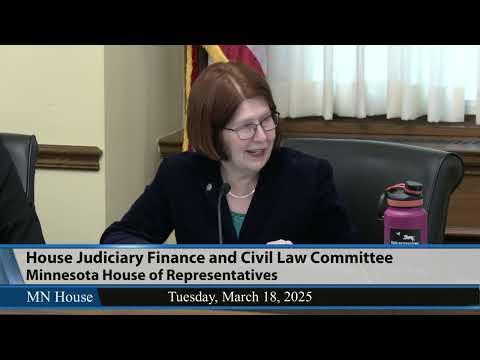
The Judiciary Finance and Civil Law Committee laid over House File 1999 after extended testimony from school officials, county recorders, and open-government advocates about the operational burden of broad or anonymous data requests on school districts.
Representative Greene, the sponsor, said the bill targets “non-serious” anonymous requests—instances in which districts prepare records for anonymous requesters who then do not appear to inspect them—and would allow districts to hold anonymous requesters responsible for costs when records prepared for inspection are not collected. Greene said the intent is to protect districts from repeated, costly anonymous requests that divert staff time from instruction and legitimate requests.
Owatonna Superintendent Jeff Elstad told the committee his district had received 12 anonymous requests in two years; he said nine were abandoned and cost the district in excess of $40,000 to prepare, with cumulative data-request-related staffing costs estimated at roughly $400,000 over four years. Rochester Public Schools Chief Administrative Officer John Carlson described examples including commercial data-mining requests and broad “phishing”–style requests that require staff across departments to search and redact records; he said one large request could have required $901,000 in staff time when including overtime and stipends.
Open-government speakers, including Don Gemberling of the Minnesota Coalition of Government Information and Rich Neumeister, urged caution about limiting the right to anonymous requests and encouraged training and better administrative practices; Gemberling emphasized anonymous requests can be important protections against retaliation. County recording officials raised concerns about retroactive privatization and implementation challenges for property and tax records in later bills and urged limiting scope to records posted online.
After questions and a short discussion, the committee laid the bill over for further work and stakeholder negotiation.