Get Full Government Meeting Transcripts, Videos, & Alerts Forever!
Get email alerts on the Tidelands Oil Revenue Transition topic
No spam. Unsubscribe anytime.
Long Beach council hears plan to smooth Tidelands oil revenue decline; staff warns of federal grant risk
Summary
City staff outlined strategies to address declining oil-related tidelands revenue, including state legislation, entertainment and real estate development, and use of one-time funds. Council members pushed for public contingency planning on possible federal grant losses.
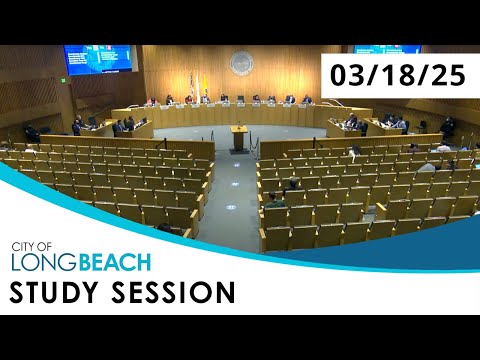
Long Beach city staff presented preliminary budget projections and long-term strategies on the city’s dependence on tidelands oil revenue, telling the City Council on an unspecified date that the city must prepare for declining oil receipts and possible federal funding losses.
Budget staff said the Tidelands Fund currently supports major public safety and lifeguard services and that the city is accounting for reduced oil support in its general-fund forecast: “In our forecast ... we are accounting for the reduced oil support, year over year,” Budget staff said. Council members pressed for clearer timelines and contingency plans.
The presentation and council discussion focused on several interlocking issues: the accelerated timetable for the state’s oil transition created by SB 1137, the city’s existing set-asides for oil-abandonment and subsidence liabilities, proposals to repurpose interest on those set-aside dollars, and strategies to grow non-oil revenues such as entertainment, convention and real-estate development.
Why it matters: Tidelands dollars currently fund large recurring expenses. Councilmember Duggan noted the scale of those charges, asking whether the forecast accounts for $20,000,000 annually to fire and $12,000,000 to police that are charged to the tidelands fund. Budget staff clarified that those are departmental charges to tidelands rather than transfers to the general fund and said the fund balance is projected to decline beginning in fiscal 2027, when structural reductions may be required if new revenue does not materialize.
State and legislative options: Mayor (name not specified) said the city is pursuing a two-part legislative strategy in Sacramento. The mayor described the first phase — already enacted — as increasing monthly deposits to the city’s abandonment fund from $2,000,000 to $5,000,000, raising annual contributions from roughly $24,000,000 to about $60,000,000. The mayor said the city is now seeking legislation to allow some of the interest earned on that fund to be used to “smooth out some of the impacts” of the accelerated transition to 2029 created by SB 1137. “That legislation … will help smooth out the impacts in tidelands, but it is not a slam dunk,” the mayor said.
City strategies and capital needs: Staff said the city expects some ongoing oil revenues from existing contracts and will prioritize using oil receipts for one-time capital rather than ongoing operations. Staff identified major capital needs including Naples seawalls, Belmont Pier and Queen Mary-related work. Staff also described development opportunities near Shoreline Drive, the Convention Center and Alamitos Bay as potential long-term revenue drivers if projects come to fruition.
One-time funds and credit rating: Council members repeatedly cautioned against relying on one-time funds for recurring costs. Budget staff and Kevin (finance staff) explained how rating agencies evaluate issuers, saying agencies look at structural budget balance, reserve levels and whether the city is investing in physical infrastructure. Kevin summarized: “They look at three different aspects ... are you spending in accord with ongoing revenue, do you have adequate reserves, and are you investing in the city’s physical health as well as fiscal health.” The council discussed using multi-year projections (three to five years) for capital programs like Elevate 28 to ensure intentional use of one-time revenue.
Federal grant risk: Councilmembers Sorrow and Kerr pressed staff on contingency planning for potential federal funding losses. Staff said current projections assume federal funding stays at present levels but acknowledged uncertainty and litigation affecting some federal programs. Staff noted that some city programs rely heavily on federal dollars — for example, the city’s housing choice vouchers program was described as approximately $80,000,000 annually — and said the council would have to decide whether to supplant federal losses with general-fund dollars or reduce services if federal funds disappear. Staff said departments have been surveyed about exposure to federal dollars and that the budget office will provide fact sheets to the council and public.
Health fund and equity review tool: Staff described the city’s health fund as a restricted fund historically supported by state grants and fees and increasingly by general-fund support to avoid negative balances. The council also asked about a new internal “budget equity and reconciliation” toolkit intended to align racial-equity plans across departments when reviewing proposals. Staff said the city will include details in the proposed budget book and will apply the toolkit to significant service changes.
Public comment and vote: No members of the public spoke on the item. The council voted to receive and file the presentation; the motion was carried (tally not recorded).
Notes on attribution: Quotations in this article are taken from the meeting transcript and identified by the speaker labels used in the record (Budget staff; Mayor; Councilmember Duggan; Councilmember Sorrow; Councilmember Kerr; Kevin). The transcript did not provide full personal names for city staff or the mayor; those speakers are identified here by their role as recorded in the meeting.