Get Full Government Meeting Transcripts, Videos, & Alerts Forever!
Get email alerts on the Transportation Project Planning topic
No spam. Unsubscribe anytime.
MPO official: draft state transportation plan defunds large sections of planned I‑26 widening
Summary
Tristan Winkler, director of the French Broad River MPO, told the Woodfin Town Council the Draft State Transportation Improvement Program (STIP) released in January proposes delaying or decommitting several regional projects — including large portions of the Future I‑26 widening — because costs have doubled since 2021.
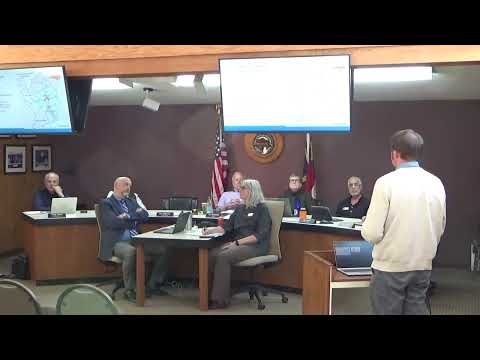
Tristan Winkler, director of the French Broad River Metropolitan Planning Organization, told the Woodfin Town Council on March 18 that the Draft State Transportation Improvement Program released in late January proposes delaying or decommitting many projects across the region, including large portions of the planned Future I‑26 widening.
Winkler, describing the MPO’s role as a regional forum for transportation decision-making, said the STIP must be “fiscally constrained,” meaning the state must show expected revenues to match planned expenditures. He told the council that rising construction estimates — especially for asphalt, labor and right‑of‑way acquisition — have forced the state to remove or delay projects to meet that requirement.
The draft STIP would decommit or delay four projects in Buncombe County and others across neighboring counties. Winkler said one of the projects of direct interest to Woodfin is the A10a segment of the Future I‑26 widening, from Broadway north to Weaver Boulevard, which was previously estimated at roughly $300 million and is now estimated at “considerably more than $600 million.” That doubling in cost is a primary reason the state is removing parts of the corridor from near‑term funding.
Winkler said some segments of the I‑26 work remain funded or have been re‑scoped so parts of the corridor can still move forward. He pointed to the New Stock Road interchange and nearby bridge work that are continuing, and he listed other segments now shown as unfunded in the draft STIP: the Broadway interchange (unfunded), the Elk Mountain Road interchange (estimated at $67 million, not funded), the Merrimon Avenue interchange (estimated at $122 million, not funded) and a Weaver Boulevard interchange (estimated at $42 million, not funded). He said those figures are draft estimates provided in the STIP materials.
Winkler urged the public to comment to NCDOT: public input on the draft STIP is open through April 4 on the NCDOT website, with a planned adoption by the North Carolina Board of Transportation in June and MPO consideration later in the summer. He noted that the MPO maintains a regional Transportation Improvement Program (TIP) that feeds federal funding eligibility, and that projects must appear in both the STIP and the TIP before federal funds can flow.
The director also highlighted that not all projects are decommitted: major sections of the I‑26 connector (sections B and D), including new bridges over the French Broad River and Riverside Drive improvements, remain in the plan and continue toward construction. Winkler said the I‑26 connector is now estimated at over $1 billion and is the largest project ever let by NCDOT, but that splitting the connector into sections has allowed some work — especially the new bridge work — to proceed while other segments await funding.
Winkler attributed the widespread schedule changes mainly to inflation and rising construction and right‑of‑way costs since 2021. He said his MPO staff worked with NCDOT to rank regional projects and that rankings, project cost increases and funding availability drove which projects remained committed.
Why it matters: Woodfin is directly affected by decisions on Future I‑26 and Riverside Drive because planned freeway and interchange work intersects the town’s greenway and multimodal planning. Decommitting or delaying large corridor components can postpone multimodal linkages and shape future local planning and funding decisions.
What’s next: public comments on the draft STIP are due to NCDOT by April 4; the North Carolina Board of Transportation is expected to consider adoption in June and the MPO board will consider the regional TIP in late summer. Winkler encouraged residents and local officials to submit comments through NCDOT’s portal and to monitor MPO notices for regional updates.