Get Full Government Meeting Transcripts, Videos, & Alerts Forever!
Get email alerts on the Special Education topic
No spam. Unsubscribe anytime.
Charter special‑education director and superintendents press for more resources for students with high‑acuity needs
Summary
Paramount Charter Schools and district superintendents described rising numbers of students with severe behavioral health needs and asked the subcommittee for policy tools — grant multipliers, navigators, and additional funding — to provide 1:1 supports, specialized transportation and outside placements.
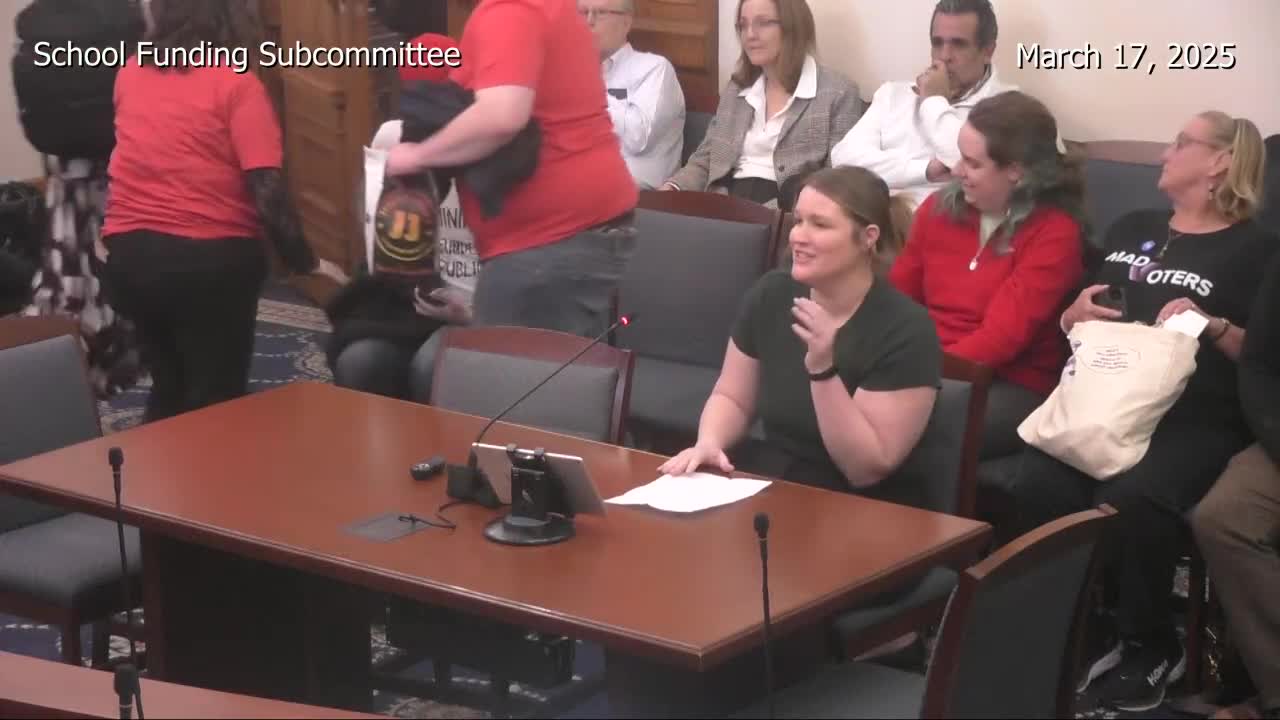
Stephanie Haines, director of special education for Paramount Charter Schools, told senators her network serves about 500 students with disabilities across eight campuses and that the schools are seeing an increase in students with “high acuity behaviors,” including severe emotional dysregulation, self‑harm and physical or verbal aggression. “These students require extra support or services through special education including communication devices, 1 on 1 support staff, outside contractors, specialized transportation, or even in some cases, outside placements,” Haines said.
Haines asked the subcommittee to consider updates to policy and resources — suggestions included grant multipliers for high‑need students, statewide navigators to help families navigate services, and access to ESA funds for parents of children enrolled in public schools. She also offered to serve as a resource while the committee examined options.
Superintendents and district leaders echoed the need for sustainable mental‑health and safety funding. Jake Allen, superintendent of Mooresville Schools, described a recent intervention that prevented a planned school shooting and said the episode “underscores an urgent reality. Schools need reliable funding for mental health resources and school security personnel to ensure student safety.” Todd Hitchcock, representing small and rural schools, noted rising operational costs and urged sustained increases in per‑pupil funding, plus separate curricular material reimbursements so districts can prioritize pay and services.
Why it matters: Districts and charter schools reported a rise in students who need intensive, expensive services. Witnesses asked the legislature to consider targeted funding tools and changes to how categorical funds are distributed so schools can provide early intervention and maintain safe learning environments.
The subcommittee asked follow‑up questions but did not make immediate budget decisions at the hearing.