Get Full Government Meeting Transcripts, Videos, & Alerts Forever!
Get email alerts on the Virtual Schools topic
No spam. Unsubscribe anytime.
Virtual‑school leader urges funding parity: ‘For every dollar…a virtual student receives about 85¢’
Summary
Indiana Connections Academy told the subcommittee virtual charter students receive less state funding per pupil than traditional public-school students and urged parity so the virtual option remains viable for 6,000+ students, many low‑income or receiving special education services.
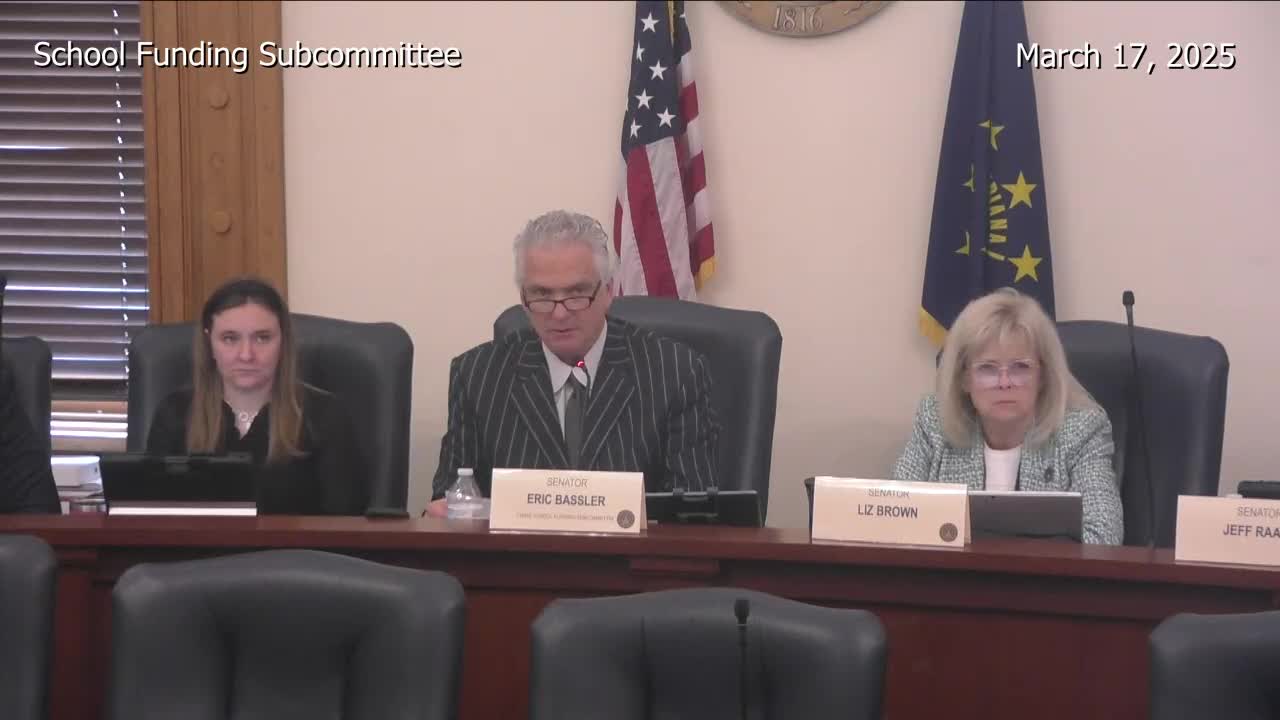
Kelly Simone, executive director of Indiana Connections Academy, told the School Funding Subcommittee that virtual charter students receive less state support than their brick‑and‑mortar peers and that the disparity threatens the viability of online public options that serve thousands of students.
Simone said: “For every dollar spent in support of traditional public schools, a student choosing a virtual school receives about 85¢.” She said her virtual schools serve more than 6,000 students statewide, including almost 20% who receive special education services and nearly 45% who qualify as economically disadvantaged.
Simone described the virtual‑school funding model as the schools’ only source of revenue and said state funds must cover teacher pay, technology, curriculum, testing and the costs of meeting new graduation and accountability requirements. “As virtual school leaders for more than 12 years, I can assure you that we use every dollar that we receive to provide necessary services to our students,” she told the committee.
Senators asked Simone about accountability and past fraud cases involving virtual programs. Simone responded that attendance tracking and state monitoring have improved and audits confirm compliance for her schools: “We adhere to all state requirements. We work hand in hand with the Department of Education … We have financial audits just the same as all other charter and public schools which we have full compliance and we pass with flying colors.” She also said virtual schools must spend a large share of tuition support on teacher compensation (the 62% figure in current law; she noted it may increase to 65%), leaving less for other school needs.
Why it matters: The House budget language includes a funding parity request for virtual schools. If virtual schools remain relatively underfunded, advocates said they will struggle to meet accountability, special education and graduation requirements while keeping technology, curriculum and teacher pay funded.
The hearing produced follow‑up questions from senators about comparative per‑pupil costs and operational differences between virtual and traditional public schools; Simone agreed to provide more detailed expense comparisons on request. No formal action was taken at the hearing.