Get Full Government Meeting Transcripts, Videos, & Alerts Forever!
Get email alerts on the Medical Licensure Compact topic
No spam. Unsubscribe anytime.
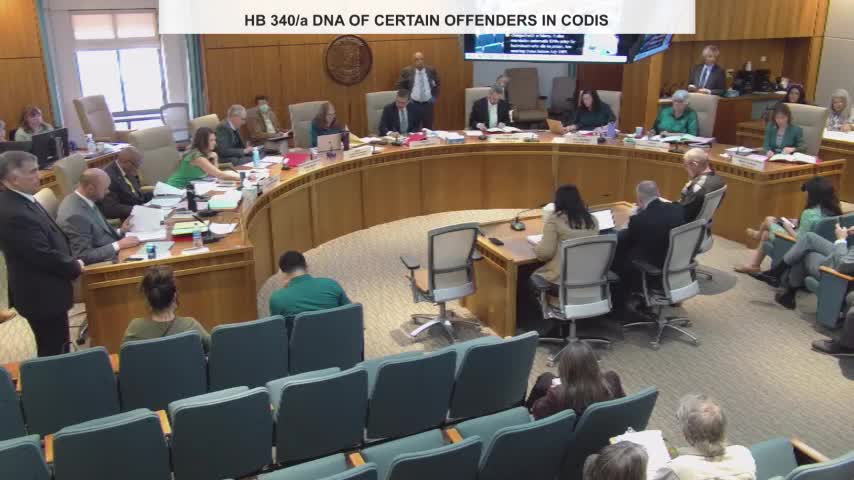
Committee debates medical licensure compact; rulemaking, immunity and withdrawal terms spark objections
Summary
Lawmakers and compact counsel debated proposed membership in the Interstate Medical Licensure Compact, with senators raising concerns about commission rulemaking authority, liability/immunity language, subpoena/enforcement provisions and the compact’s withdrawal and dispute-resolution terms.
Committee members engaged in detailed debate over whether the state should adopt the Interstate Medical Licensure Compact (House Bill 243), focusing on the compact’s delegated rulemaking authority, liability and immunity language, subpoena provisions and the commission’s dispute-resolution and withdrawal processes.
Representative Matthews, the bill sponsor, said the compact is intended “to have more doctors available for the citizens of our state” by expediting licensure through an interstate mechanism. Rick Masters, general counsel for the compact commission and a longtime practitioner in interstate-compact law, answered questions and described the compact as an interstate administrative instrument adopted by 43 states and territories.
Several senators raised multiple specific objections. Senator Duhigg proposed a long list of amendments to remove or alter compact language he characterized as incompatible with New Mexico law: he recommended striking the model’s purpose clause, removing references to a non-existent New Mexico “gross misdemeanor” category, deleting language that would give compact rules the force of state law, limiting or removing broad immunity provisions, narrowing the commission’s rulemaking/public-records language, and striking provisions that would require states to continue bearing costs or legal obligations after withdrawal.
Masters responded that compacts are contractual; states that materially deviate from the model statute can create enforcement problems with other member states and potentially leave the state out of the shared system. He said some suggested edits — such as timing or operational wording for withdrawal and coordination — are negotiable, but that wholesale deletion of rulemaking or immunity language could jeopardize the compact’s uniform operation across member states. He offered to work with the committee to find language that preserves state protections while keeping the compact operationally consistent with other states.
Committee members voiced several recurring concerns: - Rulemaking: Multiple senators said they were uncomfortable delegating rulemaking authority to a multistate commission whose rules could be treated as having the force of law in New Mexico. Masters said the compact uses administrative-rule processes analogous to state agencies and that ultra vires rules would be disallowed, but committee members asked that legal guardrails be tightened in statute if New Mexico joins. - Immunity and liability: Senators questioned broad immunity language in the model compact and whether it effectively shields commission staff and contractors from legal accountability. Masters said the commission’s intent is to align liability exposure with the member state’s limits so that members and commission staff are treated similarly to other state officials for civil-liability purposes. - Subpoena and enforcement authority: Some senators expressed concern that the compact’s cross-state subpoena language might allow subpoenas issued in one member state to be enforced in New Mexico without ordinary judicial oversight; the committee asked for language to limit cross-state subpoenas to joint, agreed investigations and for appropriate court oversight. - Withdrawal and effective-dates: Senators flagged provisions that would delay the legal effect of a state’s withdrawal from the compact (for instance, requiring a one-year wind-down) and questioned whether the compact could require a state to continue paying dues or fees after it has repealed membership by statute. Compact counsel said the timetable is meant to allow operational wind-down and protect licensees who depend on multistate arrangements, and offered to negotiate alternative timelines.
Other topics included the compact’s dispute-resolution and arbitration framework and the compact’s revenue and staffing model; compact counsel said the commission employs staff and collects fees, and offered to provide an annual report and budget for committee review.
Committee leadership and members said they were not ready to forward the compact and requested follow-up negotiation on the listed concerns. No final committee vote on the compact was recorded in the transcript; sponsors and compact counsel agreed to continue discussions and to circulate proposed fixes for review.