Get Full Government Meeting Transcripts, Videos, & Alerts Forever!
Get email alerts on the Consolidated Plan topic
No spam. Unsubscribe anytime.
Syracuse holds public hearing on draft five-year consolidated plan; service providers urge steady CDBG, HOME and ESG support
Summary
City of Syracuse Department of Neighborhood and Business Development opened a public comment period on its draft five‑year consolidated plan and the proposed one‑year action/budget; community organizations urged maintaining or increasing CDBG, HOME and ESG funding for housing stability, weatherization, legal services and workforce programs.
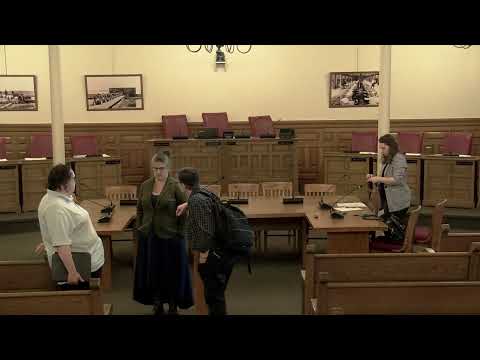
The City of Syracuse Department of Neighborhood and Business Development (NBD) held a public meeting to open the comment period on its draft five‑year consolidated plan and the proposed one‑year action plan and budget. The department said both documents are drafts and will be revised based on comments submitted during the public comment period, which the department said is open through April 2 at midnight; the department also announced an additional public comment opportunity on March 31 at 5:30 p.m. in the chambers.
Deputy Commissioner Michelle Zabanski described the consolidated plan as the city’s statement to the U.S. Department of Housing and Urban Development (HUD) of community funding priorities over the next five years and said the draft focuses on preserving the quality and safety of existing housing, promoting affordable homeownership, expanding affordable housing supply, preventing and addressing homelessness, improving neighborhood health (including remediation of vacant properties), building family wealth and improving neighborhood vibrancy. From the department’s draft annual budget, staff said six new programs are recommended for funding, including initiatives targeting weatherization barriers, workforce development, legal services and estate planning.
A series of local nonprofits and service providers spoke during the three‑minute public comments, describing demand for services and asking the city to maintain or increase funding for specific programs. Representatives from Interfaith Works, OnPoint for College, Home Headquarters, Peace Inc. (the Community Action Agency for Onondaga County), the Volunteer Lawyers Project (VLP), In My Father’s Kitchen, Syracuse Northeast Community Center (SNCC), Greater Syracuse Tenants Network and the Northside Economic Development Association (NEDA) emphasized housing stability, eviction prevention, job placement and remediation of hazardous housing conditions as priorities.
Interfaith Works (assistant director for settlement services, identified as Pye) said CDBG funding has been critical to prevent homelessness among newly arrived residents and urged additional allocation for refugee settlement services. OnPoint for College (Chrissy Rizzo, deputy executive director) thanked the city for support of career services that the group said helped about 200 students from targeted neighborhoods and assisted more than 90 students into employment or internships last year; OnPoint urged continued investment in career programming tied to housing stability.
Home Headquarters (speaker identified as Kerry/Carry Quaglia/Quigley) described locally run homeownership programs funded through the plan: a down‑payment and closing cost assistance program that, according to the speaker, has helped about 45–50 first‑time buyers a year over the past five years; housing counseling (about 400 counseled annually, per the speaker); the SHARP program (about 25 participants on average) and an urgent care/substantial rehab program (about 80 rehabs over five years). Peace Inc. (Carolyn Brown) explained that its weatherization program cannot proceed in homes with knob‑and‑tube wiring, asbestos or lead hazards and said the agency requested $159,971 to remediate such barriers but was awarded $65,000, which the speaker said will reduce the number of households they can serve. The speaker provided cost ranges for remediation work cited by the agency (rewiring and asbestos abatement) and said those costs are prohibitive for many homeowners.
The Volunteer Lawyers Project (Sal Curran, executive director) thanked NBD for an allocation to support estate‑planning services and eviction defense; Curran said estate planning and powers of attorney help preserve housing and prevent costly legal disputes, and that nearly 3,000 eviction cases were filed in Syracuse City court last year, underscoring demand for landlord‑tenant legal services. In My Father’s Kitchen (John Tomino, executive director/co‑founder) described outreach and shelter‑to‑housing work, reporting the organization exceeded its internal goals and saying staff had housed 50 individuals so far in the reported program year and engaged 273 unduplicated individuals on the streets to date; the speaker described continuing services to prevent recidivism for six months after placement.
Syracuse Northeast Community Center (speaker identified as Bridal/Brenda Fay) said SNCC serves more than 7,500 individuals and that CDBG funding helps leverage additional grants and supports workforce development, lead‑exposure education and other anti‑poverty initiatives. Sharon Sherman of the Greater Syracuse Tenants Network cautioned against launching new programs while existing providers face HUD funding cuts, and said tenant education and organizing remains a priority; Sherman advocated for targeted tenant assistance and partnerships (for example, help with online application processes). NEDA (Andrea Wandersi) thanked the city for continued support, noting CDBG funding serves as match for other state grants and enables neighborhood stabilization efforts on the North Side.
NBD staff reiterated how public comments will be used and closed the public hearing. The department noted it will review submitted comments and incorporate changes to the draft plans where appropriate before formal consideration by the Common Council at a later public hearing.