Get Full Government Meeting Transcripts, Videos, & Alerts Forever!
Get email alerts on the Mental Health Policy topic
No spam. Unsubscribe anytime.
House committee tables revision to civil-commitment definitions after extended public debate
Summary
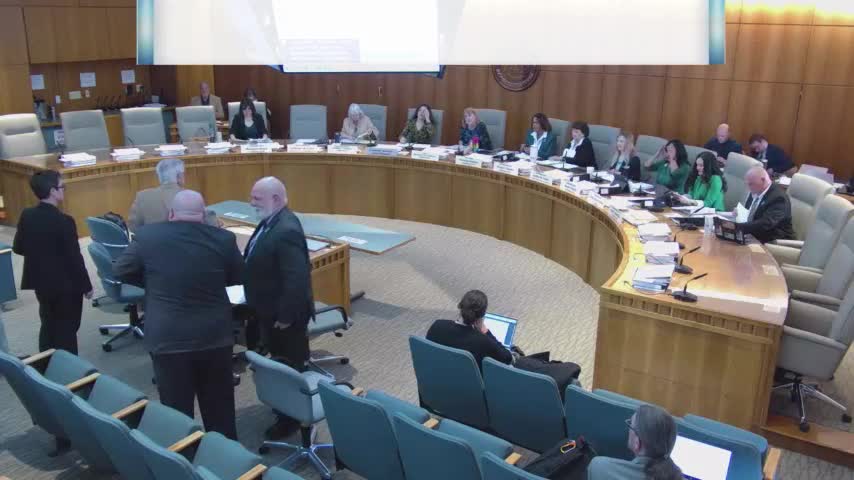
The House Health and Human Services Committee tabled Senate Bill 166 after extensive testimony about proposed changes to the legal definitions used for civil involuntary commitment and assisted outpatient treatment.
The House Health and Human Services Committee heard extended testimony on Senate Bill 166, which would revise statutory definitions used in civil involuntary commitment and assisted outpatient treatment laws to clarify when a person may be ordered into care for being a danger to themselves or others.
Sponsor remarks framed SB 166 as an update to long‑standing statutory language contained in the Mental Health and Developmental Disabilities Act and the Assisted Outpatient Treatment Act (43-1-1 and 43-1B-1). Supporters said the existing language is outdated and that clearer statutory definitions would help courts, law enforcement and families identify individuals who require intervention.
Proponents included several law‑enforcement officials, the Greater Albuquerque Chamber of Commerce and other public‑safety advocates. Police chiefs and chiefs of behavioral health programs described cases in which repeated outreach had not persuaded individuals in crisis to accept voluntary services; they said clearer definitions would allow earlier civil‑law interventions aimed at treatment rather than incarceration. Several speakers urged that courts apply the existing high legal standards (clear and convincing evidence, least‑restrictive means) and stressed that civil procedures, not criminal arrests, were the bill’s goal.
Opponents included disability advocates, homeless‑services organizations, the ACLU and community members who warned the bill’s language could sweep in people experiencing poverty, homelessness or chronic medical neglect and expand involuntary commitment without ensuring housing or voluntary services. Testimony cited risks shown in other states where broader civil‑commitment definitions were followed by increased inpatient census and urged lawmakers to prioritize voluntary housing, outpatient services, mobile crisis teams and peer supports instead.
Several witnesses and committee members repeatedly raised capacity and resource questions: whether state hospitals and community treatment providers have enough staff and beds; whether assisted‑outpatient treatment would succeed without substantial expansion of community services; and who would initiate petitions for civil commitment. Sponsors said the threshold legal standard and procedural protections in current law would not change and that the amendment’s language emphasizes “recent past” behavior and relevant indicators to support predictions about near‑future harm. The governor’s legal counsel described the draft language as consistent with several other states’ approaches and said it did not change the evidentiary standard required for civil involuntary treatment.
After extensive public comment and committee questioning, a substitute motion to table the bill prevailed by a 5–4 vote and SB 166 was tabled. Committee members who supported tabling said the measure required more time for deliberation and coordination with other behavioral‑health investments that were considered in the legislative session; members who opposed tabling said the state needs clearer statutory tools to protect people in acute crisis and expand treatment options.
Votes at a glance
- Substitute motion to table Senate Bill 166: Passed, tally 5 yes, 4 no — SB 166 tabled.
What’s next
The committee tabled SB 166 for further deliberation; sponsors and stakeholders indicated willingness to continue negotiations and to tie statutory language to ongoing investments in beds, community services and oversight.