Get Full Government Meeting Transcripts, Videos, & Alerts Forever!
Get email alerts on the Insurance Fair Plan topic
No spam. Unsubscribe anytime.
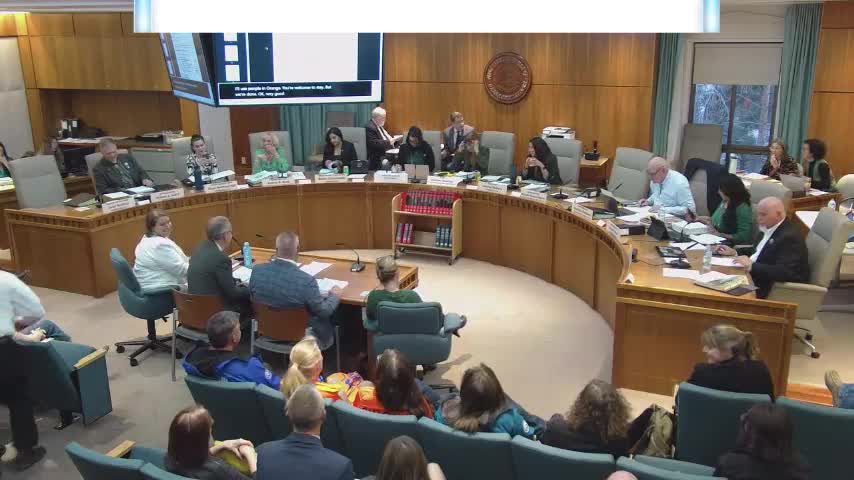
House panel debates overhaul of New MexicoFair Plan; adopts amendment on board makeup and then tables bill
Summary
Lawmakers and industry witnesses debated Senate Bill 81, which would restructure the New Mexico Fair Plan and raise coverage limits, before the committee adopted a floor amendment on board composition and ultimately tabled the amended measure 7-4.
The House Judiciary Committee on Thursday debated Senate Bill 81, a measure to restructure the New Mexico Property Insurance Program Association (commonly called the Fair Plan) and raise coverage limits for properties that cannot obtain private-market insurance. After extended testimony from sponsors, industry representatives and state actuarial staff, the committee adopted a substantive amendment to the bill's board-composition provisions and then voted to table the amended bill 7-4.
Supporters said the bill responds to a sharp rise in cancellations and nonrenewals and to wildfire-driven losses that have left many homeowners and businesses unable to secure traditional coverage. "This is a program created in 1969, which provides an alternative to homeowners and businesses," Senator Wirth said in committee. He told members New Mexico has seen "over 10,000 nonrenewals since 2021." The bill as discussed would raise residential coverage limits long set by the plan and add mitigation and underwriting requirements tied to IBHS standards.
The nut of the debate centered on two linked issues: how high to raise the Fair Plan's coverage limits and who should sit on the plan's governing board. Senator Wirth described a compromise passed on the Senate floor that increases board membership from nine to 11 and shifts appointment authority to include industry and consumer seats. As explained in committee, the compromise version described the board as including industry appointees and consumer representatives, plus the superintendent of insurance (or designee) and the state fire marshal (or designee). Wirth said the Senate amendment also gave board members the right to select their chair rather than having the superintendent automatically serve in that role.
Opponents representing the insurance industry and the existing Fair Plan urged changes or rejection of the bill as drafted. Brent Moore, a registered lobbyist for the American Property Casualty Insurance Association, told the committee the draft language was "unworkable" and would misstate how policies are sold and issued. Jason Espinosa of the National Association of Mutual Insurance Companies warned the expansion "will require a substantial increase in premiums" and cited testimony that an actuarial analysis "could lead to an initial rate increase of up to 40%." Several witnesses representing the Fair Plan and independent agents urged protections for the thousands of current Fair Plan policyholders.
State insurance officials and actuaries said the plan's rates need to be actuarially sound and acknowledged the potential for sizable increases. "The current policies that are currently on the Fair Plan, I estimate are 20% too low," Christian Myers, chief actuary at the Office of Superintendent of Insurance, told the committee. Superintendent Alice King described the Fair Plan as "an insurer of last resort" and said current underwriting and annual reviews are part of how policyholders are evaluated.
Witnesses also discussed mitigation costs and timing. Committee testimony estimated that homeowners who must "harden" houses to IBHS wildfire standards could face mitigation costs in the range of about $5,000 to $7,000; sponsors said timelines and underwriting procedures for mitigation would be set in the Fair Plan's procedures rather than in statute.
After hours of discussion, the committee adopted an amendment that reworked the bill language (the adopted amendment was described and put to a roll call; the chair announced the amendment was adopted). Later the committee voted 7-4 to table the amended bill. The roll call on the tabling motion yielded seven yes votes and four no votes; the chair announced that the bill had been tabled. The sponsors said they would continue to work on compromises and that some of the unresolved issues including the apparent drafting problem in a section about whether member insurers or the Fair Plan issue policiesneeded technical fixes.
Committee members pressed on several practical questions that remain unresolved: whether Fair Plan coverage is cash-value or replacement value (witnesses said Fair Plan pays actual cash value), how an applicant proves three prior insurer declinations to become eligible for the plan, how an expansion of coverage limits would interact with the Fair Plan's solvency and assessment mechanisms, and whether any state appropriation would be used to backstop the fund. Sponsors and witnesses said an earlier proposed appropriation of $50 million from the Senate finance process had been removed in later drafting, and that some grant programs were being considered elsewhere to help low-income homeowners pay mitigation costs.
The committee did not act further on the bill and tabled the amended measure for future consideration. Sponsors said they plan to continue negotiations among industry, consumers, the Fair Plan board and the Office of Superintendent of Insurance before bringing the measure back to committee.