Get Full Government Meeting Transcripts, Videos, & Alerts Forever!
Get email alerts on the Fortified Roofs And Insurance topic
No spam. Unsubscribe anytime.
Fortified Gulf Coast urges clearer insurance discounts, updated inspection standards to boost fortified roofs
Summary
A grassroots group, Fortified Gulf Coast, urged the state to adopt clearer insurance benchmark discounts, expand certified fortified evaluations, and modernize wind-mitigation inspection tools to encourage more homeowners to install fortified roofs and reduce wind-related claims.
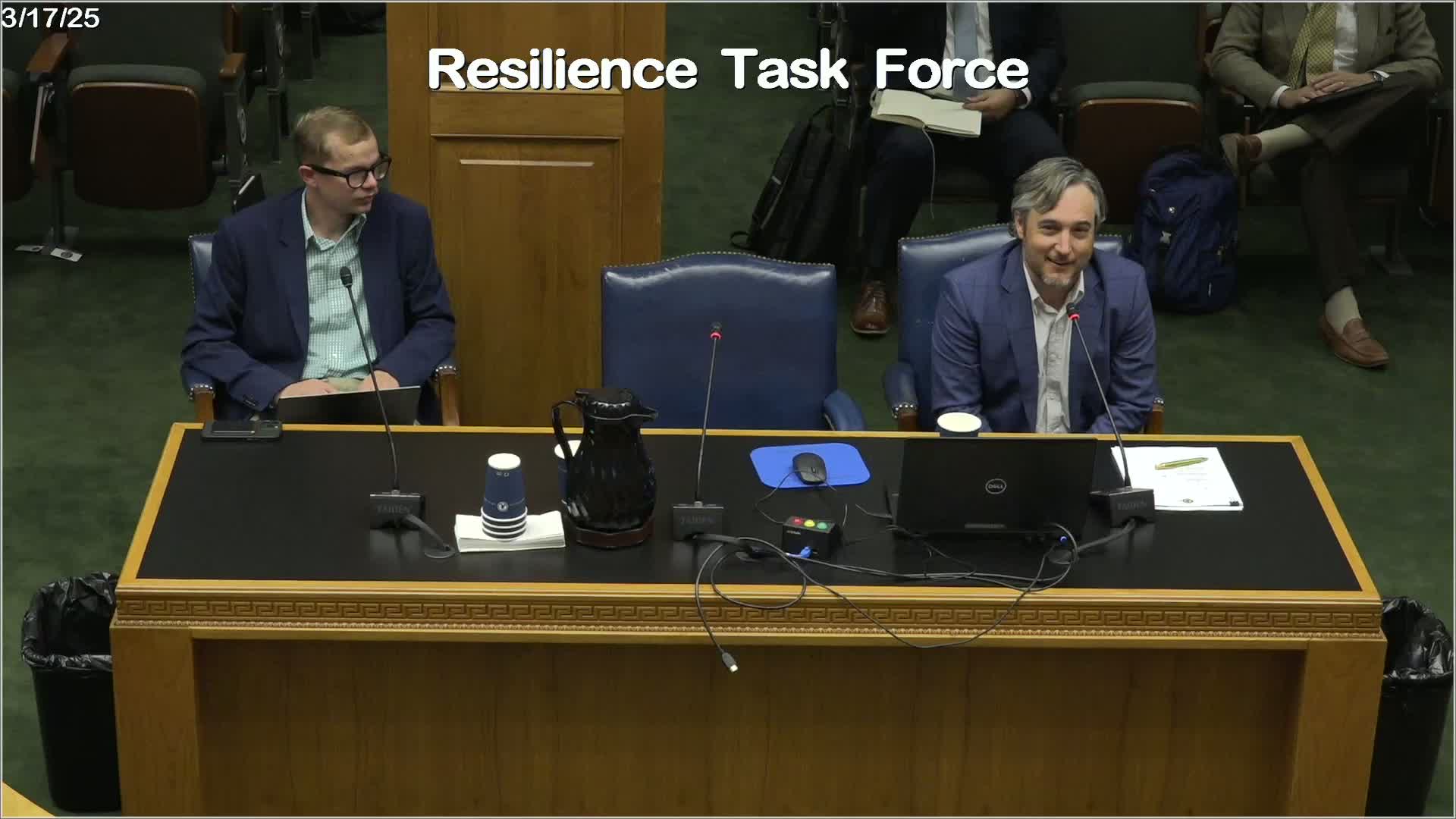
Remy Rishard (presented as Rami Rishard), co-founder of Fortified Gulf Coast, told the Resilience Task Force that high insurance costs are driving residents away from coastal Louisiana and that expanding fortified construction and consistent inspection standards could reduce claims and premiums.
Rishard outlined four main problems: limited code flexibility for coastal communities; inconsistent inspections at the parish level; an outdated wind-mitigation survey tool; and insufficient incentives for homeowners to install fortified measures. He recommended using IBHS (Insurance Institute for Business & Home Safety) fortified certification, expanding the pool of certified fortified evaluators, modernizing the wind-mitigation form and establishing transparent benchmarks or discount ranges so homeowners can estimate savings before paying for upgrades.
"The number 1 complaint... they don't know the discount," Rishard said, summarizing residents' reluctance to invest out-of-pocket in fortified measures without clear, predictable insurance savings. He pointed to Alabama's program as a model, saying Alabama has completed tens of thousands of fortified projects and cited IBHS's figures that fewer than 5% of fortified homes filed claims after a recent category-3 storm in that region.
Department of Insurance staff and task force members discussed benchmarks, practical discount ranges and agent education. The Department of Insurance said it was cautious about setting formal benchmarks because a public benchmark could reduce competition among insurers; it urged continuing dialogue about how to make discounts transparent and how to improve agent and consumer information.
No formal policy changes were adopted at the meeting; presenters and agencies agreed to follow up on data, agent outreach and possible pilot expansions of fortified programs.