Get Full Government Meeting Transcripts, Videos, & Alerts Forever!
Get email alerts on the Area Of City Impact topic
No spam. Unsubscribe anytime.
Bannock County, cities begin talks to redraw areas of city impact under new state law
Summary
County commissioners and city representatives opened negotiations on revising "areas of city impact," reviewing statutory criteria, notice requirements and timelines; county staff will meet individually with cities, county GIS support offered and a final public meeting is targeted for summer.
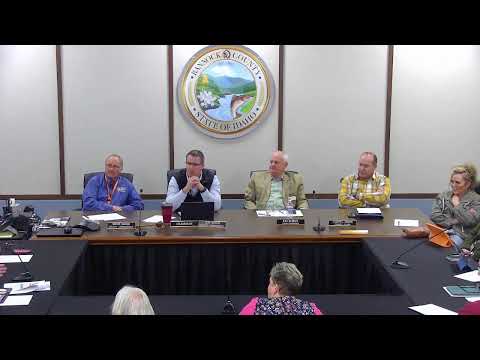
At a kickoff meeting in Bannock County, county commissioners and city officials began planning negotiations to modify local "areas of city impact" under recently updated state law. The meeting brought together county planning staff, county commissioners and representatives from several cities to discuss statutory criteria, notice procedures and a timeline for reaching agreements.
Commissioner Jeff Huff of the Bannock County Board of County Commissioners said the purpose was “to bring everybody up to speed and hopefully get us all kind of on the same page with the area of city impact,” and to set target dates for city-level meetings and a final public session. County staff members who will lead the process said they expect to meet individually with each city and to use the county's GIS to align proposed maps.
The group reviewed several statutory requirements county staff identified as central to the forthcoming negotiations: cities should be prepared to show defensible, evidence-backed plans for areas they expect to serve within five years; an area of city impact (ACI) generally should not extend more than two miles from existing city limits; and applicable county comprehensive plan, zoning and subdivision ordinances apply within an ACI. County staff emphasized that the Commission will adopt ACIs by resolution and that current ACIs will remain in place until new agreements are finalized.
Staff flagged several points needing clarification or legal interpretation. One concern is the notice process: the statute directs that the county provide written notice and refers separately to a city paying for notice, and the language is ambiguous about which specific notices a city must pay for. Staff also noted the statute references published notice under Idaho Code section 67-6509 and requires the Board to provide the city at least 15 days' advance written notice of county public hearings under the chapter. County staff said they will seek clarification on those provisions.
County staff told cities they should bring maps and any documentation showing planned sewer, water or other infrastructure expansions that support a five-year growth horizon. Staff said they will ask each city for “a general idea of what you think your ACI should look like and why” rather than a final boundary at the first meeting. The county intends to help smaller jurisdictions that lack planning resources.
Commissioner Ken Bullock urged cities to view the process as a way to coordinate infrastructure and avoid long-term patchwork development. “Weare not here to curtail any city's authority or anything else. It's actually to help your cities to not all of a sudden run into a hammer a few years down the road,” Bullock said, explaining that private wells and septic systems in county subdivisions can later make annexation and service extension impractical.
Participants discussed related county work including a pending comprehensive-plan adoption and an anticipated “mass rezone” of areas where county zoning no longer matches likely land use. Staff said those planning steps will proceed alongside ACI negotiations and that cities should expect follow-up conversations on appropriate county zoning at shared borders.
Next steps and deadlines: county planning staff (Tristan Borkwin and others) will contact each city to schedule one-on-one meetings, will prepare GIS-aligned maps and aim to hold a single, consolidated public meeting late this summer (staff suggested August as a target). Staff cautioned that if the parties do not reach an agreement by the statutory deadline in December, the county interprets that current ACIs could lapse; participants said reaching an agreement before year-end is therefore a priority.
Key details not specified in the meeting: which exact notifications a city must pay for; any dollar estimates for notification or meeting costs; and final dates for individual city meetings. County staff said they will seek legal clarification where statutory language conflicts or is ambiguous.