Get Full Government Meeting Transcripts, Videos, & Alerts Forever!
Get email alerts on the Advanced Learning Aig topic
No spam. Unsubscribe anytime.
Wake County reports ~30,500 AIG identifications, outlines 2025–28 AIG plan priorities
Summary
Wake County Schools staff told the Student Achievement Committee that about 30,500 students are identified for academically or intellectually gifted (AIG) services, outlined program standards grounded in Article 9B, and previewed a 2025–28 AIG plan focused on access, instruction and teacher certification.
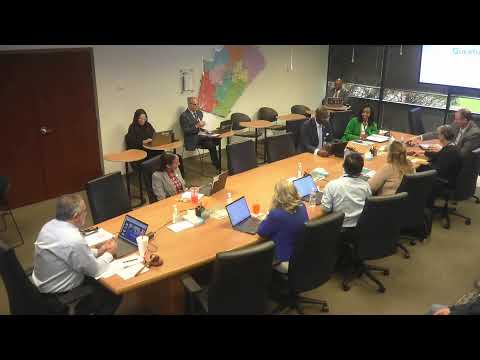
Dr. Stacy Wilson Norman, the district's chief academic officer, and advanced learning staff told the Student Achievement Committee on April 1 that roughly 30,500 Wake County students are identified as AIG (academically or intellectually gifted) and that the district is preparing a 2025–28 AIG plan that will prioritize access, academic advancement, and policy/practice alignment.
Drew Cook, an advanced learning staff member, said the current AIG identification count of about 30,500 represents roughly 19% of Wake County's student population — up from about 25,000–26,000 five to six years ago and higher than the statewide average of about 11%. Cook said roughly 91% of Wake County's AIG subgroup met the state's college-and-career readiness benchmark in 2024 (the higher benchmark used for that subgroup) and that the subgroup exceeded its growth benchmark in 2024 compared with like peers in the state.
Wake County staff framed the work in three “buckets”: policy and practices, academic advancement and access and opportunity. They reiterated that Article 9B of North Carolina law provides the state definition and program standards that guide district AIG plans and noted a three‑year cycle for submitting and revising the district plan. Lakisha (staff member) and other presenters described proposed plan highlights: expanding access (including single-subject acceleration), improved communication and screening (universal screening at second grade, portfolio routes and parent nominations), a newly supported cohort of Wake County teachers completing AIG certification in partnership with a local university, and planned listening sessions with community partners in April.
Board members pressed staff on identification, screening and funding. Miss Caulfield asked how parents can request screening; staff said parents may request school screening and that teams use universal screening, EOG/EOC data, portfolio review and local geospatial analyses to surface students who may have been missed. Board members asked about “twice-exceptional” students; staff said individualized service plans (ISPs) and IEP-like individualized supports are used and that the district can provide counts on twice-exceptional identifications on request.
On funding, staff said North Carolina caps state AIG funding to 4% of ADM for per-pupil AIG funding. Staff estimated a per-pupil state allocation of about $1,300 for AIG-funded pupils; with Wake County's AIG identification exceeding the 4% funded level, staff said local funds are used to staff additional AIG teachers and supports beyond the funded 4% identified cohort. Committee members requested a future breakdown of state versus local spending for AIG services and clarity on the district's identification criteria that will be documented in the coming AIG plan.
Staff said they will return with a redlined AIG plan showing proposed changes and will hold listening sessions in April to gather partner feedback before returning for board action.
"We are very excited to be able to share some of the work that we have going on in our advanced learning services department," Dr. Wilson Norman told the committee, and presenters emphasized that the plan will be returned to the board with opportunities for feedback.