Get Full Government Meeting Transcripts, Videos, & Alerts Forever!
Get email alerts on the Public Works Force Account topic
No spam. Unsubscribe anytime.
Madera Public Works cited for exceeding force-account limits; county officials warn of higher costs and delays
Summary
The California Uniform Construction Cost Accounting Commission found Madera County out of compliance for exceeding force-account limits on a 2020 paving overlay. Public Works says the county followed a long-held interpretation but will comply; CFAC called for proactive cost evaluations.
The California Uniform Construction Cost Accounting Commission reported that Madera County violated Public Contract Code section 22032(a) by exceeding force-account limits for a paving project, a finding county Public Works officials disclosed to the Board of Supervisors on March 18.
Dominic Tyburski, director of Madera County Public Works, told the board the issue centers on a 2.5-inch overlay on Road 36'1/2 near State Route 145 performed in June 2020. Tyburski said the department had believed the maintenance district in question was not bound by the California Uniform Construction Cost Accounting Act (CUCA), but later discovered the districts had been opted in by the board some 25 years earlier. "The challenge brought by CFAC was the use of county crews and equipment to place a 2 and a half inch overlay on Road 36 And A Half near State Route 145 that was performed in June of 2020," Tyburski said.
Raquel White, Central Regional Compliance Manager for the Construction Industry Force Account Council (CFAC), addressed the board during public comment. White said the county has been a CUCA member for 25 years and that "on 01/10/2025, the California Uniform Construction Cost Accounting Commission unanimously found the county violated public contract code section 22032a by exceeding the limit." CFAC urged the county to implement proactive cost evaluations before self-performing work and offered training and guidance to help the county comply.
Public Works and several board members described concrete operational effects of the finding. Tyburski said complying with the force-account limit will require contracting out some work that the county currently performs in-house. "Additional cost results for this action because as you know, there's profit margins that are built into all construction contracts, usually a minimum of 15%," he said, and added that contracting out work will require plans, specifications and inspection staff that the county currently does not always need to deploy for in-house overlays.
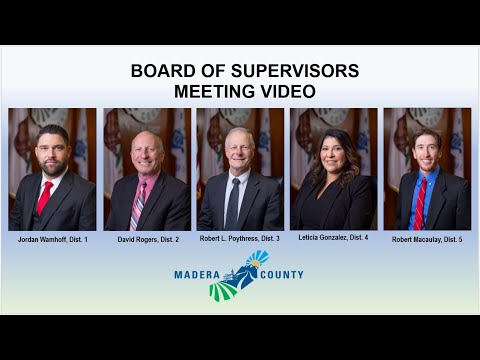
Board members expressed frustration at the finding and concern about the cost and schedule impacts. Supervisor Rob Rogers, who has experience as a private-sector contractor, said the result will likely be higher costs to taxpayers and slower project delivery. Several supervisors asked county counsel and staff about whether the county can opt out of CUCA for maintenance districts; staff said opting out is difficult under current law and that the commission's finding requires the county to notify its governing body within 60 days, a step that was completed by the department.
CFAC noted that the statutory force-account threshold was $60,000 at the time of the 2020 project and has since been raised to $75,000; the commission's finding reflected the applicable limit when the work was performed. County staff said they will follow the commission's direction and alter future contract practices to comply with Public Contract Code requirements. The item was presented as informational; the board did not take formal corrective action at the March 18 meeting, though supervisors indicated they would pursue state-level remedies and review policy options.
CFAC recommended the county perform cost evaluations before self-performing work to avoid future violations. County staff said they will coordinate with counsel and administrative staff to assess next steps, reconcile affected projects and bring back any items requiring board approval.
The transcript shows heated exchanges during public comment and follow-up discussion: CFAC criticized the county's noncompliance and urged training and better internal review, while at least one board member characterized the organizations that press such complaints as pursuing private-sector advantage. Public Works emphasized the operational need to deliver repairs promptly but acknowledged the need to follow the law going forward.