Get Full Government Meeting Transcripts, Videos, & Alerts Forever!
Get email alerts on the Budget Cip topic
No spam. Unsubscribe anytime.
Board hears FY26 capital improvement overview; tentative requests top $200 million amid budget shortfall
Summary
Pima County staff presented an updated Integrated Infrastructure Plan and tentative fiscal‑year 2026 capital improvement program. Departments requested just over $200 million for FY26 and about $900 million over five years; county leaders warned of an overall operating shortfall of roughly $20 million and discussed reserves and PAYGO options.
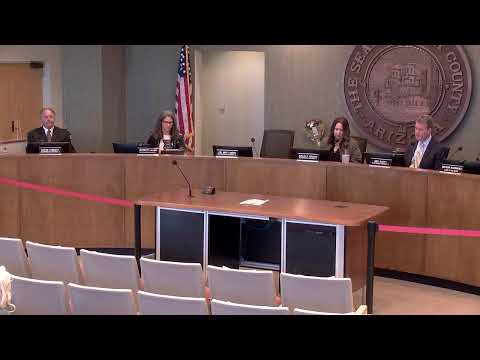
Pima County officials presented the Board of Supervisors on March 31 with the county’s updated Integrated Infrastructure Plan (IIP) and a tentative capital improvement program (CIP) that will be refined before final adoption in June.
What staff presented
Project Design and Construction director Rod Lane and finance staff described a live IIP that collects 10‑year needs across county departments and feeds a five‑year CIP and the one‑year budget that the board will consider. The county took a snapshot of projects and funding requests for FY26 that will be refined before the tentative budget is published in April.
Key figures and priorities
- FY26 tentative request: staff said departments requested a little more than $200 million for capital projects in FY26.
- Five‑year total: staff presented a five‑year CIP total of just north of $900 million.
- Major program drivers: wastewater capital needs were the largest single departmental component in the FY26 requests (staff cited roughly $63 million in wastewater requests). Facilities maintenance and court facility improvements, transportation and flood‑control projects were also among the largest line items.
- Funding snapshot for FY26: staff outlined major funding sources that would fund the tentative CIP, including department revenues (notably wastewater), grants, previously issued certificates of participation and flood‑control funding. Presentation slides listed example figures such as grants at about $29.2 million and certificates of participation at roughly $21 million; flood control funding appeared in the mid‑teens of millions for FY26 on staff slides.
Budgetary context
County Administrator Lesher told the board staff continues to reconcile capital requests with operating needs and revenues. She said the county faces an operating gap: if the board were to carry the FY25 base forward without change, staff estimate the county would be approximately $20 million short of fully funding the coming year’s operations (a working figure to be refined as staff continue budget work).
Reserves and PAYGO
Lesher and finance staff discussed the board reserve policy. She said reducing the general‑fund reserve from 17 percent to 15 percent would provide roughly $12.2 million of one‑time budget flexibility; staff said they were consulting bond counsel about any potential rating impact before recommending an adjustment. Staff also reviewed how PAYGO (pay‑as‑you‑go) programming is calculated and said the board can consider various PAYGO splits among priority categories as part of budget development.
Board direction and next steps
Supervisors requested additional detail: how CIP requests map to the board’s stated budget priority areas, which projects could be deferred to reduce near‑term spending, and more granularity on wastewater and sheriff’s program projections. Several supervisors requested department‑level briefings with staff to review items in detail.
Staff said they expect to produce a first draft of a balanced budget view and to provide follow‑up analyses (including reserve scenarios and PAYGO modeling) ahead of the board’s April meetings and the April release of the tentative budget documents.
Why it matters
The IIP and CIP provide the framework for multi‑year capital decisions — roads, wastewater, courts, flood control and facilities — that translate into contracts, operating impacts and future financing. With multiple large project requests and an operating gap noted by staff, the board must weigh capital priorities against current operating needs and reserves as it finalizes the FY26 budget in coming months.