Get Full Government Meeting Transcripts, Videos, & Alerts Forever!
Get email alerts on the Floodplain Management topic
No spam. Unsubscribe anytime.
Pima County adopts 2025 Floodplain Management Plan, sets action agenda for next five years
Summary
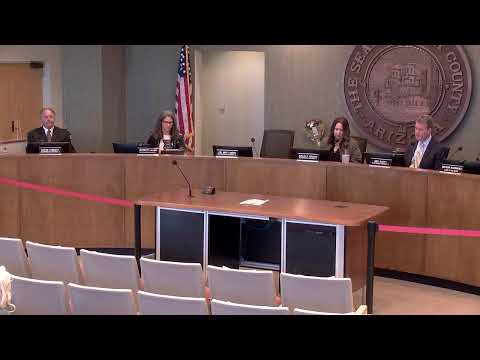
Pima County supervisors voted unanimously March 31 to approve a new county floodplain management plan intended to guide flood mitigation, outreach and stormwater planning for 2025–2030.
Pima County supervisors voted unanimously March 31 to approve a new county floodplain management plan intended to guide flood-risk reduction and stormwater planning for 2025–2030.
The plan — described to the board as a near-1,000-page document and an update of the county’s 2020 plan — compiles hazard assessments, outreach findings and a five‑year action plan that county staff and community stakeholders developed over the last year. The Board of Supervisors approved the plan 5–0.
County officials said the update is designed as a programmatic roadmap rather than immediate rulemaking. Greg Sachs, the county’s environmental planner, told the board the plan “follows FEMA’s guidance on the National Flood Insurance Program” and that it supports Pima County’s high Community Rating System standing; “Pima County is in the top 0.3 in The United States. So anyone buying flood insurance in the county gets a 40% discount,” he said.
Why it matters: the plan is intended to coordinate technical work, capital projects and outreach across jurisdictions and neighborhoods that face flood risk and to reduce long‑term costs for residents and insurance policyholders. It also seeks to direct future rulemaking and capital spending — both of which would require separate formal processes and public review.
Key elements and figures
- Scope and timing: The plan covers countywide floodplain issues for 2025–2030 and also serves as the county’s statutory report of activities over the prior five years, staff said. Sachs described the plan document as comprehensive and process‑oriented.
- Action plan: The draft includes roughly 61 programs and 108 discrete projects identified by the planning committee, county staff said. Projects range from capital improvements to neighborhood‑scale stormwater reuse and outreach programs.
- New goals emphasized by the planning committee include increased beneficial use of stormwater (regional recharge and urban green spaces), equitable access to flood‑mitigation services, and prioritizing neighborhood projects in vulnerable and underserved areas.
- Engagement and sources: County staff said the update was guided by an open planning committee established by board resolution in 2019, extensive stakeholder meetings and a mailed survey to more than 30,000 floodplain residents. The committee held multiple public meetings and coordinated input from neighborhood associations and advisory bodies.
What the plan does — and does not — do
- Not a rule change: Staff emphasized to the board that adoption of the plan itself is not rulemaking and is not a capital program. Any recommendations that require new rules or funding would follow the separate statutory rule‑making and budgeting processes, with additional outreach and board review.
- Implementation pipeline: Some items in the plan are already linked to capital projects tracked by the county. Staff said capital project proposals and changes would come through the county’s capital improvement programming process and be published for review before funding decisions.
Board reaction and follow‑up
Supervisors acknowledged the breadth of the effort and asked staff to continue outreach to organizations and neighborhoods not yet heard from. Supervisor Steve Christie asked that groups such as the Verde Valley Association be included in future outreach; staff said the plan will be treated as a living document and can be updated annually.
Director remarks and next steps
Director Shep and Sachs told the board the plan grew from five years of work and stakeholder engagement; adoption provides a common framework for the district’s projects and outreach through 2030. The board voted 5–0 to approve the plan and directed staff to continue stakeholder engagement and to return with related rule or capital proposals through the normal public processes.
Ending note
County staff said the floodplain plan will be published on the county website and that the department will take periodic “snapshots” of the plan as projects and priorities are updated. Staff also reiterated that any new standards or regulations that emerge from the plan will go through formal rulemaking and additional public input.