Get Full Government Meeting Transcripts, Videos, & Alerts Forever!
Get email alerts on the Parks And Recreation topic
No spam. Unsubscribe anytime.
Parks fund policy proposes $7.1M first‑year capital slate, prioritizes accessibility and engagement
Summary
Parks staff presented a parks fund policy and a proposed first‑year capital package on March 18 that emphasizes accessibility, community engagement, and accountability. The policy would govern a dedicated parks fund (4031) and staff proposed 14 initial projects totaling roughly $7.1 million plus an $800,000 contingency.
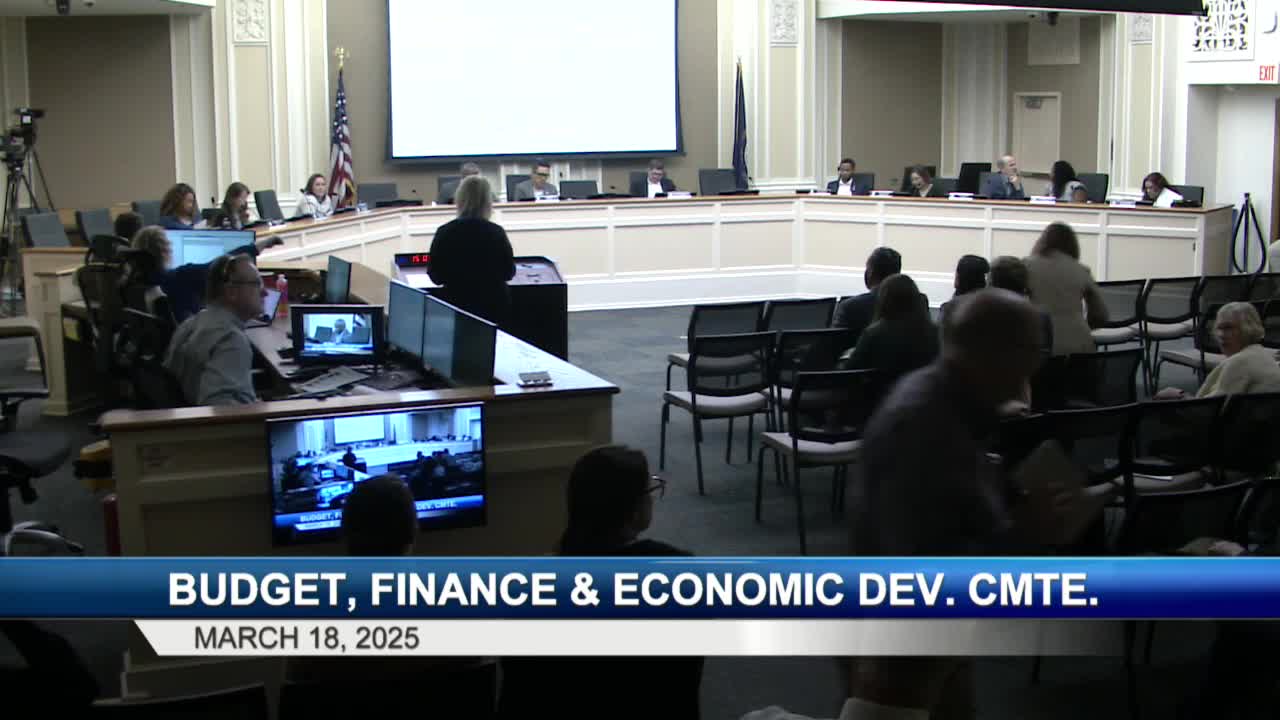
Lexington parks officials presented a parks fund policy and a proposed year‑one capital program to the Budget, Finance & Economic Development Committee on March 18, asking for committee feedback on governance, prioritization and public engagement.
Director Conrad told the committee the policy would create a dedicated funding source for park improvements and guide prioritization using the parks master plan, a social needs index and other data‑driven tools. “The policy is built on 3 core principles — accessibility, engagement, and accountability,” Conrad said.
Why it matters: the parks fund is intended to provide stable, accountable capital funding for park projects across the city; the committee will see the projects again as part of the annual budget process and the parks team said it will provide ongoing public reporting and project tracking.
Details of the policy and proposed Year 1 slate
- Fund and governance: Parks staff identified the parks fund (4031) and said the mayor, council and administration would retain approval authority; the fund’s projects would be presented through the normal budget process and require council approval for spending.
- Principles and eligibility: The policy emphasizes geographic equity and prioritizes projects that support accessibility (Americans with Disabilities Act standards), inclusive design, multigenerational uses and cultural sensitivity. Eligible investments focus on capital construction, repair and replacement.
- Ineligible uses: The presentation listed personnel costs, programming, operating expenses and land acquisition as ineligible for this dedicated parks fund; the parks acquisition fund remains the vehicle for land purchases.
- Public engagement and transparency: Parks staff outlined a community engagement matrix to match outreach intensity to project type, and proposed a parks‑fund website with an interactive map, project tracker, mockups and FAQs. Parks said it will produce an annual report and work with internal audit on oversight.
- Year‑one projects: The department proposed 14 projects at an initial cost of $7,100,000 with an $800,000 contingency. Staff said the slate was intentionally spread across districts and will be revised in future years as the master plan, community input and delivery timelines are refined.
Committee questions and implementation notes
Councilmembers pressed for detail on how projects were chosen and how engagement with seniors, youth and neighborhood groups will be ensured. Conrad and staff said project selection uses the master plan, life‑safety priorities and prior assessments, and that the parks team will use community centers, schools and door‑to‑door approaches where needed to reach underrepresented residents.
Councilmember Lynch asked about a $300,000 estimate to complete ADA restrooms at Winnie Young; Conrad said the department expects that allocation to make the restroom compliant. Councilmember Legree asked about integrating the city’s EngageLex platform; Conrad said parks is exploring integration for online participation tools.
Ending: Parks staff said the proposed project list will appear in the budget and that staff will refine public‑facing materials, timelines and engagement plans before construction funds are accessed (staff noted some projects require design and will not begin until funding becomes available in early 2026).