Get Full Government Meeting Transcripts, Videos, & Alerts Forever!
Get email alerts on the City Budget topic
No spam. Unsubscribe anytime.
Finance staff outlines inflation, fixed costs and a proposed stabilization fund
Summary
Midland’s budget manager presented a midyear overview citing fixed‑cost drivers, potential unfunded mandates (including a $5.5 million landfill emissions estimate) and a recommendation to develop a stabilization fund to smooth future rate or tax impacts.
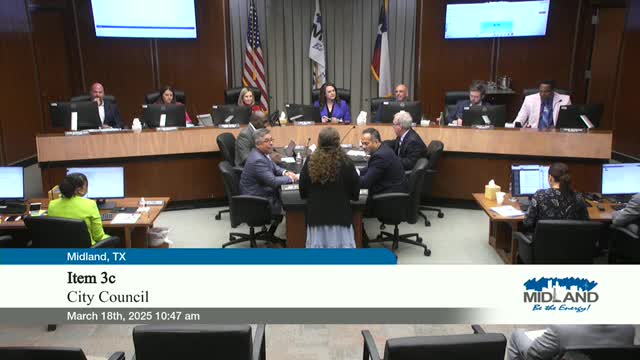
Alyssa Coppins, the city’s budget manager, presented a midyear budget update March 18 that framed current pressures and options for building reserves to smooth future tax or fee impacts.
Why it matters: Staff said inflation, growth and supply‑chain dynamics are increasing fixed operating costs across personnel, software, utilities and maintenance. The presentation tied budget planning to the council’s strategic goals and urged sustained forecasting and capital planning.
Key takeaways: Coppins and staff highlighted: - fixed cost drivers such as personnel, annual operating contracts, chemicals and utility charges; - sustained regional inflation effects despite recent national declines; - potential unfunded mandates, including a projected $5.5 million cost for a landfill gas‑flare system; - the city’s current use of oil and gas receipts in a parks maintenance fund as a limited stabilization approach; and - a recommended broader stabilization fund seeded by surplus revenue that would offset tax‑rate or fee increases and help pay for capital projects.
Enterprise funds: Coppins noted that water, sanitation, airport and golf are enterprise funds that should be self‑sustaining; she said the city has reviewed fees to ensure those funds can meet future capital needs.
Project timing and the “Midland factor”: Staff warned that local project timing can increase costs — called the “Midland factor” — because contractors and materials are in high local demand. Council discussed where projects should be cash‑funded versus bond‑funded and asked staff to continue refining the five‑year forecast and CIP as the city plans roads, parks and water projects.
Ending: Council thanked staff; members asked staff to return with detailed options for a stabilization fund and for continued monitoring of potential state changes to property‑tax authority.