Get Full Government Meeting Transcripts, Videos, & Alerts Forever!
Get email alerts on the Apprenticeship Programs topic
No spam. Unsubscribe anytime.
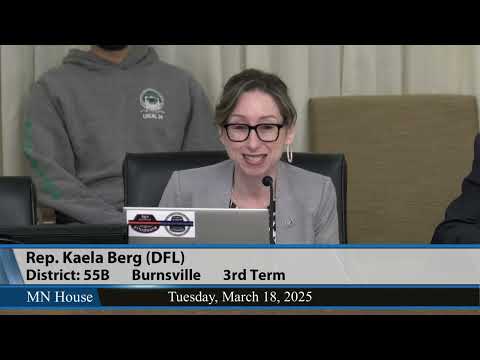
Rep. Berg presents House File 12 16 to fund apprenticeship readiness program; committee lays bill over
Summary
State Rep. Berg brought House File 12 16 to the committee to support Building Strong Communities, a statewide apprenticeship-readiness program. Testifiers — program staff and graduates — described expanded enrollment, training components and outcomes; the committee laid the measure over for possible inclusion in a future budget bill.
State Rep. Erin Berg introduced House File 12 16 on behalf of the bill’s sponsors to support Building Strong Communities, a statewide 12-week apprenticeship-readiness program that prepares people for careers in the building and construction trades. The committee heard testimony from program director Rick Martigan and three program participants, and then the chair laid the bill over for possible inclusion in a future budget bill.
Building Strong Communities (BSC) is designed to connect Minnesotans with registered apprenticeship programs, combining online and hands-on instruction and partner mentorship to prepare participants for entry into union apprenticeship pipelines, program leaders told the committee. "I'm pleased to present House File 12 16 to support an excellent apprenticeship readiness program called Building Strong Communities," Rep. Berg said at the start of the presentation.
Rick Martigan, who identified himself as a Navy veteran, a retired Local 1 tile layer and the executive director of Building Strong Communities, said the program delivers OSHA-10 safety training, foundational construction curriculum (including math), virtual classroom instruction delivered by North Hennepin Community College and hands-on trade training provided by the trades. Martigan said each participant receives an assigned program advocate during the program and for one year after placement to support retention.
Program data provided in testimony show enrollment rising from 43 participants in 2022 to 127 in 2025, a completion high of 105 graduates last year, and a three-year total of 134 people placed into construction careers. Martigan said graduates earn four college credits. Training locations cited in testimony included the Twin Cities, Rochester, Mankato, Duluth, the Iron Range and Greater Minnesota.
Three graduates testified about the program’s impact. Keelan Newman, a second-year heat-and-frost insulator apprentice and U.S. Army reservist, described seeking the program after struggling to find pathways into trades without family connections and said the class provided technical skills, emotional-quotient coaching and discipline that helped him secure work. "Rick was there to guide me. He gave me an opportunity," Newman said.
Dolisa Squires, a past graduate, said she had worked in health care for 20 years before entering the trades and credited the program — which she said was free to participants — with helping her secure housing and employment and with providing advocacy and connections. Natalie Pilring, a 2024 graduate and first-year Local 49 apprentice, said the program covered costs such as work boots and hotel expenses for training and helped her earn a placement with a union contractor. "The support didn't end when I graduated," Pilring said.
Members questioned how BSC fits with other workforce programs for veterans and women. Rep. Lisnicar noted the bill includes $100,000 a year for Construct Tomorrow, a youth outreach effort, and praised the statewide reach and the program’s higher share of women participants this year (testimony cited roughly 30% women and 70% men among participants). Committee members asked the sponsor and Martigan to follow up with additional details about how BSC overlaps or coordinates with other programs.
After testimony and questions, the chair "laid over House File 12 16 for possible inclusion in a future budget bill," according to the hearing record. No formal roll-call vote was recorded in the transcript.
The committee hearing included the bill presentation, three program testimonials, member questions about coordination with other workforce initiatives and a decision to table the measure for further budget consideration.