
Committee backs moving Market Bucks program from Humanities Center to Minnesota Department of Health
Get AI-powered insights, summaries, and transcripts
Sign Up Free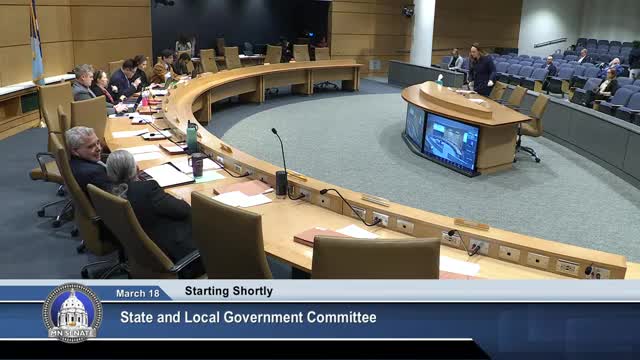
Summary
The State and Local Government Committee recommended passage of Senate File 1858 to transfer administration of the Market Bucks healthy-food incentive program from the Humanities Center to the Minnesota Department of Health (MDH).
Senate File 1858, which would move the Market Bucks healthy-food incentive program from the Minnesota Humanities Center to the Minnesota Department of Health, was recommended to pass by the State and Local Government Committee on a voice vote Tuesday.
The measure, sponsored in committee by Sen. Eric Mann, would relocate the Market Bucks program — which provides low-income Minnesotans extra purchasing power for fresh foods — to the Department of Health so the program can be expanded and paired with existing MDH work such as the Statewide Health Improvement Partnership (SHIP).
Leah Gardner of Hunger Solutions (now part of The Food Group) told the committee the bill builds “off of the long standing success of what’s more commonly known as the Market Bucks program” and that the organization has met with MDH officials who “are ready to take this on.” Gardner said the Humanities Center is supportive of the move. Senator Mann told members the change is intended to align Market Bucks with related public-health programs.
Committee members praised the program’s history and effectiveness. Senator Gustafson moved the committee recommendation; the chair announced the motion prevailed following a voice vote. The committee referred the bill to the Health and Human Services Committee.
The transcript does not record a roll-call tally for the recommendation; the committee recorded the action as a prevailing voice vote.
Votes at a glance: Senate File 1858 — recommended to pass; referred to Health and Human Services Committee; motion by Senator Gustafson; voice vote, counts not specified.
Background: Market Bucks supplements federal nutrition benefits by providing matching funds or incentives when low-income shoppers purchase fresh fruits and vegetables. The bill places program administration with MDH to leverage existing partnerships with grocers and public-health initiatives.