Get Full Government Meeting Transcripts, Videos, & Alerts Forever!
Get email alerts on the Agronomy Licensure topic
No spam. Unsubscribe anytime.
Committee hears split views on bill to let UPR‑Utuado graduates seek agronomist licensure with added science credits
Summary
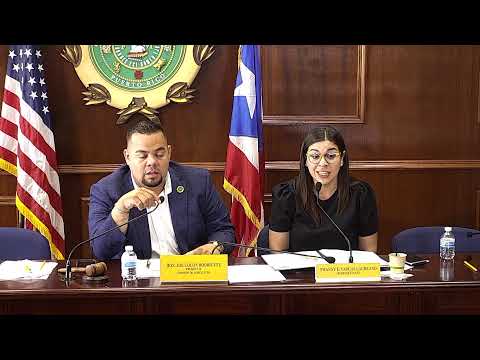
The House Agriculture Committee on March 18 considered PC 361, which would allow graduates holding a Bachelor of Arts in Sustainable Agriculture to pursue agronomist licensure if they add eight credits in biology and eight in chemistry.
The House of Representatives Committee on Agriculture on March 18 heard competing views on PC 361, a measure that would amend Article 5 of Law 20 (April 9, 1941, as amended) to add a path to agronomist licensure for graduates with a Bachelor of Arts in Sustainable Agriculture who also complete eight credits in biology and eight credits in chemistry.
Supporters said the change would expand access to professional pathways and help rebuild enrollment at the University of Puerto Rico at Utuado. Luis A. Tapia Maldonado, rector of the University of Puerto Rico at Utuado, told the committee that UPR‑Utuado "apoya firmemente el PE de la C tres sesenta y uno" and described the campus’ interdisciplinary bachelor’s program in sustainable agriculture and its existing academic offerings.
The Colegio de Agrónomos and the professional licensing board raised objections centered on scientific depth and standards. José Ruiz Hernández, president of the Colegio de Agrónomos de Puerto Rico, said the profession requires a “profundidad científica” that current bachelor of arts curricula may not provide and stated, "nos vemos en la obligación de no poder avalar el proyecto de la cámara tres sesenta y uno ante nuestra consideración." Jorge González Ortiz, a senior agronomist and former extension specialist, reiterated that agronomy licensure has historically required curricula with more advanced science coursework aligned to agricultural sciences.
Student testimony and committee discussion highlighted compromises reached within the UPR system. Student Sebastián Zegarra Maldonado said many undergraduates already are taking additional science courses; he told the panel the program enrolls about "aproximadamente cincuenta y cinco estudiantes" (the exact figure was not specified in the hearing). Rector Tapia noted the UPR Board (Junta Universitaria) had approved adding the sixteen credits and tasked the institution to submit the curriculum to the Junta de Instituciones Postsecundarias for evaluation.
Committee members pressed for technical detail. Representatives and agronomy leaders agreed that whether the proposed pathway meets licensing standards depends on the science courses’ content and level, not simply the credit count. José Ruiz and other agronomists urged the committee and UPR to specify which biology and chemistry courses would be required and at what academic level.
Outcome and next steps: The committee did not vote on PC 361. Members directed staff to summon additional parties for follow up, including representatives of the UPR Mayagüez campus, the Junta de Instituciones Postsecundarias, and the Junta Examinadora (licensing board), and to request curricular documentation. Representative José Colón Rodríguez (chair) said the committee will continue the review and “citaremos” those entities for further technical testimony. No formal action or amendment was taken during the hearing.
Ending: The panel closed testimony on PC 361 after extended questioning and agreed to reconvene the discussion when requested documentation and additional stakeholders are available.