Get Full Government Meeting Transcripts, Videos, & Alerts Forever!
Get email alerts on the Youth Sports Aed Training topic
No spam. Unsubscribe anytime.
Assembly committee approves bill requiring youth sports emergency plans, AED upkeep and coach training
Summary
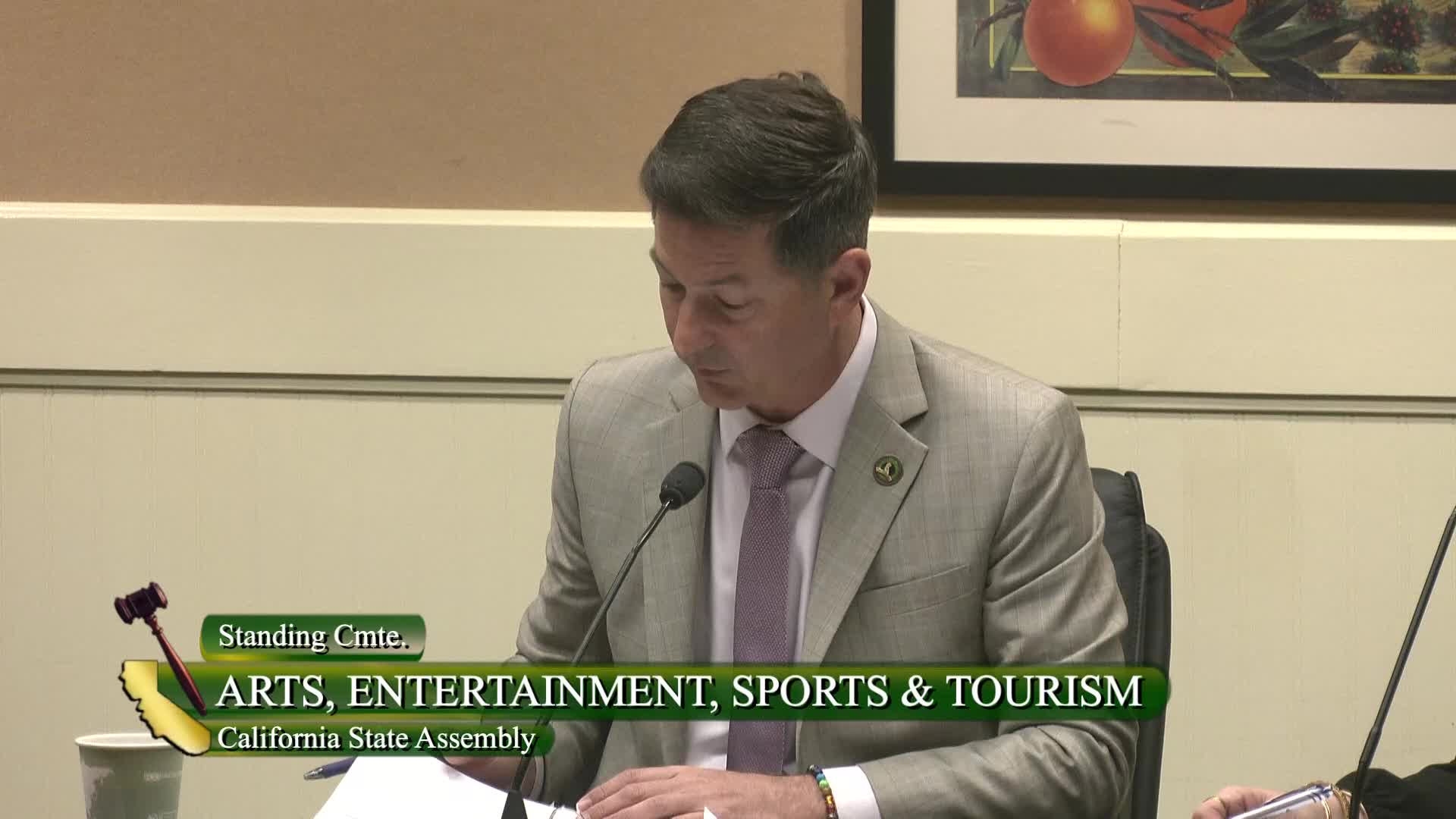
The Assembly Arts, Entertainment, Sports and Tourism Committee voted 9-0 to pass AB 310, which would require youth sports organizations to adopt written emergency response plans that identify AED locations, require AED testing and maintenance, and provide coach training opportunities.
A California State Assembly subcommittee advanced Assembly Bill 310 on a 9-0 vote after testimony from medical and youth-sports groups and volunteers about sudden cardiac arrest risks and the costs of compliance.
The bill would require youth sports organizations to adopt a written emergency response plan that lists the location of automated external defibrillators (AEDs), sets procedures for responding to cardiac emergencies, requires regular testing and maintenance of AEDs, and requires that coaches be provided opportunities for training in AED use.
AB 310 was introduced during the March 18 hearing of the Assembly Arts, Entertainment, Sports and Tourism Committee. The author said the measure builds on last year’s California Neveah Youth Sports Safety Act (AB 1467), which required that organizations ensure access to an AED during practices and matches. The author said AB 310 “aims to establish a minimum level of training to use this life saving equipment, thus offering families a greater sense of safety and confidence in the programs that their children participate in.”
Greg Herner, on behalf of the Eric Paredes Save A Life Foundation, testified in support and described long-standing efforts by family-founded nonprofits to place AEDs and provide training. Herner said exposing young people to AEDs increases willingness to use them, and added, “These save lives.” Tim Madden, representing the California chapter of the American College of Cardiology, also voiced support, saying cardiologists “know this can and will save lives.”
Opponents — principally volunteer-run youth soccer organizations — said the original AED requirement in AB 1467 created unanticipated financial burdens. Jazzy Goring, representing Cal North Youth Soccer, said the organization supports the safety aims but estimated the cumulative cost to Cal North member organizations could exceed $15,000,000 and warned that many leagues are volunteer-run nonprofits that would have to raise dues to comply. Andrew Donnery, CEO of Elk Grove Soccer, testified that his organization estimates the cost to them at “over $250,000” and said recurring costs for training and device replacement must be considered.
Committee members pressed supporters and opponents on costs and potential funding pathways. Vice Chair Lackey and others noted lower-cost AED models and national discount programs mentioned in testimony, and committee members asked staff to continue working on grant and partnership options to reduce cost burdens on volunteer leagues. The author and witnesses indicated nonprofit grants and industry discount programs (for example, the NFL HeartSmart Coalition, cited in testimony) are being pursued to lower costs.
After discussion, the committee voted to move AB 310 out of committee on a 9-0 roll call. The motion was recorded as “do pass.” The committee and the bill’s author said they will continue to work with stakeholders on implementation details and funding support to help volunteer organizations comply without pricing families out of programs.
The committee hearing record includes written testimony submitted to the committee website and public comment delivered in the hearing room and by live stream.