School districts report billing delays for CYBHI fee schedule; districts warn of layoffs without bridge funding
Loading...
Summary
Local education agencies in early implementation cohorts told the Assembly subcommittee that technical and administrative obstacles, delayed guidance and late onboarding of the third‑party administrator have limited claims submission under the Children and Youth Behavioral Health Initiative fee schedule and put staff at financial risk.
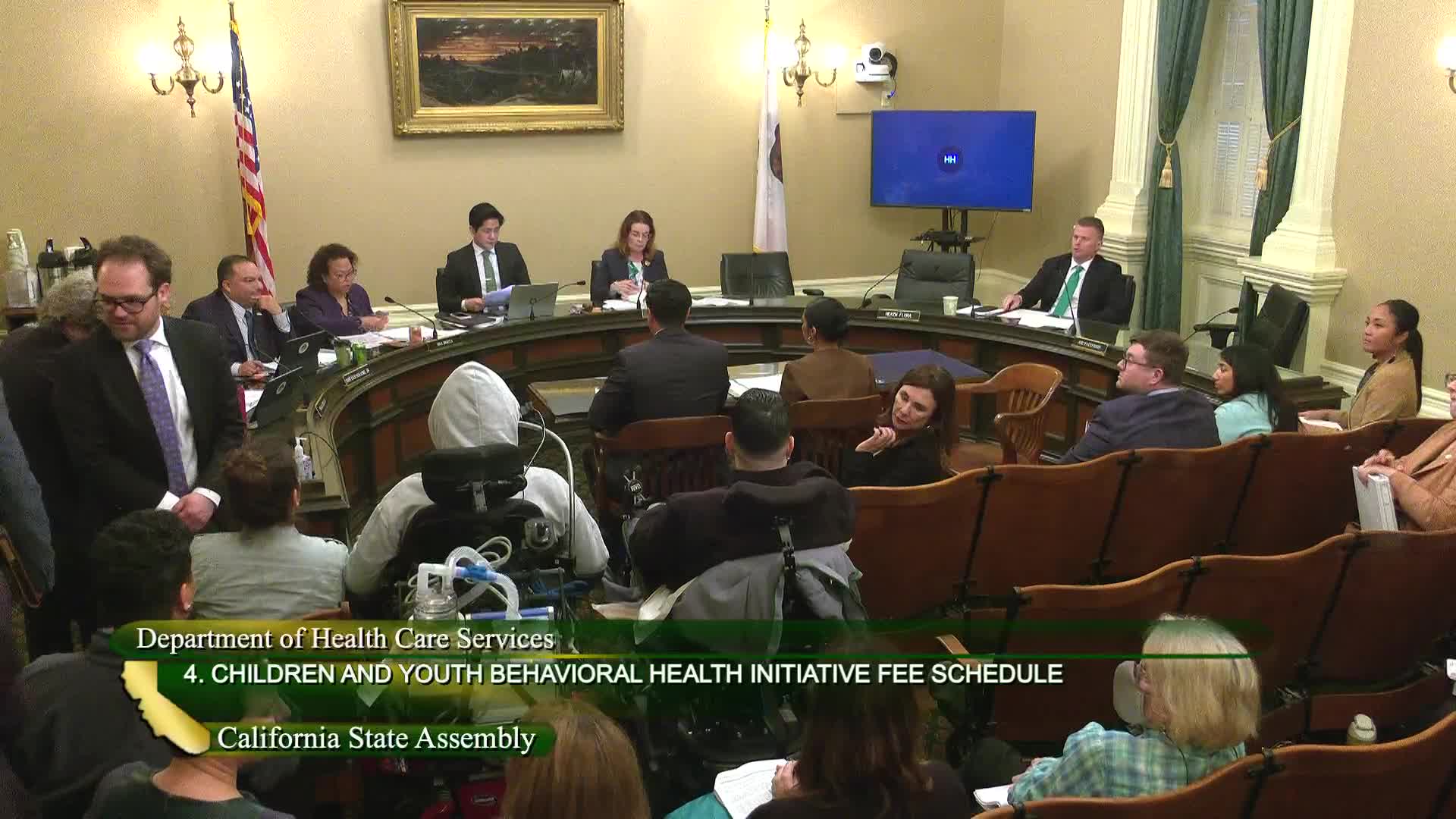
School and county education officials told the Assembly Subcommittee on Health that implementation delays for the Children and Youth Behavioral Health Initiative (CYBHI) fee schedule risk dismantling school‑based behavioral health capacity built with one‑time grants.
Tyler Sedwith, state Medicaid director at DHCS, outlined the fee schedule as a first‑of‑its‑kind reimbursement pathway for outpatient behavioral health services delivered at schools and school‑linked settings. DHCS awarded $400,000,000 in one‑time grants to local educational agencies (LEAs) as readiness funding and created four implementation cohorts. Carillon Behavioral Health serves as the program’s third‑party administrator (TPA).
But Fresno County Superintendent Trina Frazier and Los Angeles Unified School District Executive Director Joel Cisneros told the committee that the rollout has been slower than expected. Fresno said it applied to cohort 1 in October 2023 and submitted its first claim only on February 8, 2025, despite plans to claim earlier. Fresno reported hiring wellness coaches in October but said many coaches face layoff notices because wellness‑coach rates and billing pathways were not available. LAUSD said it expects to submit its first claim shortly after completing onboarding and stressed years of experience with LEA billing does not eliminate the administrative complexity of the CYBHI fee schedule.
Districts and county offices of education asked for clarity and suggested a short‑term bridge fund while DHCS and the TPA resolve operational issues and ramp claims processing. Several county offices reported that the enrollment and student insurance verification process — and both FERPA and HIPAA concerns when handling student health information — have delayed claims submission.
DHCS said it has provided one‑on‑one technical assistance, created peer learning opportunities among LEAs, and is revising program guidance; the department also said it would allow additional submission windows beyond the usual 180‑day claim period for cohort 1 participants that showed good‑faith efforts to onboard.
Why it matters: Schools often serve as the first access point for youth behavioral health; sustained reimbursement is considered essential to retain staff hired with one‑time grant dollars. Delays in billing and uncertainty about eligible provider types and rates threaten both service continuity for students and the financial viability of school‑based providers.
What was not decided: The Legislature did not adopt bridge funding at the hearing. DHCS committed to continuing technical assistance, expediting onboarding and coordinating with the TPA and plans to expand cohorts in 2025–26.
Ending: Members said they will monitor implementation closely and urged DHCS to prioritize timeliness so districts do not lose staff and students do not lose access to services they now receive at school.