Get Full Government Meeting Transcripts, Videos, & Alerts Forever!
Get email alerts on the Proposition 35 topic
No spam. Unsubscribe anytime.
Assembly members press DHCS to convene Prop 35 advisory panel as providers await rate increases
Summary
Providers and Assembly members urged DHCS to convene the Proposition 35 stakeholder advisory committee and begin implementing MCO‑tax financed rate increases, warning that delays could forfeit federal matching funds and worsen access in rural and specialty care.
Lawmakers and providers urged the Department of Health Care Services to convene the Proposition 35 stakeholder advisory committee and begin implementing the managed‑care‑organization (MCO) tax spending plan to speed provider rate increases and draw down federal matching dollars.
DHCS staff said the committee requires a six‑member quorum and that legislative appointees were recently completed; the department is preparing committee meeting materials and timelines. Jason Constantura of DOF and DHCS emphasized that the administration’s initial spending plan is reasonable but incomplete; the Legislative Analyst’s Office recommended early legislative oversight because federal rule changes could shrink future MCO tax capacity and because Proposition 35 changes how funds must be allocated beginning in 2027.
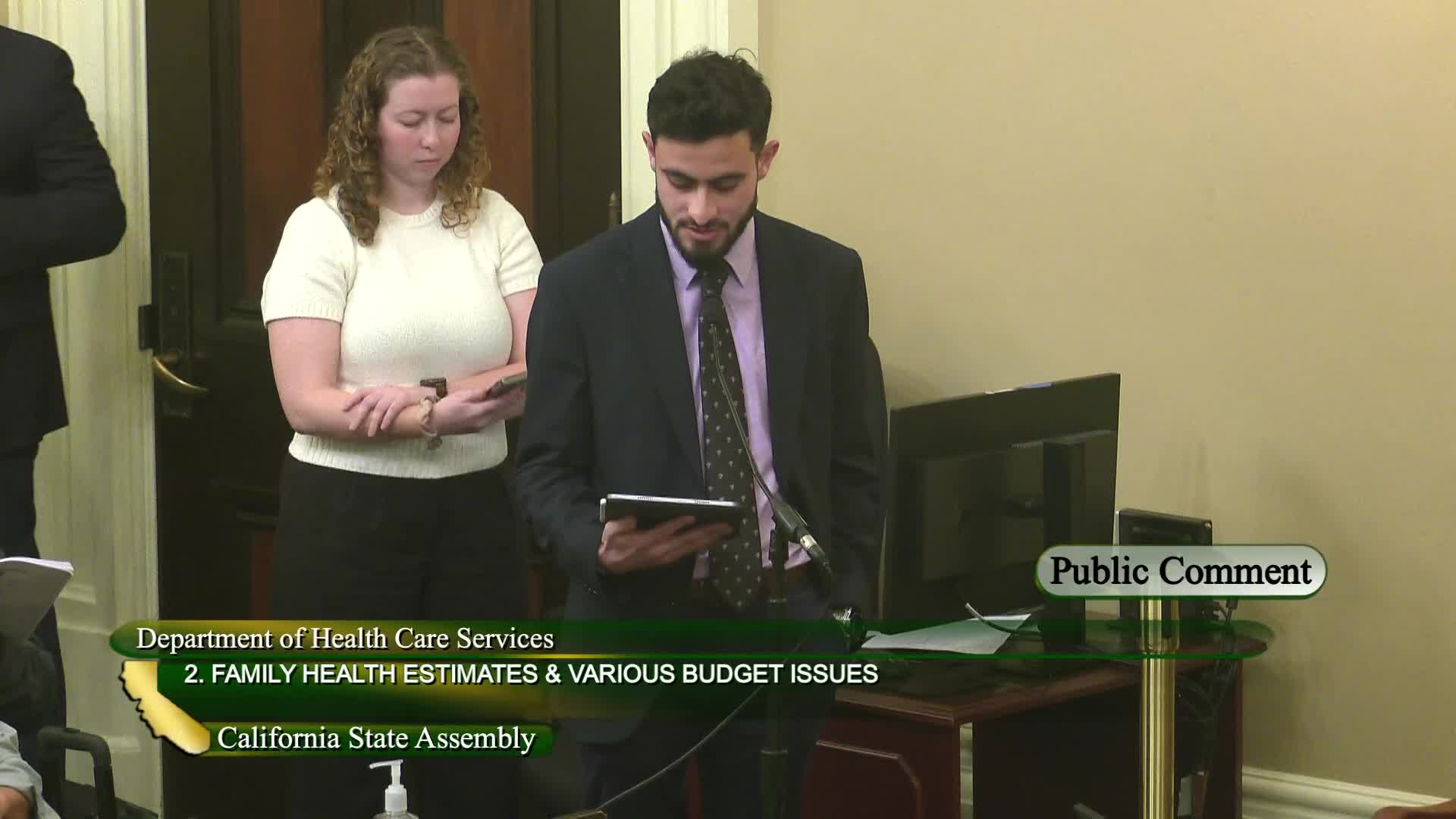
Providers urged speed. George Soares of the California Medical Association, Mark Farouk of the California Hospital Association and other provider groups told the subcommittee that delays could forfeit hundreds of millions in federal matching funds and leave clinicians and hospitals waiting years for rate increases that are already authorized in last year’s budget act. ‘‘Rate increases often take a long time to reach physicians,’’ the California Medical Association said in public comment, noting some plans had not implemented 2023–24 rate increases.
Rural and emergency services: Air ambulance operators and emergency medical air services requested interim (bridge) funding for 2025–26, warning of base closures without a short‑term payment pathway. Air ambulance witnesses said roughly 40% of their transports involve Medi‑Cal patients. Other providers — pediatric dental, audiology, prosthetics and hospitals — requested that particular buckets in the Prop 35 investment plan be implemented quickly and transparently.
Congregate living health facilities: Several speakers from congregate living health facilities (CLIFs) described losing expected rate increases and asked the Legislature to restore modest funding that was rendered inoperative by the passage of Proposition 35. CLIF owners and residents described the facilities as lower‑cost, community‑based alternatives to institutional care for people with catastrophic injuries.
Why it matters: Proposition 35 appropriated MCO tax revenues for provider investments and specified domains for investment; implementing the spending plan affects which providers receive immediate increases and how much general fund offset is available for Medi‑Cal operations. Federal rule changes and Proposition 35’s 2027 allocation rules could reduce future MCO tax flexibility, which could in turn raise general‑fund costs.
What was not decided: The subcommittee did not adopt formal instructions; DHCS said meetings will be scheduled quickly now that legislative appointments are complete and that specific payment methodologies will follow stakeholder consultation. The LAO urged the Legislature to consider questions about timing, distribution methods, and contingency planning for a possible smaller MCO tax in 2027.
Ending: Providers and patient advocates pressed legislators to ensure prompt, transparent action so that rate increases reach providers and that bridge funding addresses urgent access gaps while the Prop 35 implementation process proceeds.