Get Full Government Meeting Transcripts, Videos, & Alerts Forever!
Get email alerts on the Medi Cal Budget topic
No spam. Unsubscribe anytime.
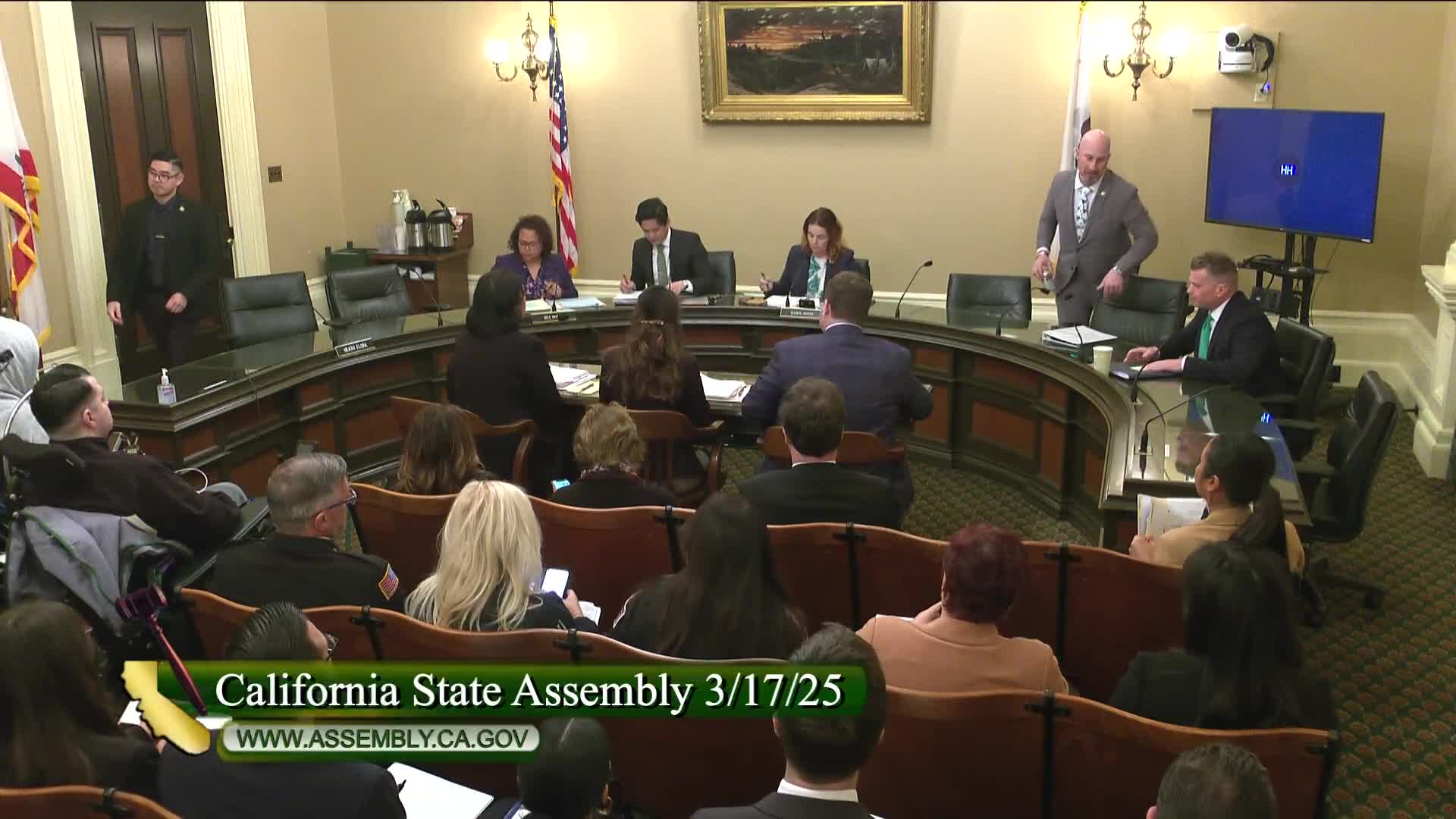
Assembly subcommittee hears DHCS request for loan as Medi‑Cal costs surge
Summary
The Assembly Subcommittee on Health heard Department of Health Care Services officials explain a newly activated March cash loan and a request for additional state borrowing to address higher‑than‑expected Medi‑Cal spending driven by enrollment, pharmacy costs and timing of revenue collections.
The Assembly Subcommittee No. 1 on Health heard administration and fiscal analysts describe steps taken to maintain Medi‑Cal cash flow as program costs exceeded earlier projections.
Department of Health Care Services Director Michelle Baass told the panel that “on March 4 the Department of Finance activated a $3,440,000,000 medical provider interim payment loan to the department” to manage medical cash flow and ensure providers and plans are paid on time. Baass added the administration will seek an additional $2,800,000,000 consistent with the governor’s projected current‑year shortfall identified in the governor’s budget.
The loan and supplemental request follow upward revisions in the November 2024 Medi‑Cal estimate. DHCS said the November estimate projected $174,600,000,000 in total Medi‑Cal spending and $37,600,000,000 in state general fund for the current year; the budget year estimate rose to $188,100,000,000 total funds and $42,100,000,000 general fund due to higher caseload and spending projections.
Why it matters: Medi‑Cal covers nearly 15,000,000 Californians, about one in three residents, including 3 in 7 children and around 40% of births. A change in federal matching rules, delays in federal revenue reconciliations and faster‑than‑expected enrollment growth could force the state to alter its budget plans unless the loan and other actions preserve payment capacity.
Drivers and timing: DHCS and fiscal staff attributed higher near‑term general‑fund needs to multiple, documented factors rather than a single cause. Baass and other witnesses pointed to: - Caseload increases tied to policy changes, including elimination of an asset test and expanded coverage to more adults, and continued effects of the post‑public‑health‑emergency “unwinding” redetermination process; DHCS said enrollment has remained near 15 million compared with a pre‑pandemic enrollment near 13.14 million. - Higher pharmacy spending, including increased use of GLP‑1 medications and lower‑than‑expected prior‑year rebate reconciliations. - The timing of revenue receipts such as managed‑care organization (MCO) tax collections and supplemental payments, which influence Medi‑Cal’s cash‑basis accounting and can produce large swings between fiscal years.
Ryan Miller of the Legislative Analyst’s Office urged caution in reading the numbers. “This is something that’s heard every year in the budget,” he said, adding the total is “the sum total of estimated spending for dozens of programs, hundreds of individual issues,” and that May revision numbers will be updated when more months of data are available.
Committee members pressed DHCS on when the state would have firmer numbers. Baass said work on the May revision will incorporate additional actual data through January 2025 and that more granular line‑item detail would be available at that time.
Public comment and stakeholder response: Dozens of community groups and providers testified during the hearing’s public comment periods, urging preservation of Medi‑Cal coverage and warning against cuts. Health Access California, immigrant‑advocacy groups and provider associations said expansions to eligibility had increased enrollment for reasons consistent with legislative intent and warned against politicizing the loan request.
What was not decided: The subcommittee did not take any formal vote. The loan enacted by the Department of Finance is an administrative cash‑management action; the administration announced it will seek legislative approval for additional borrowing identified in the governor’s budget process.
Next steps and context: DHCS and fiscal offices said May revision estimates will incorporate more complete data and that the administration will continue updating projections. Members said they expect to review more detailed line‑item drivers and may hold further hearings as May revision numbers are finalized.
Ending: Committee members and witnesses repeatedly stressed the fragility of timing on revenue recognition under cash‑basis accounting and the role of pharmacy costs and enrollment changes in near‑term pressure on the state general fund for Medi‑Cal. The subcommittee plans to revisit Medi‑Cal budget estimates after the May revision.