Get Full Government Meeting Transcripts, Videos, & Alerts Forever!
Get email alerts on the Business Certificate Of Use topic
No spam. Unsubscribe anytime.
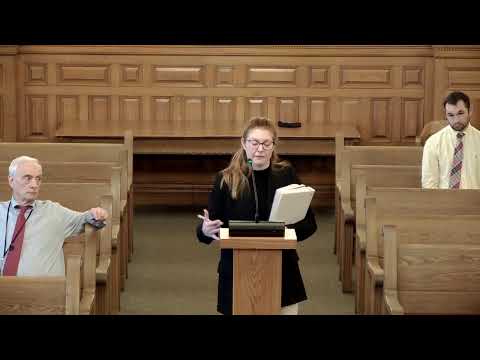
Syracuse councilors review changes to business certificate-of-use rules to tighten enforcement
Summary
Syracuse Common Council members spent their meeting reviewing proposed amendments to the Syracuse Property Conservation Code that would clarify and strengthen the city’s rules for business certificates of use (CFU), the license some bars, restaurants, corner stores and other commercial establishments must hold to operate.
Syracuse Common Council members spent their meeting reviewing proposed amendments to the Syracuse Property Conservation Code that would clarify and strengthen the city’s rules for business certificates of use (CFU), the license some bars, restaurants, corner stores and other commercial establishments must hold to operate.
City staff described the package as primarily administrative changes that would clarify definitions, require new owners to reapply, tighten inspection and application procedures, require building-owner signatures on applications and speed the city’s administrative hearing process for businesses operating without a certificate of use.
Jake, a Division of Code Enforcement staff member, said the changes are intended to make enforcement more uniform across the city while preserving due process. "CFU has been around a long time. It's recently, you know, become, you know, an enhancement tool that we've used against, bad operators, I'll say, you know, for things like suspension or closing them temporarily or even permanently in some cases," he said.
Why it matters: Councilors raised concerns about how the rules affect people trying to open or buy small businesses, especially those unfamiliar with city permitting or who face language barriers. Staff and counsel described a mix of enforcement tools the city uses — from administrative hearings to court petitions — and said the amendments aim to make those tools faster and more consistent.
What the draft amendment would do - Require a new certificate of use when ownership of a business changes, even if the business name remains the same. - Narrow and clarify definitions for terms such as "neighborhood market" or "food market" to distinguish small convenience/corner stores from full grocery stores; the change is intended to prevent businesses from avoiding zoning or licensing rules by mislabeling themselves. - Require the building owner to sign CFU applications so the city can hold property owners accountable when unlawful activity occurs on their premises. - Eliminate the conditional certificate-of-use provision from the code text because staff said it was rarely used; instead, staff would consider issuing administrative guidance for transitional cases. - Streamline the administrative hearing process for businesses operating without a CFU by automatically scheduling hearings and shortening the city’s internal deadlines for hearing determinations and final orders. Corporation Counsel staff said the law department will attend those hearings to help the division reach decisions more quickly while preserving due-process rights.
Process and timelines Staff described the typical sequence for a new or changing business: land‑use approval (zoning), building permits for any construction or code-required safety systems, and finally operating licenses including the CFU, tobacco or liquor licenses and any entertainment permits. Jake said the CFU is "really the last part of that," and that CFUs are valid for two years and must be renewed.
Staff said the licensing coordinator in the central permit office is the initial point of contact for applicants. Under ordinary circumstances, staff estimated departmental review and an initial scheduling letter for inspection can occur within a couple of weeks, but complex cases that require zoning approvals or special use permits can extend the process to several months.
Fees, background checks and enforcement The draft does not change the CFU fee; staff said the fee has long been $500 and is nonrefundable. Heather Davis, an attorney in the Corporation Counsel's office, said the division has discretion not to require applicants to repay the fee if they were denied for reasons such as zoning and later cured the problem: "we aren't, if they are denied, asking them to necessarily repay the fee when they come back." (Heather Davis, Corporation Counsel.)
On background checks, staff described review criteria that include recent felonies and misdemeanors; Sergeant Romaine of the Syracuse Police Department was cited in discussion of that review. City staff said denials for criminal-history reasons are rare.
For enforcement, staff said the city has closed about 40 locations in roughly the last year and a half by using a mix of administrative and legal tools when businesses operated unlawfully. The code currently includes a civil penalty provision that staff estimated at about $100 per day, though they said they did not propose changing that amount in the current amendment.
Council concerns and staff commitments Councilors repeatedly urged clearer front‑door information for prospective business owners — for example, plain-language checklists at the permit desk, online guidance about likely costs (fees, architect, permit costs) and better outreach to immigrant and first‑time business owners. Staff agreed to prepare resources for the permit counter and the city website and to work with Business Development and the city’s public information office to circulate them. Staff also said they would consider whether a placard or posted notice on long‑vacant commercial properties could help prospective tenants understand permitting requirements before signing leases.
A few councilors asked that the code preserve some form of conditional licensing for time‑limited transitional situations; staff said they removed the conditional certificate language from the ordinance text because it was rarely used but that they could develop administrative guidance to address straightforward transitional cases where neither enforcement nor immediate closure was appropriate.
At the meeting’s close, a motion to adjourn was offered and seconded; no roll‑call vote on the proposed CFU amendments was recorded in the transcript.
What’s next City staff and Corporation Counsel said they will refine the draft language and provide outreach materials and administrative guidance as needed. Councilors indicated they expect to return to the matter for further questions and formal action at a later meeting.