Get Full Government Meeting Transcripts, Videos, & Alerts Forever!
Get email alerts on the Enrollment And Redistricting topic
No spam. Unsubscribe anytime.
Stoughton committee reviews street‑level student data and enrollment projections as new‑school vote approaches
Summary
Stoughton Public Schools staff presented street‑level student counts and multi‑year enrollment projections to a school committee, with a resident asking about bus costs and the fate of Wilkins School. Committee members requested more granular maps and registration figures ahead of an upcoming vote.
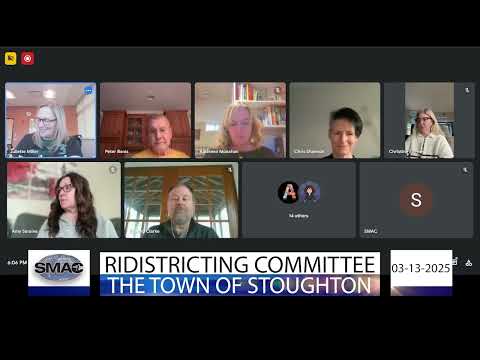
Stoughton Public Schools staff presented street‑level student counts and multi‑year enrollment projections to a school committee during a virtual meeting, and a resident raised questions about bus costs and how administrative moves would affect Wilkins School.
The data package included a South School district list showing student counts by street and a longer projection dataset the presenter described as showing district growth. The presenter said the district currently shows 3,771 pupils in school year 24/25 and that projections indicate about “a little under 300 more students” by 02/1934. Committee members asked for more granular mapping — for example, clusters of houses along long streets such as Sumner Street — and suggested converting addresses to longitude/latitude to create heat maps for redistricting analysis.
Resident Peter Vaness, during the public‑comment period, said the original vote on the project was “55% to 45%” and asked several operational and cost questions, including: “I have citizens that wanna know the cost of what the busing's gonna be.” The presenter responded that some of the resident’s questions were not on the committee agenda and could not be discussed during the meeting but offered to provide the meeting minutes to him: “I can certainly send to you the minutes.”
Committee members requested additional, specific data for future meetings. Requests included street‑level breakdowns for Jones School enrollment and its wait list, kindergarten registration counts (the presenter said registration and preschool registration are already open and that “there’s been probably a couple hundred already registered”), and whether outside demographic or development data from the town could be incorporated into projections. Several members recommended contracting or using third‑party tools to produce heat maps and cluster analyses; the presenter said staff would try to obtain the requested information and registration numbers for the next meeting.
The committee also reviewed a longitudinal dataset (referred to in the meeting as the Nasdaq/NESDAC data) that the presenter said highlights recent large growth years between 02/2022 and 02/2024 and projects continued growth through 02/1934. Members discussed whether the data accounts for local churn (students moving in and out) and asked staff to query the data provider on that point. A member noted that town planning or development permit data could improve location‑specific forecasts.
Separately, the committee recorded routine business: members moved to accept the minutes of the Feb. 13 meeting and completed a roll call; the chair said the approval was unanimous. The group scheduled its next meeting for April 10, which the presenter said would follow the upcoming public vote and likely provide clearer direction for next steps.
The discussion centered on preparing better, more granular analyses to inform possible redistricting and operational planning tied to the proposed new building; staff committed to returning with additional registration and street‑level breakdowns at the next meeting.