Get Full Government Meeting Transcripts, Videos, & Alerts Forever!
Get email alerts on the Public Safety topic
No spam. Unsubscribe anytime.
Committee approves 'Halo Act' to bar approaching first responders within 25 feet after warning
Summary
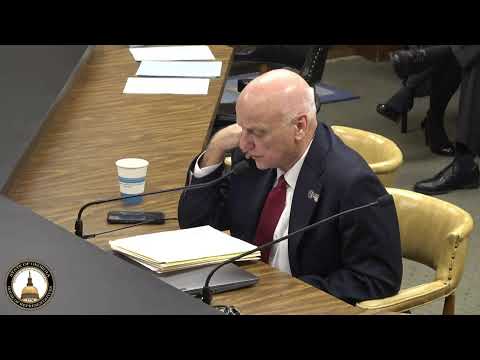
Representative Whit Robertson told the House Judiciary Committee that Senate Bill 268, known as the Halo Act, would make it a misdemeanor for a person who, after a verbal warning, knowingly approaches or remains within 25 feet of a first responder with the intent to impede, threaten or harass the responder.
Representative Whit Robertson, the bill’s sponsor, told the House Judiciary Committee during its hearing that Senate Bill 268 — commonly described in testimony as the “Halo Act” — would create a specific offense for interfering with a first responder at an incident scene.
"After receiving a verbal warning ... and approaches or remains within 25 feet of the first responder with the intent to impede or interfere with the first responder's ability to perform such duty, threaten the first responder with physical harm, or harass the first responder," Robertson said, describing language in the draft. Robertson characterized the offense as "a misdemeanor of high and aggravated nature."
The bill defines "first responders" to include law enforcement, fire suppression and rescue agencies, and other personnel who may be engaged in the lawful performance of duties, according to Robertson's presentation. He told the committee the 25-foot distance is grounded in studies of "reactionary zones" and is intended to give trained responders time to react to an assault or attack. "The standard number that they came up with was 25 feet," Robertson said, noting the figure comes from long-standing research.
Supporters said the measure targets "looky loos" and bystanders who, intent on recording or photographing a scene, impede responders and traffic flow. Robertson stressed the bill would not prohibit people from filming or from yelling unless their conduct actually interferes with the responder's duties. Representative Petish, who said a similar bill had been considered elsewhere, asked about differences; Robertson replied the bill expands the distance to reduce on-scene confusion and crowding.
Maisie Lynn Guertin, executive director of the Georgia Association of Criminal Defense Lawyers, testified in committee that Georgia already criminalizes obstruction of police, firefighters and EMS personnel and that those statutes cover many of the behaviors SB 268 targets. "We already have the crimes of obstruction of law enforcement officer, obstruction of a firefighter, obstruction of an EMS worker," Guertin said. She raised practical concerns about the bill’s requirement that a first responder give a verbal warning before the new offense could apply, saying that obligation could be "cumbersome" to implement at incident scenes.
After brief additional questions, the committee voted to pass SB 268. The record in the hearing shows the committee approved the bill by voice vote; no roll-call tally was provided in the transcript excerpt.
The measure will now move to the next legislative step assigned by the committee. Proponents framed the bill as a targeted tool to keep responders safe and maintain traffic flow at crash and emergency scenes; opponents urged caution and noted similar conduct is already unlawful under existing obstruction statutes.
Ending: Committee testimony and discussion centered on how to balance responder safety, public access to scenes and the practicalities of enforcement. The committee passed the bill and it will proceed through the legislative process with the language as amended in committee.