Get Full Government Meeting Transcripts, Videos, & Alerts Forever!
Get email alerts on the Transportation Mobility Parking Equity topic
No spam. Unsubscribe anytime.
Cambridge holds expert panel on cutting car use; discussion centers on parking price, employer benefits and equity
Summary
MIT researchers, transportation entrepreneur Robin Chase and city staff briefed the City Council committee on strategies to reduce car trips, change parking practices and address equity and accessibility concerns as Cambridge implements its net‑zero transportation goals.
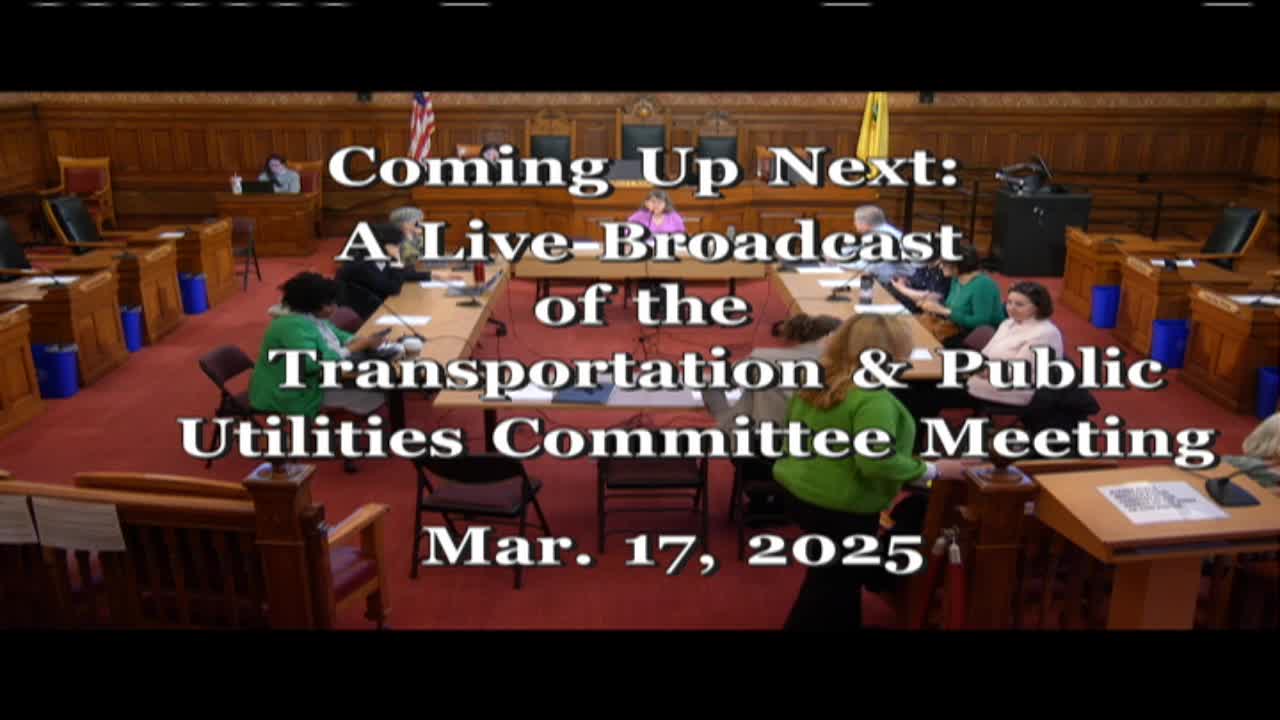
Cambridge’s Transportation and Public Utilities Committee convened a public hearing with three transportation experts and city staff to explore ways to reduce car use, manage curb space and protect vulnerable residents while pursuing the city’s net‑zero transportation aims. The session brought MIT researchers Joseph Ferreira and Jinhua Zhao and transportation entrepreneur Robin Chase together with city staff, council members and community commenters to discuss parking pricing, employer programs, micromobility and regional coordination.
The discussion matters because Cambridge has set aggressive climate goals and faces a high existing level of vehicle ownership: presenters cited the city’s roughly 51,000 households and about 42,000 vehicles as part of the context for planning. Committee members and staff said meeting the city’s greenhouse‑gas reduction targets will require shifting trips away from single‑occupant cars while ensuring people who genuinely need to drive are not left behind.
MIT researchers urged a package approach rather than single fixes. Professor Joseph Ferreira said “point‑to‑point travel and single‑occupancy vehicles is inefficient and unsustainable without addressing the congestion and climate change externalities,” and emphasized that changes to land use, curb management and pricing are all part of the solution. Ferreira and other presenters noted new information technologies and micromobility can help—but that land‑use trends and household commitments to vehicle ownership change slowly.
Professor Jinhua Zhao described MIT’s campus‑level reforms as a model for employers. MIT shifted from annual parking permits to daily paid parking (an $11 daily rate in one example), embedded free MBTA access in employee ID cards and negotiated a payment arrangement with the transit authority in which MIT pays the MBTA only for incremental rides above typical use. Zhao reported MIT’s measures reduced parking demand by about 15% and driving mode share by about five percentage points, and that avoided construction of expensive parking (presenter cited roughly $125,000 per space and an estimated 700 spaces saved) lowered development costs.
Robin Chase, co‑founder of Zipcar, pushed for measurable, time‑bound goals and a mode‑neutral approach to benefits. “We need to set measurable goals with a timetable,” she said, calling for targets such as increasing the share of car‑free households and cutting single‑occupant vehicle trips. Chase recommended unbundling parking fees from housing costs, stronger requirements for bike and stroller storage in new buildings, prioritized curb space for shared vehicles and pilots for employer mobility benefits that can be used for transit, bike leases or shared vehicles rather than fixed free parking.
City staff described existing tools and immediate constraints. Assistant Commissioner Groll (Transportation) clarified that the percentage figures in the city’s net‑zero plan presented earlier refer to estimated greenhouse‑gas reductions tied to specific actions—not direct mode‑share targets. Staff also noted the city enforces a 24‑hour movement requirement for visitor parking permits; street cleaning runs monthly April through December; and the parking and Transportation Demand Management (TDM) ordinance requires many properties—especially in Kendall Square—to provide commute programs and transit benefits.
Equity and accessibility were prominent in public comment and staff responses. Rachel Tenenhaus, identified earlier in the meeting as the city’s ADA coordinator and executive director of the Cambridge Commission for Persons with Disabilities, and other speakers stressed gaps in service for seniors, people with disabilities and home‑health aides. Commenters said some deliveries and home services struggle to find nearby short‑term parking and that wheelchair‑accessible taxis and other accessible shared options remain limited. A city staff representative said the department is tracking those operational concerns and exploring ways to prioritize curb access for essential services.
Panelists and committee members also pressed for stronger regional coordination. Multiple speakers noted Cambridge is not an island—commuters and deliveries cross municipal borders—and urged collaboration with neighboring cities and the MBTA. Staff said Cambridge participates in regional conversations and expects to present an annual TDM update to the City Council later this spring (2024 reporting cycle was cited) to show programs and progress.
Votes at a glance
- Motion to extend the meeting for 10 minutes — motion made from the floor (mover not specified in the record); roll‑call votes recorded in the meeting transcript included Councilor Sabrina Wheeler: yes; Councilor Wilson: yes; Councilor Zusi (appears in transcript as "Councilor Susie"): yes. Outcome: approved.
- Motion to adjourn — motion made from the floor (mover not specified); roll‑call votes recorded included Councilor Sabrina Wheeler: yes; Councilor Wilson: yes; Councilor Zusi: yes. Outcome: approved.
Committee members directed staff to continue developing the city’s net‑zero transportation work and to return with implementation details, and staff said they will publish the annual TDM report and continue public engagement on parking and flexible curb uses.
Next steps mentioned in the hearing included city staff producing an updated report on TDM measures later this spring and continuing community outreach on flexible curb and parking corridors. Several speakers urged pilots targeted at specific groups—such as low‑income commuters, home‑health workers and seniors—so the city can test e‑bike leasing, employer mobility packages and prioritized short‑term parking for essential services.