
Public commenters press council on trash-can thefts, Sixteenth Street Baptist parking and mental-health services
Get AI-powered insights, summaries, and transcripts
Subscribe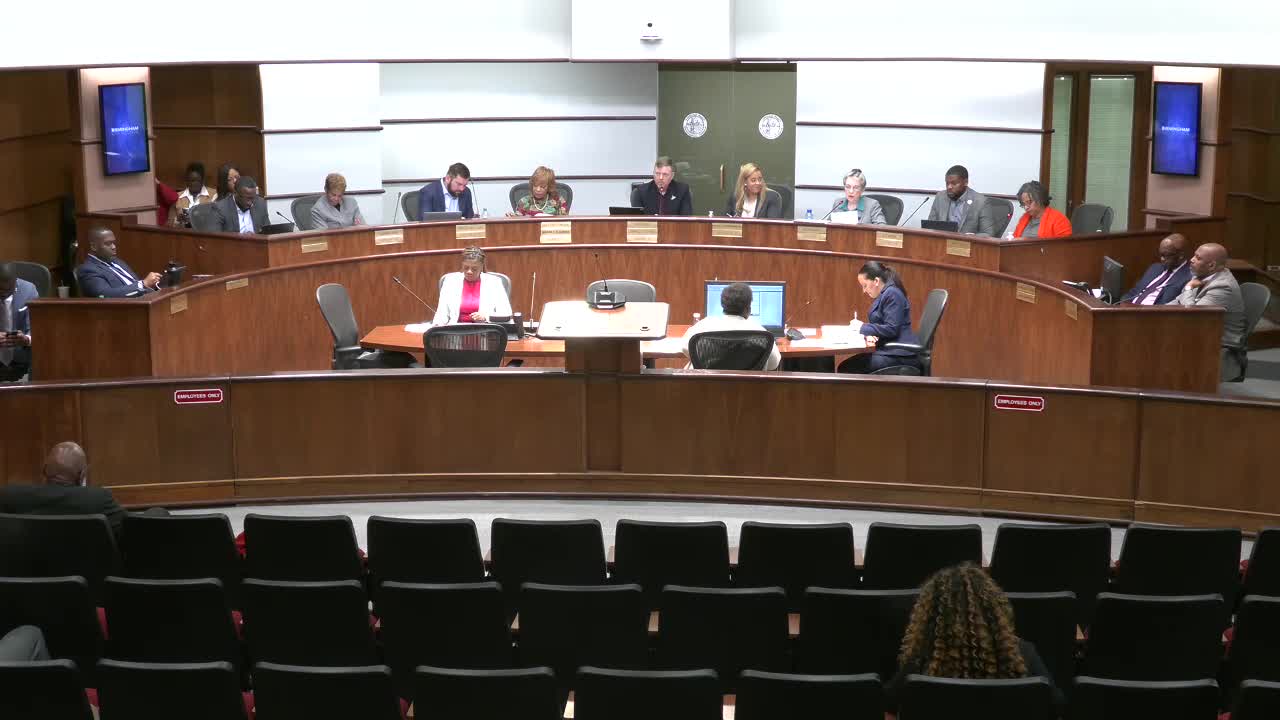
Summary
During public comment at the March 18 meeting, residents raised a range of local concerns: theft and replacement of city trash carts, a disputed parking agreement tied to Sixteenth Street Baptist Church, and a local clinician seeking city referrals and partnerships for mental-health and wellness programming.
Several members of the public used Tuesday—s meeting to press the council on neighborhood-level issues.
Garbage-can thefts and replacement: A resident described repeated thefts of city-issued trash carts at a duplex and asked why the city would not replace a stolen can. Councilors and a city official said the cans include RFID chips that link each cart to an address; staff said follow-up on reported thefts is handled on a case-by-case basis and that the city can attempt recovery rather than encouraging confrontations. Councilors advised residents to report theft or missing carts to the city so staff can investigate and attempt recovery.
Sixteenth Street Baptist Church parking dispute: Deacon W. A. Case of Sixteenth Street Baptist Church said a prior agreement between the church and city staff (he referred to conversations with a former staffer, Ben Green) allowed public parking on the church—s lot but that the church now seeks to build on part of that lot and limit public parking. He said the change would reduce spaces available to churchgoers and neighborhood residents and asked the council to review the matter. Councilors acknowledged the concern and said they would look into the claim; one councilor noted the block adjacent to the church (Alabama Power block) is scheduled for eventual redevelopment in a master plan and that surface parking there has been an interim use.
Mental-health services and community programming: Janae Millhouse, who identified herself as Coach True and operator of House of True, described mental-health and wellness programming she offers (therapy-informed coaching, breath work, mindfulness, yoga) and asked the city for help connecting with funding or partners and for referrals to provide services in neighborhoods and institutions. Councilors pointed her to the Department of Innovation and Economic Opportunity and to community initiatives including Bold and the Majestic Peace Collective; several council members offered to share contact information and to explore placing her services in community events or youth detention programming.
Why it matters: the public-comment speakers asked the city to act on neighborhood livability concerns and to connect grassroots service providers with city resources and partner organizations. Council members pledged follow-up and recommended reporting channels and city staff contacts.