Get Full Government Meeting Transcripts, Videos, & Alerts Forever!
Get email alerts on the Indigent Defense Appellate topic
No spam. Unsubscribe anytime.
Appellate indigent defense directors warn of ‘constitutional’ crisis as panel attorneys decline and caseloads rise
Summary
Project directors and appellate staff told the subcommittee that the statewide network of appellate indigent defense projects and volunteer panel attorneys has shrunk sharply while appeals and dependency matters have grown, producing long waits for appointed counsel and arguing for a larger funding increase than the administration proposed.
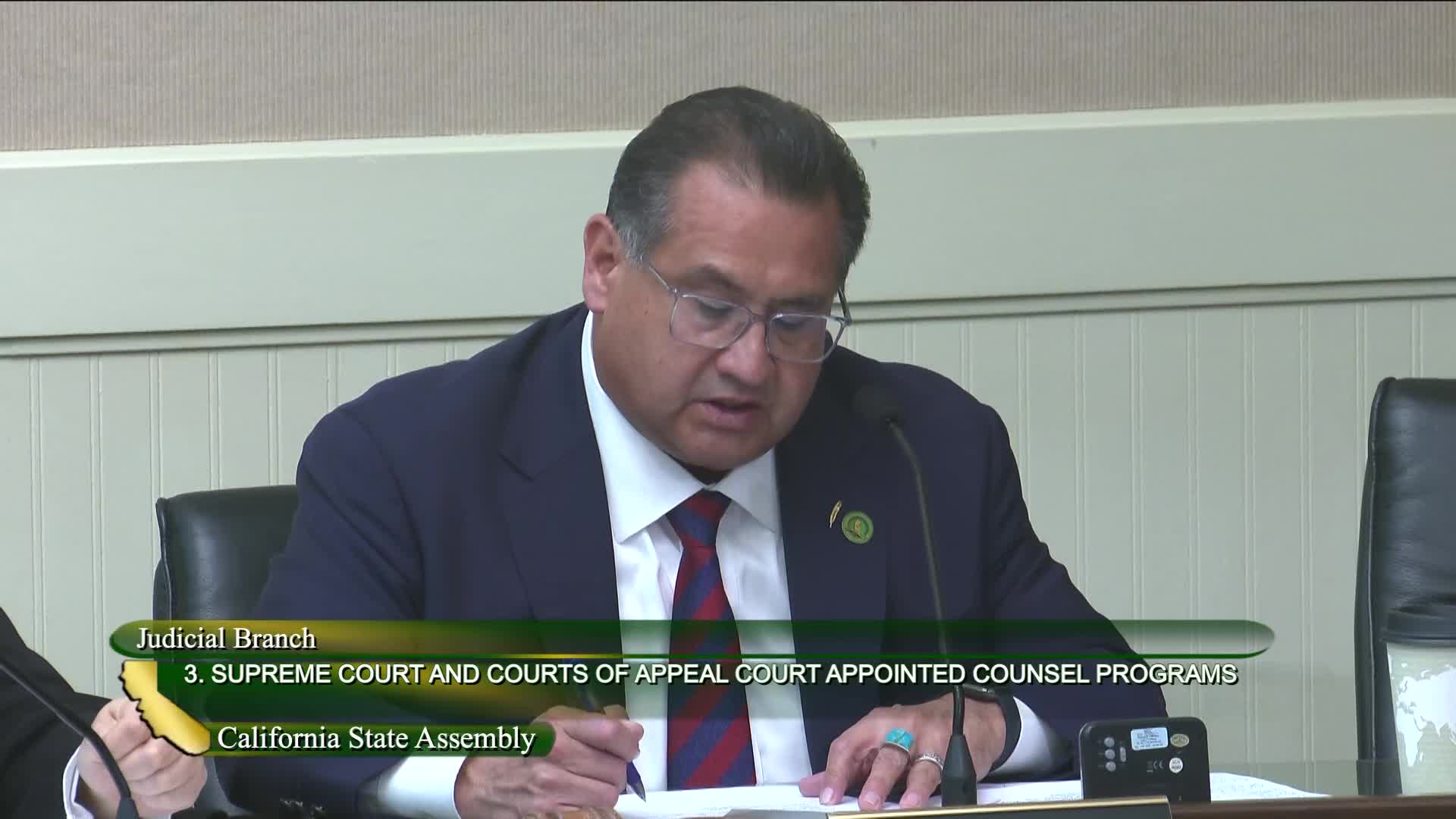
Appellate indigent defense project directors, a Court of Appeal justice and dozens of panel attorneys and public defenders told the Assembly panel the state faces a near‑term crisis in court‑appointed appellate representation.
Justice Bulwell Urie (representing the Judicial Council’s appellate indigent defense oversight committee) said panel attorney numbers have fallen from roughly 950 about a decade ago to about 600 today while courts of appeal handle nearly 10,000 appeals annually. “The need is desperate and quantifiable,” she said, and supported the Judicial Council’s requested $25 million to bolster project offices and raise hourly rates for panel attorneys.
Jennifer Peabody, acting executive director of the California Appellate Project in Los Angeles, said the number of indigent appeals has increased 27% since FY 2018‑19; in the Second Appellate District the project moved from roughly 2,800 appointed cases a year to about 4,000, with another 1,000 clients waiting for counsel. Peabody said the number of attorneys accepting appointments has fallen roughly 30% statewide, creating waits of many months for assignment; she asked the subcommittee to fund the Judicial Council’s full ask — roughly $25 million — which would allow an approximate $40/hour increase for panel attorneys and 30% increases for project offices.
Project directors and panel witnesses described the downstream harms of delays: children kept longer in foster care, juveniles held in custody while appeals wait, and people serving sentences that would be shortened under timely appellate review. Speakers offered concrete figures: several projects said they had hundreds of active cases waiting for assignment and many more offers declined because panel attorneys are at capacity.
The administration proposed a smaller increase in the Governor’s budget (about $6.3 million in 2025‑26). Department of Finance said the 6.3M was a modest request sized to what the administration could afford in the current budget architecture. LAO staff had no technical objection to the proposal but noted the problem is structural and said the Legislature should weigh competing priorities.
Why it matters: Indigent appellate counsel is constitutionally mandated; project directors told the subcommittee that without larger, sustained funding they cannot recruit or retain sufficient attorneys to provide timely appellate representation. Several speakers warned that delays place children, detained juveniles and incarcerated adults at risk of unjust prolonged detention or delayed relief.
Ending: Members heard detailed, firsthand descriptions of courtroom and post‑trial consequences from delayed appellate representation and asked staffers and the Judicial Council to return with additional budgetary detail.