Get Full Government Meeting Transcripts, Videos, & Alerts Forever!
Get email alerts on the Court Operations topic
No spam. Unsubscribe anytime.
Judicial Council and local courts welcome partial restoration but warn staffing, cyber and facility needs remain
Summary
Judicial leaders told the Assembly subcommittee that a partial reversal of prior cuts has helped avoid furloughs and shore up cybersecurity and training, but courts remain understaffed, face facility deficits and require careful legislative oversight on ongoing funding.
Judicial Council and local court officials told the Assembly Budget Subcommittee they appreciated the governor’s January proposal that partially restore cuts to trial courts but said the branch is not yet made whole and still faces structural staffing and facilities needs.
Shelley Curran, Administrative Director of the Judicial Council, said the January budget proposal reduced the prior $97 million cut by $42 million and included additional funds for operating costs, court‑appointed counsel, and facilities. “We are committed to working with you,” Curran told the subcommittee, and described near‑term restorations that allowed courts to avoid layoffs and furloughs in many places.
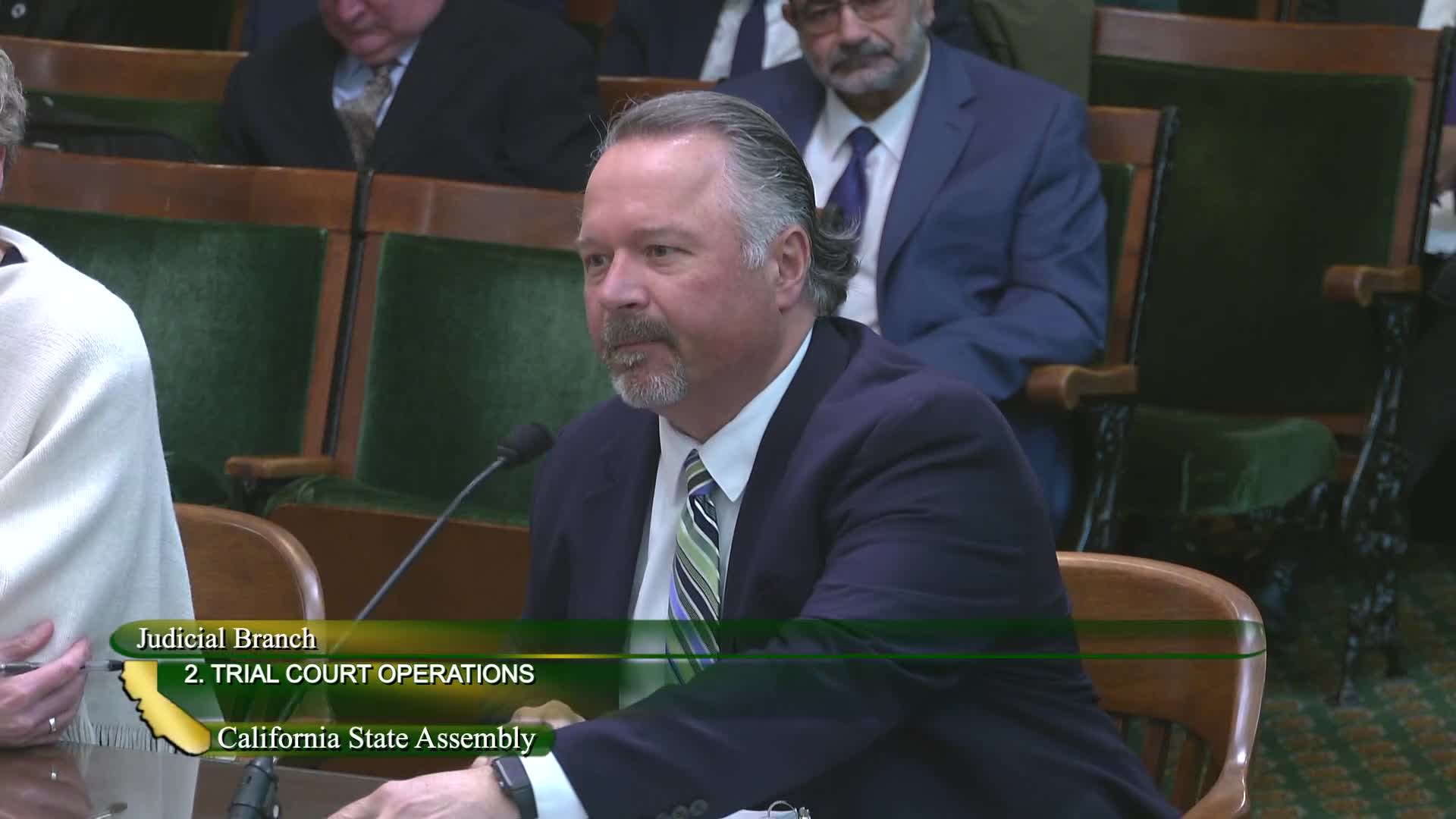
Presiding Judge Lisa Rogan and Daryl Parker, chair of the Court Executive Advisory Committee, described how the partial restoration relieved immediate staffing and cybersecurity risks. Rogan said restoration funds helped the largest courts respond to cyber incidents and resume operations, allowed training of new hires, and supported scanning and records digitization projects that reduce long‑term storage costs.
Parker said voluntary furloughs and hiring freezes implemented during the cut period had practical effects on public service hours and case processing times; restoring hours remains necessary to prevent backlogs. Both witnesses said courts still face difficulty competing for employees with county and municipal employers that have offered higher pay.
Anita Lee from the Legislative Analyst’s Office recommended procedural safeguards for the legislature’s review of midyear and ongoing adjustments: LAO said it is reasonable to weigh the governor’s proposed ongoing $82 million augmentation against other state priorities and recommended the Legislature consider specifying priorities for how the funds should be used and receive 30 days notice for transfers from the Trial Court Trust Fund.
Department of Finance told the committee that flexibility in how courts use ongoing resources is intentional because individual courts have differing needs.
Why it matters: Courts reported restored hours, cyber‑security staffing and modest facility investments have meaningfully reduced immediate operational risks; however, judges and court managers told the committee that the branch still lacks enough staff, courtroom space, and funding for long‑term staff recruiting and retention. Absent continued funding or targeted legislative direction, witnesses warned services and access to justice could suffer in some counties.
Ending: Subcommittee members expressed support for the courts and urged continued dialogue on how to balance ongoing general fund commitments against other statewide budget pressures.