Get Full Government Meeting Transcripts, Videos, & Alerts Forever!
Get email alerts on the Government Oversight topic
No spam. Unsubscribe anytime.
Connecticut hearing urged independent audit of DDS residential costs
Summary
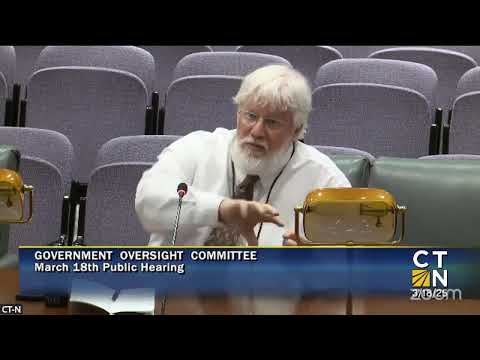
Members of the Connecticut General Assembly’s Government Oversight Committee heard testimony March 18 on legislation—referred in testimony as Bill 6,487—requesting a study of the costs and quality of 24/7 residential services provided through the Department of Developmental Services (DDS).
Members of the Connecticut General Assembly’s Government Oversight Committee heard testimony March 18 on legislation—referred in testimony as Bill 6,487—requesting a study of the costs and quality of 24/7 residential services provided through the Department of Developmental Services (DDS).
Advocates, provider representatives and the state auditors all said an updated, objective comparison of state-run and nonprofit residential care is overdue and urged clarity about the study’s scope and resources. “We need to have a better understanding, a more granular understanding of what it's costing to serve all of our folks,” said Walter Glum, executive director of the Connecticut Council on Developmental Disabilities and a parent of a person who receives DDS services.
The bill’s supporters told the committee they expect cost differences between state-operated residences and services delivered by nonprofit community providers, and they want the Legislature to have current, auditable data before policy decisions are made. “The public option is just unsustainable,” said Thomas Fiorentino, a board member of The Arc Connecticut and a parent, describing what he called high per-person costs in state-operated settings. Ben Shakin, director of government relations for the Connecticut Community Nonprofit Alliance, cited the most recent publicly available DDS report and told the committee “4,184 of them, or 92 percent, are in community-based settings,” while a small number remain in state-operated group homes or institutions.
Auditors of Public Accounts staff said they can perform audits of this kind but raised practical concerns about timing and staffing. Craig Miner, who appeared for the auditors, cautioned that meeting the bill’s proposed deadline would be “very hard to achieve” without additional resources and that some elements of the bill—especially working jointly with the Office of Policy and Management (OPM)—could raise autonomy and methodological issues.
Why it matters: Committee members and witnesses described a long-running shift of people from institutional care into community-based settings and said updated cost and quality comparisons could inform policy on funding, wage levels for direct-care staff and whether some state-operated services could be managed differently. Witnesses also urged the study to capture indirect costs (fringe benefits, retirement contributions) and to include supportive living models such as individualized home supports (IHS) and Community First Choice (CFC) services so comparisons are “apples to apples.”
Details from testimony and questions: Witnesses recommended that whoever conducts the study engage stakeholders to define quality metrics that go beyond physical-plant inspections and include measures tied to individuals’ goals and quality of life. Walter Glum asked that the study not be limited only to traditional settings such as state group homes and Connecticut’s large institutions but also analyze supportive-living and day-service packages that families combine with Medicaid state-plan services.
Several witnesses described workforce and fiscal pressure points: Fiorentino urged the auditors to count state employee retirement system (SERS) contributions in state cost calculations and raised examples of high total employer costs for state positions; witnesses said nonprofit direct-care wages—often cited at roughly $17–$19 an hour in testimony—have hampered recruitment and retention compared with state wages and some private-sector jobs that pay more.
Auditors’ capacity and scope: Auditor staff listed current audits and said adding a new, comprehensive study would require either delaying other work or adding staff. Miner said OPM could perform comparative analysis from a budgeting perspective, but the auditors would be asked to provide an objective standard and that the bill’s timeline and joint-oversight language merit further discussion.
What was not decided: The committee did not vote on the bill during the hearing. No formal outcome was recorded at the public hearing; testimony and committee questions concluded and the committee recessed as planned.
Looking ahead: Committee members discussed whether to narrow the study’s initial scope (for example, focusing first on 24/7 residential settings) to meet timing constraints, while advocates pressed to include supportive-living and day-service mixes in the analysis. Several witnesses and legislators asked for clear resourcing if auditors or OPM are assigned the work.