Get Full Government Meeting Transcripts, Videos, & Alerts Forever!
Get email alerts on the Motor Vehicle Regulation topic
No spam. Unsubscribe anytime.
Motor Vehicle Commission advances fee increases, adds civil-penalty and compliance rules
Summary
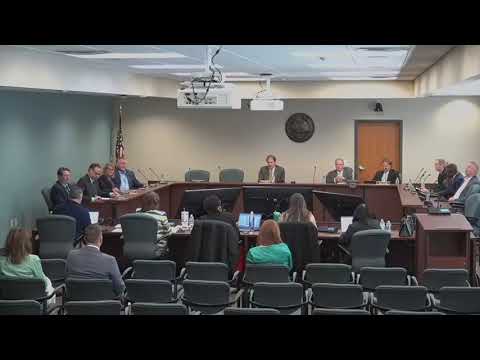
CHARLES WEST, chairman of the Rules Committee of the Tennessee Motor Vehicle Commission, reported changes to the commission’s rules and moved the package into the formal rulemaking process after a public hearing on March 17 in Nashville.
CHARLES WEST, chairman of the Rules Committee of the Tennessee Motor Vehicle Commission, reported changes to the commission’s rules and moved the package into the formal rulemaking process after a public hearing on March 17 in Nashville.
The package, presented at the rulemaking hearing by Sierra Shepherd, assistant counsel in the Department of Commerce and Insurance, would increase several biennial license fees, add new enforcement and compliance provisions, remove an outdated certified-mail requirement and authorize a 30-day response requirement for communications from the commission. The commission also voted to adopt required procedural attachments — a regulatory flexibility addendum, an impact-on-local-government statement and information for the joint government operations committee — and to forward the rules for the attorney-general and secretary-of-state review required under Tennessee law.
Why it matters: The fee increases are intended to help the commission maintain self-sufficiency; staff estimated additional revenue of $1,574,000 for the combined fiscal years 2026 and 2027. The package also tightens enforcement tools (a civil-penalty rule and factors for assessing fines) and clarifies licensee responsibilities for responding to the commission and notifying the agency when a dealer relocates.
Key provisions and fee changes
- License-fee increases (biennial amounts shown in proposed rule language): manufacturer/distributor, factory branch and distributor branch license fee from $1,600 to $2,400; motor vehicle dealer (new or used) from $400 to $600; factory or distributor representative from $400 to $600; automotive dismantler and recycler from $400 to $600; automobile auction fee from $800 to $1,200; recreational vehicle dealer from $400 to $600; duplicate license fee from $25 to $50; name-change fee from $400 to $600; automotive mobility dealer from $400 to $600; fee manufacturers pay per franchise dealer from $50 to $75; motor vehicle salesperson fee from $35 to $50.
- New or amended rules: a civil-penalty rule allowing assessment of a penalty for each separate violation and listing factors for determining penalty amounts; a requirement that licensees comply with applicable Tennessee and federal laws; a requirement that licensees respond to commission mail within 30 days; a rule requiring a dealer relocating to submit a new application and notify the commission within 30 days of the move date; revisions to the motor-vehicle shows/displays rule to better reflect current practice and remove some prior show-permit requirements.
Process and next steps
Sierra Shepherd summarized the hearing process and the statutory steps that follow: rules are filed with the secretary of state and remain for 90 days before taking effect, and fee rules generally take effect July 1 if timing requirements are met. The commission adopted the hearing rules language, the regulatory flexibility addendum and the impact-on-local-government statement in roll-call votes on March 17 and directed staff to file the package for review by the governor’s office and the attorney general’s office.
Director Denise Lawrence told commissioners the department posted hearing notices on the program website and sent an e-notify to licensees. Shepherd said there were no written public comments submitted to the commission for this hearing.
Small-business and fiscal findings
Commission staff reported the commission licenses 3,360 new, used and RV dealers across Tennessee and issues more than 900 other licenses (auctions, manufacturers/distributors, representatives, dismantlers/recyclers). Staff estimated about 60% of dealer licensees meet the program’s definition of small business (fewer than 300 vehicles sold annually). The proposed biennial fee increases were described as “minimal” for many small businesses but larger in absolute dollars for larger licensees; staff concluded no less-burdensome alternatives were available. The commission adopted the regulatory flexibility addendum by roll-call vote.
Commission remarks and forward view
Commissioners discussed the broader trend of dealer “boutique” or showroom models and said the commission may need to consider further rulemaking to address how temporary display locations and boutique showrooms operate under Tennessee rules. Charles West said the retrospective review was required by Public Chapter 328 (2021) and that staff had worked to consolidate items into a single package to reduce confusion with a concurrent fee rulemaking.
Timing: staff projected that, after required reviews, fee changes could be effective as soon as the rule process and legislative timing allow, and noted fee rules frequently take effect July 1 if the timing in the secretary-of-state filing is met.
Ending: The commission approved the rulemaking items and asked staff to advance the package through the governor’s and attorney-general’s review; the commission will receive updates as those reviews and any legislative review proceed.