Get Full Government Meeting Transcripts, Videos, & Alerts Forever!
Get email alerts on the Housing Policy topic
No spam. Unsubscribe anytime.
Investor warns Bangor's vacant-property ordinance penalizes sellers and renovators
Summary
A local real-estate investor said the city’s vacant-property ordinance can impose fees on properties listed for sale or under renovation, calling for exemptions and clearer language.
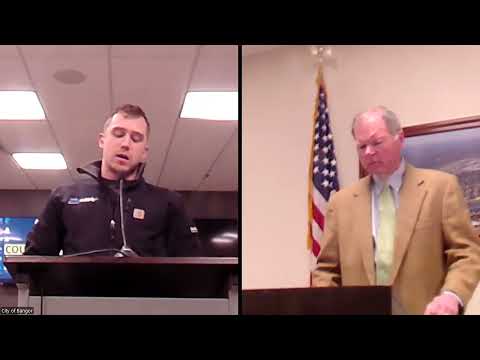
Connor Winchenbach, a local real-estate investor, told the Bangor City Council on March 17 that the city’s vacant-property ordinance is having unintended consequences for sellers and property renovators.
Winchenbach said he buys vacant, distressed properties to renovate and return to the market and supports the ordinance’s goal of addressing blight and institution-owned vacant homes. But he said the ordinance’s current wording — specifically “section 223-7” as cited in the meeting — requires property owners to apply and pay a $500 initial fee within 60 days of vacancy, with the fee increasing every six months and capped at $4,000 every six months. He said the ordinance does not exempt single-family homes listed for sale and that short escrow periods or normal closing delays can leave a seller responsible for fees.
"Based on the current ordinance, this applies to all single family homes that are currently listed for sale," Winchenbach said. "There is no verbiage in the ordinance that states that listed homes are exempt." He told the council that he discussed the matter with David Sabczak, the city solicitor, and multiple code enforcement officers, and said enforcement practice currently avoids pursuing properties listed with real-estate agents but the ordinance text does not provide that exemption.
Winchenbach also raised the situation of owners actively renovating properties: he asked why exemptions apply for properties listed for sale but not for properties undergoing active renovation by a contractor, and he warned that when a property reaches the fee cap and then is sold, the new owner appears to inherit the ongoing fee obligation.
Council members and staff present told Winchenbach the issue had been discussed at a committee meeting two weeks earlier and that the matter was being looked into.
The council did not take formal action on the ordinance during the meeting; Winchenbach’s remarks were recorded during the public comment portion and the council noted the committee follow-up.