Get Full Government Meeting Transcripts, Videos, & Alerts Forever!
Get email alerts on the Weed Removal Funding topic
No spam. Unsubscribe anytime.
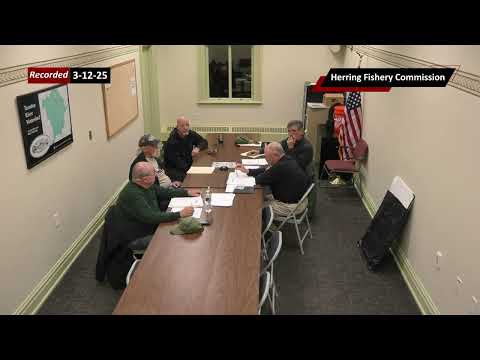
Herring commission agrees to accept Nature Conservancy funding for weed removal, with conditions
Summary
Middleborough-Lakeville Herring Fishery Commission voted to accept up to $35,000 in funding, offered through the Nature Conservancy, to cover a weed-removal project including eco-harvester work — subject to timing, permitting and invoicing arrangements.
Tom Brock, a member of the Middleborough-Lakeville Herring Fishery Commission, said the commission voted to accept funding to support weed-removal work on the river and related costs, with the money to be administered through outside billing rather than as a direct cash transfer to the commission.
The vote followed discussion of a recent offer from the Nature Conservancy, conveyed by Maria Gabriel, to underwrite a weed-removal effort similar in scale to last year’s project. Commission members stressed the offer is conditional: the donor’s funds reportedly must be spent by June, the work window typically available to contractors is a two-week period in August, and the commission will need amended orders of conditions and other approvals before work can occur.
Why this matters: the proposed work would fund an eco-harvester and related protections (turtle handling, contractor invoicing) intended to remove invasive aquatic vegetation in reaches that affect herring passage and habitat. Commissioners said timing and permitting constraints could make it impossible to use the money this season; several members preferred the Nature Conservancy bill the contractor directly rather than the commission taking possession of a check.
Commission discussion and conditions Commission members discussed logistics and limits. They cited last year’s cost (about $35,000 for roughly five days of work), the need for new or amended orders of condition if the targeted river sections change, and access constraints that affect where an eco-harvester can be launched (Vaughn Street, Wareham Street, or near the MBTA railroad bridge were mentioned as options, each with access and sedimentation complications). Members also noted that county equipment or county-provided eco-harvesters require a local operator and transportation; town DPW staff have declined to operate such equipment because of insurance and equipment concerns.
Tom Brock said the commission is willing to accept funding in principle but emphasized multiple contingencies: the donor’s timeline, permitting, the availability of suitable contractor access points, and whether the Nature Conservancy will pay vendors directly. “I would rather see a bill direct to the Nature Conservancy and us stay away from it,” Brock said during the meeting.
Motion and outcome The commission made a motion to accept funding for a potential weed-removal project in the amount communicated by the Nature Conservancy (the figure discussed was $35,000). The motion carried by a voice vote; the meeting record shows a unanimous voice approval but does not record a roll-call tally or named yes/no votes. The commission clarified that it is accepting funding for a project (to be paid for by the donor or billed directly) rather than taking unrestricted cash into its accounts.
Next steps and uncertainties Commissioners agreed that staff (and Brock) will follow up with the Nature Conservancy and the anonymous donor to clarify whether funds can be held, whether direct billing is possible, and whether the donor will permit spending after June if permitting delays occur. Commissioners also asked staff to pursue amended orders of condition if the proposed removal would cover different reaches than last year. If the donor’s funds are not available in time, the commission said it will pursue alternate grant avenues in future seasons.
Votes at a glance - Motion: Accept Nature Conservancy funding (discussed as $35,000) to support a weed-removal project and related contractor costs. Outcome: approved by voice vote; commission recorded unanimous “Aye” but no roll-call tally was recorded in the transcript. Notes: funding may be billed directly to the Nature Conservancy; spending is contingent on permitting, timing and donor conditions.
Ending Commission members said they will notify the Nature Conservancy of the commission’s conditional acceptance and proceed with necessary permit amendments and logistical planning if the donor confirms funding and timing.