Get Full Government Meeting Transcripts, Videos, & Alerts Forever!
Get email alerts on the Student Transportation topic
No spam. Unsubscribe anytime.
Board debates walk zones, opt-in bus registration as transportation capacity tightens
Summary
District staff described discrepancies between policy walk-zone distances and current practice, and proposed moving toward an opt-in registration system for bus service to better match routes to riders. Board members raised safety, weather and equity concerns, and asked staff to return with options.
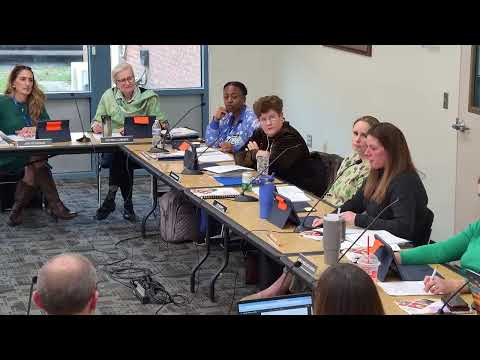
Talbot County Board of Education members spent substantial time on March 17 discussing student transportation policy (AR 5.9), existing "walk zone" distances and a potential shift to opt-in bus registration for families.
Mr. Schafer, transportation staff, presented a spreadsheet of every school that showed policy-dictated walk-zone distances, current practice and assigned buses. He said some schools have effectively no walk zone because of sidewalk gaps, while Easton schools have the largest populations affected by the policy-dictated distances.
"We assign basically everyone to a bus, and so therefore we're trying to get to a percent utilization," Mr. Schafer said, explaining the district's routing and utilization calculations. He told the board the district currently assigns students to routes even if parents do not use the bus and has been encouraging families to "opt in" voluntarily for the last two years to get a clearer picture of actual ridership.
Why it matters: Many school systems rely on walk-zone definitions to determine who is eligible for transportation. The district's current routing method — assigning students unless they opt out — strains bus capacity in some routes and complicates routing efficiency and driver workloads.
Key discussion points and numbers - Route capacity: Mr. Schafer said average utilization figures were calculated across roughly 25 buses; some individual buses run above capacity (he cited examples up to about 125%) while others are below. He said the district is "pushing the edge" of capacity on some runs. - Easton: Easton Elementary, Middle and High schools together have a significant number of students inside the walk-zone calculations and are driving utilization concerns for that area. - Opt-in trial: Staff have encouraged parents to opt in for two years; about 1,000 families voluntarily opted out in the most recent cycle, Mr. Schafer said.
Board members raised safety and equity concerns. President Jackson and other board members said weather and sidewalk conditions can make walking unsafe on some days and that restricting bus access based on fixed walk zones could leave children without safe travel options. "I feel very strongly that we shouldn't be limiting kids to how close they are when weather can be a big factor," one board member said.
Other members recommended expanding bus service for middle-school students to reduce incidents off campus at dismissal times and suggested operational ideas such as double runs or after-school runs to make better use of buses and reduce in-town congregating. Staff noted those options come with trade-offs (additional adult supervision, teacher-contract implications and increased costs).
Procedure and next steps: Mr. Schafer said moving to a mandatory opt-in model would require board action. He suggested a phased approach — reduce walk zones for a pilot year, gather accurate registration data and adjust routing — and promised to return with detailed scenarios, capacity modeling and communication plans. Staff also said schools currently field most parent transportation requests and will coordinate to improve public information and FAQs on the district website.
No formal policy change or vote took place on March 17; staff will present refined proposals to the policy committee and the full board for further consideration.