Get Full Government Meeting Transcripts, Videos, & Alerts Forever!
Get email alerts on the Education topic
No spam. Unsubscribe anytime.
Committee backs expansion of foster-care scholarship, adds spending cap
Summary
The House Higher Education Committee voted to recommend a substitute for Senate Bill 85 that sets a per-student limit and clarifies how the foster care scholarship stacks with other aid; advocates representing current and former foster youth spoke in support.
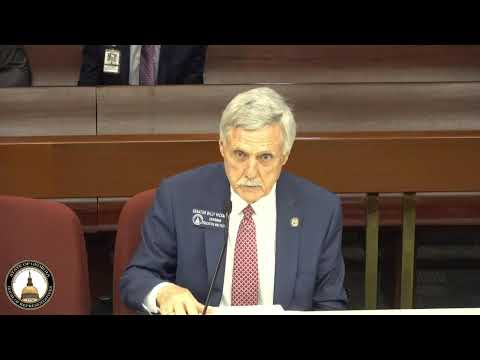
The House Higher Education Committee on March -- voted to recommend a substitute to Senate Bill 85, a bill that creates a foster-care scholarship and adds guardrails on how the award may be used.
Supporters said the scholarship would help students who experienced foster care continue into postsecondary education and that the proposal is narrowly scaled in its early years. "We do support the bill as written, and are grateful that data will be collected," said Devin Rudy Johnson, who identified himself as speaking on behalf of a group of people with lived experience in foster care. "In fiscal year 24 to 25, there were only 98 students total utilizing ETV ... and ... within private schools ... it was only 14 students," he added, citing data he said he obtained from Embark, the agency that administers the Education and Training Voucher program.
A second witness, Ashanti Williams, a youth advocate at Georgia Empowerment and a former foster youth, told the committee the financial support would change students' ability to complete college. "Financial support specifically designed for former foster youth is not just about tuition. It's about creating stability and allowing students to focus on their education instead of ... survival," Williams said.
The committee substitute sets a per-scholarship maximum and clarifies that the stipend may be stacked with other aid such as HOPE or Pell grants. The chair outlined the changes and said the substitute adds a cap "not to exceed 30,000" per scholarship and aligns allowable use with existing HOPE limits — up to the attainment of a bachelor's degree, 90 quarter hours, 120 semester hours, or for a maximum of 10 years of eligibility. The chair also described the stipend as stackable with other financial aid sources.
Senators and committee members expressed support and moved the substitute forward without further amendment. A motion to recommend the substitute, LC 610231 S, to pass was made and seconded; the committee voice vote approved the recommendation and the measure was referred to the Rules Committee. Committee members indicated Representative Trey Kelly agreed to carry the bill in the House.
Proponents told the panel the number of likely immediate recipients is small based on current usage of federal and state supports, and they cited research suggesting that financial supports for foster youth increase college completion. Committee discussion focused on the scope and fiscal guardrails of the proposed scholarship rather than substantive changes to eligibility.
The substitute will proceed to the Rules Committee in the House stage; committee members said a House sponsor had been identified.