Get Full Government Meeting Transcripts, Videos, & Alerts Forever!
Get email alerts on the Housing And Community Development topic
No spam. Unsubscribe anytime.
Mauldin council adopts GCRA plan to spend CDBG, HOME and ESG funds; affordable housing remains priority
Summary
The Mauldin City Council unanimously adopted the Greenville County Redevelopment Authority's FY2025 Annual Action Plan, which outlines use of HUD formula grants, including CDBG, HOME and ESG funds, with the majority of past allocations going to affordable housing projects.
The Mauldin City Council on March 17 unanimously approved the Greenville County Redevelopment Authority's (GCRA) fiscal year 2025 Annual Action Plan, the city's application to the U.S. Department of Housing and Urban Development that lays out how Community Development Block Grant (CDBG), HOME Investment Partnerships (HOME) and Emergency Solutions Grant (ESG) funds will be used for the coming program year.
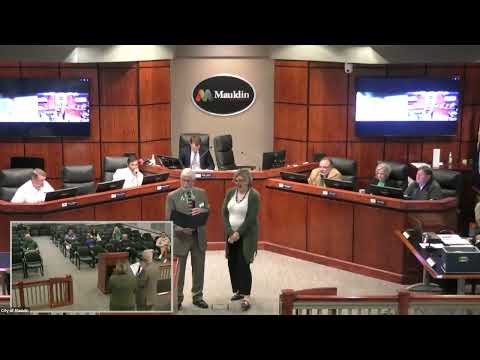
The plan will be submitted to HUD after the public comment period. Jose Reynoso of the Greenville County Redevelopment Authority said the Annual Action Plan "outlines what we plan to do with your Community Development Block Grant, your HOME grant, and then your Emergency Solutions grants." He told the council the program year begins July 1 and that the city's funding typically supports affordable housing production and rehabilitation projects.
Why this matters: the CDBG and HOME grants are primary local tools for financing affordable housing, infrastructure and services for low- and moderate-income residents. Reynoso told the council that in recent years "most of the allocation has gone towards actually building the in kind of affordable housing. I would say at least 70% of it, maybe 80% of it went towards that," citing partnerships on projects such as Parkside, Butler and the Belvedere.
What the plan covers: the presentation described eligible activities for each program, including new construction and rehab, homeownership assistance, rental assistance and homelessness prevention and rapid rehousing. Reynoso identified programs and partners: a first-time homebuyer program in partnership with Community Worth Carolina, landlord loan programs to bring rental units up to code, major and minor home repair programs, in-house financing for homeownership, and rental assistance tied to homelessness prevention. He said the city funds subrecipients that include tenant services and parks and recreation programs.
Council action and public process: the council moved to adopt the GCRA-proposed funding plan after the presentation and public comment period. The motion passed by unanimous voice vote. City staff and GCRA noted the plan will be open for public comment through early May before final submission to HUD on May 15 (Reynoso said comments would be accepted through May 6 in the presentation materials).
Context and next steps: Reynoso said the draft plan is the first year of a five-year consolidated plan and that GCRA will forward submitted public comments to county officials before the HUD submission. The council did not change allocations at the meeting; adoption sends the plan forward for the required HUD review and any subsequent adjustments.
The council discussion included a question from a council member about the distribution of national-objective categories (low- and moderate-income benefit, slum/blight prevention, urgent need). Reynoso reiterated that the bulk of prior funding has supported affordable housing partnerships.
Votes at a glance: The council voted to adopt the GCRA FY2025 Annual Action Plan (voice vote; unanimous).