Get Full Government Meeting Transcripts, Videos, & Alerts Forever!
Get email alerts on the Auditor Office topic
No spam. Unsubscribe anytime.
City auditor outlines office independence, audit priorities and invites public input
Summary
City Auditor Nathan Picker told the Tulsa Human Rights Commission his office will expand performance audits, start a resident-facing risk intake and begin new audits July 1, and invited commissioners to suggest items including 911 response and the Human Rights complaint process.
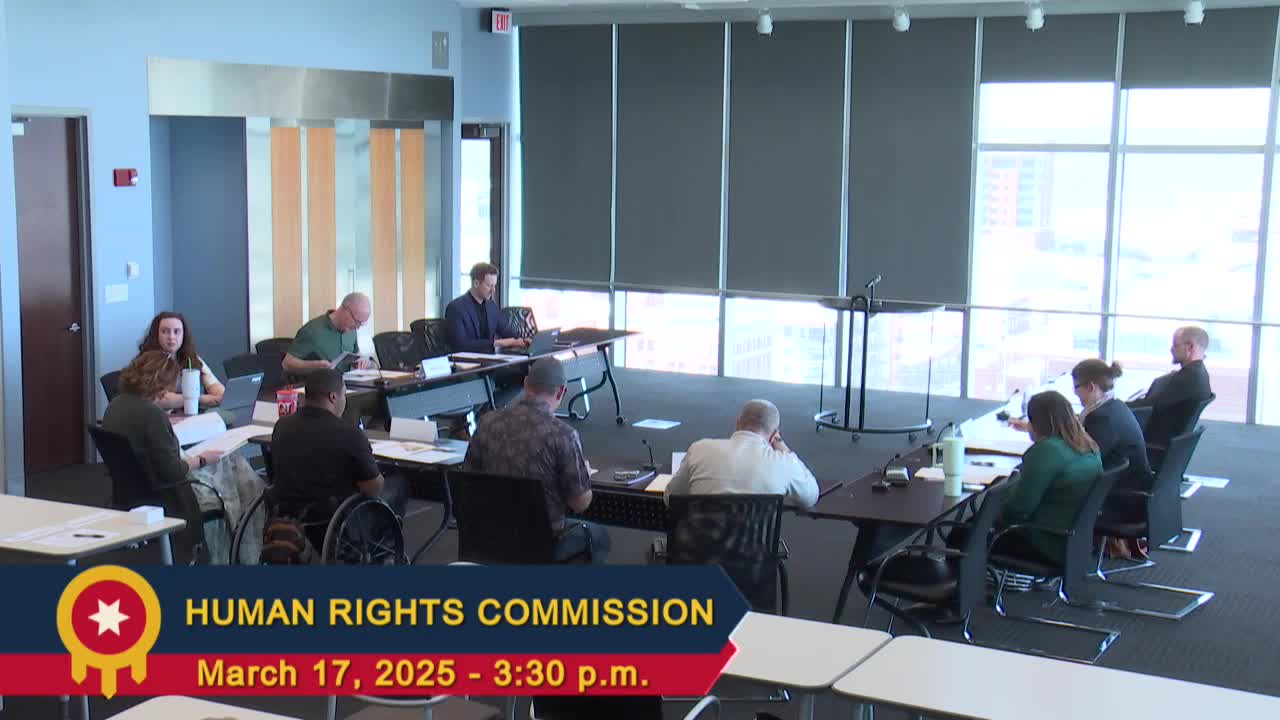
City Auditor Nathan Picker briefed the Tulsa Human Rights Commission on the office's duties, independence and planned priorities, saying the office will begin a new annual audit cycle on July 1 and is expanding resident access to suggest audits.
"Our mission is we provide accountability and build community trust by listening to residents and employees performing audits, reviews, consulting, and reporting," City Auditor Nathan Picker said, describing the office's mission, vision and values. He said the auditor is an elected position and "shall not be subject to item veto or reduction by the mayor," language he cited as preserving the office's independence and access to city records.
Picker outlined that the charter and ordinances authorize the office to examine city accounts and performance across departments, boards and commissions. He said the office historically does about 10 audits a year with roughly 12 staff positions, and that he is expanding the annual risk assessment process to accept input from residents via a form that will appear on the auditor's soon-to-launch website. "We're putting a form on our website that lets all residents put in requests for audits," Picker said.
Why it matters: the auditor's office can direct audits that examine how city programs and processes are performing and whether they meet their stated objectives. Commissioners raised specific local priorities including 911 response times, the city's 311/customer-care system and barriers in the Human Rights Commission complaint process.
Commissioners and guests pressed Picker about possible audits and the office's scope. Desiree Edwards, who identified herself as representing the Lumen's Commission and said she has managed engineering teams, flagged 911 response gaps and said her city councilor supports further scrutiny. "There's certain gaps with the 911, being able to call and get a response in less than 13 minutes depending on the time of day and resources," Edwards said, urging the auditor to examine response capabilities and times.
Picker said performance audits use standards or best practices as benchmarks and that the proposed 911 review would qualify. He described the office's risk-assessment approach as scoring likely occurrence and impact, then prioritizing audits. He also listed existing and planned work: an ethics hotline for reports, an audit of 311/customer-care, agile assessments for quicker reviews and a public-facing annual audit plan that the office will present to the audit committee before July.
On jurisdictional limits, Picker said some outside entities and authorities governed under Title 60 statutes can be harder to audit, and he noted the difference between entities the city directly controls and partner organizations. "When there are contracts where the city is giving money to other entities, as long as there's, like, a right to audit clause within that, then that does give us the ability to kind of go through and make sure what that contract has required them is being done," Picker said. He also said some title-60 authorities fall outside the auditor's authority.
Commissioners suggested other audit topics: ongoing or shelved consultant recommendations, city community-engagement practices and how the city evaluates and acts on prior consultant reports. Nathan Picker said the office will seek quantitative and qualitative data and engage through town halls and other public forums as part of the engagement audit.
Picker said he began the job Dec. 2 and that the current fiscal-year audit plan follows the previous auditor's timeline through June; his first full-year plan will start July 1. He described running for an elected office that is moving from two-year to four-year terms after a transition period.
The commission discussed ways to provide suggestions to the auditor. Picker asked commissioners to send ideas and said the office will post intake forms and contact information on its forthcoming website.
Ending: Commissioners welcomed the outreach and said they would forward suggestions including 911 response, 311 operations and the Human Rights Commission complaint process.